




The Republic of Niger has prohibited the export of premium petrol and diesel in a move aimed at protecting domestic supplies amid growing fuel shortages and disruptions in international petroleum markets.
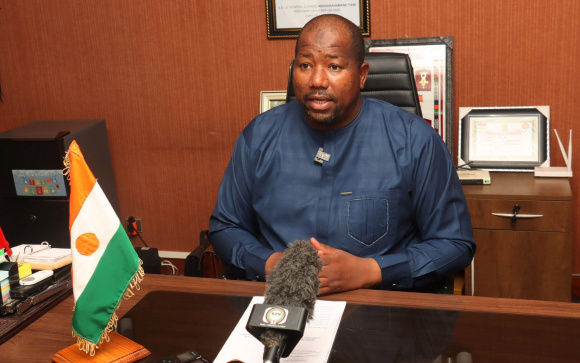
The directive, signed by the country’s Minister of Trade and Industry, Abdoulaye Seydou, on October 12, 2026, requires locally produced petrol and diesel to be channelled first towards meeting domestic demand before any exports can be considered. Niger’s state news agency, Agence Nigérienne de Presse (ANP), reported the measure on October 17.
The decision comes as fuel supply difficulties have affected filling stations in Niamey, the country’s capital, raising concerns about the availability of essential petroleum products for households, transport operators and businesses.
Under the new rules, the ban is not entirely without exceptions. The government has allowed the state-owned Société Nigérienne de Pétrole (SONIDEP) and the Zinder refinery operator, Société de Raffinage de Zinder (SORAZ), to export surplus volumes, but only after obtaining special authorisation from the minister responsible for trade.
The order also gives officials of the Ministry of Trade and Industry, customs authorities, and defence and security forces the responsibility to identify and sanction violations in line with existing laws. The directive further assigns relevant officials across the trade, petroleum, finance, interior and defence ministries responsibility for its implementation.
The export restriction follows mounting pressure on Niger’s domestic fuel supply system. In a report published on October 7, the government disclosed that the country recorded a shortfall of 196.62 million litres of premium petrol in the first eight months of 2026. Diesel also recorded a deficit of 52.60 million litres during the same period, highlighting the growing gap between available supplies and domestic requirements.
Niger’s petroleum minister, Hamadou Tini, reportedly told the country’s Consultative Council for Refoundation that the petrol shortfall had worsened considerably, rising from 47.25 million litres in 2024 to 159.74 million litres in 2025 before reaching the latest figure in 2026. The government also identified increasing reliance on imports as a financial concern because imported products can cost more than the regulated domestic selling price.
The domestic supply challenge is unfolding against a difficult international energy market. On October 16, Brent crude futures settled at $109.86 per barrel, their highest level since May 19, as tensions in the Middle East and attacks on Russian energy infrastructure fuelled fears of further supply disruptions. Reduced oil flows through the Strait of Hormuz have also added to uncertainty over global petroleum supplies.
Niger’s decision reflects a wider trend of governments seeking to protect local consumers when international supply chains come under pressure. However, the immediate effect of the ban will depend on the volume of fuel available domestically, the performance of local refining operations, import arrangements and the enforcement of the new restrictions.
For Niger, the central challenge will be ensuring that the restriction translates into more reliable supplies at filling stations rather than merely limiting exports. With petrol and diesel shortages already reported, the effectiveness of the policy will depend on whether domestic production and imports can adequately meet demand. The government has yet to establish, in the reports reviewed, how quickly the measure will ease shortages or whether it will lead to changes in retail fuel prices.
- Bournemouth Humiliate Manchester United 3-0 at Old Trafford as Carrick Faces Mounting Pressure
 Bournemouth delivered another painful blow to Manchester United on Sunday,…
- Tragedy in Kogi: Police Corporal Allegedly Kills Female Colleague, Takes Own Life After Reported Relationship Crisis
 A tragic shooting incident involving two serving police officers has…