





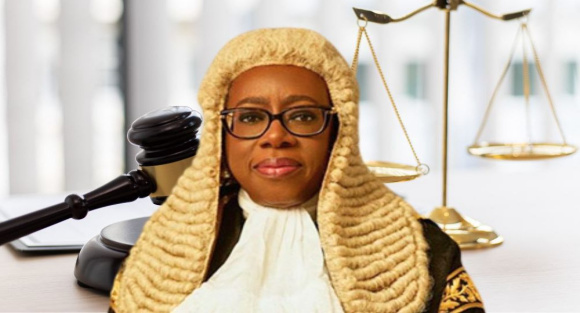
Chief Justice of Nigeria (CJN), Justice Kudirat Kekere-Ekun, has sworn in 375 judicial officers nominated to serve on the Election Petition Tribunals ahead of the 2027 general elections, charging them to resist political interference, intimidation and inducement in the discharge of their responsibilities.
The inauguration took place on Monday, November 9, 2026, at the Body of Benchers Auditorium in Abuja, as the judiciary intensified preparations for the adjudication of electoral disputes expected to arise from the forthcoming general elections. The event also featured the unveiling of the second edition of the Judicial Electoral Manual and the commencement of a specialised capacity-building workshop for judicial officers.
Addressing the newly inaugurated tribunal members, Kekere-Ekun emphasised that their responsibility was to dispense justice strictly in accordance with the law and evidence presented before them, rather than succumb to political pressure, public sentiment or attempts by influential individuals to influence judicial decisions.
The CJN cautioned politicians, political parties, lawyers, public officials and social media users against turning the courtroom into an extension of the political arena. She stressed that the judicial process must not become a continuation of electoral campaigns, warning that intimidation of judicial officers, misinformation and attempts to prejudge pending cases could undermine public confidence in the administration of justice.
She also expressed concern over the misuse of court processes, particularly the filing of multiple suits on the same subject matter, attempts to obtain conflicting orders from courts of coordinate jurisdiction and the abuse of ex parte applications to secure tactical advantages. She urged legal practitioners to uphold professional ethics and avoid conduct capable of bringing the judiciary into disrepute.
The President of the Court of Appeal, Justice Monica Dongban-Mensem, disclosed that the 375 judicial officers nominated for the election petition tribunals comprised 138 judges with previous experience in handling electoral disputes and 237 first-time tribunal members. She urged the judges to remain impartial and reject every form of improper influence, including political pressure, financial inducement, intimidation and personal relationships.
Dongban-Mensem described their appointment as a call to service rather than a privilege, emphasising that the credibility of the electoral process depended partly on the judiciary’s ability to resolve disputes fairly and within constitutionally prescribed timelines. She also called for effective case management, cautioning against unnecessary adjournments while stressing that speedy adjudication must not come at the expense of fairness.
Meanwhile, the Attorney-General of the Federation and Minister of Justice, Lateef Fagbemi, SAN, called on the Nigerian Bar Association to develop clear ethical guidelines or a code of conduct for lawyers handling election-related cases. He maintained that legal practitioners must ensure that election petition proceedings remain platforms for impartial dispute resolution rather than opportunities for professional misconduct and unnecessary controversy.
The Chairman of the Independent National Electoral Commission (INEC), Professor Joash Amupitan, SAN, who also addressed the gathering, highlighted emerging technological challenges that could complicate electoral litigation in 2027. He specifically warned about artificial intelligence-generated deepfakes, fabricated election announcements, manipulated videos and disputes surrounding electronic transmission of election results. He urged judicial officers to develop the capacity to evaluate digital evidence and distinguish authentic electoral records from manipulated materials.
Amupitan described election petition tribunals as important constitutional mechanisms for resolving political disagreements and preventing electoral disputes from escalating into wider instability. He also stressed that cooperation between INEC and the judiciary was necessary to strengthen electoral credibility but should never be interpreted as an opportunity to influence judicial decisions or discuss the merits of pending cases.
The preparations come ahead of the presidential and National Assembly elections scheduled for January 16, 2027, while governorship and State Houses of Assembly elections are slated for February 6, 2027. With the second edition of the Judicial Electoral Manual expected to serve as a reference for tribunal members, the CJN urged the judges to remain firm, patient and impartial, insisting that the judiciary must protect the rule of law without becoming entangled in partisan political contests.
- 2027 Elections: CJN Swears In 375 Tribunal Judges, Warns Politicians Against Meddling in Judicial Process
 Chief Justice of Nigeria (CJN), Justice Kudirat Kekere-Ekun, has sworn…
- Court Subpoenas INEC Chairman to Produce Tinubu’s 1999, 2023 Election Records in Sowore’s Criminal Trial
 The Federal High Court in Abuja has issued a subpoena…