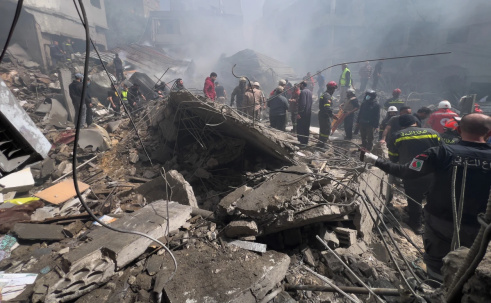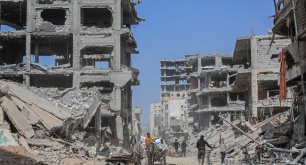






Israel has carried out a major airstrike on Iran’s largest petrochemical facility, marking a sharp escalation in the ongoing Middle East conflict and intensifying fears of a broader regional war.
The strike, confirmed on Monday by Israeli Defence Minister Israel Katz, targeted critical infrastructure at Iran’s South Pars petrochemical complex in Asaluyeh, one of the world’s most significant energy sites and a backbone of Iran’s economy.
The South Pars facility, which contributes a substantial share of Iran’s petrochemical production and export capacity, was hit by multiple explosions, according to Iranian state-linked reports.
Israeli officials said the operation was designed to weaken Iran’s economic and military resilience by crippling a major source of revenue tied to its energy sector.
The attack also reportedly disrupted supporting utility companies that provide electricity and water to the complex, causing temporary shutdowns across parts of the facility.
The strike comes just hours before a deadline issued by U.S. President Donald Trump, who has warned Iran to reopen the Strait of Hormuz, a vital global oil transit route, or face “devastating” consequences.
Iran’s continued blockade of the strait has already sent shockwaves through global energy markets, with oil prices surging amid fears of supply disruption.
Although the United States has not officially confirmed direct involvement in the latest strike, Iranian-linked sources alleged that U.S. aircraft participated in attacks on auxiliary infrastructure within the petrochemical zone.
The latest strike is part of a broader wave of hostilities that began in late February, when coordinated U.S. and Israeli operations targeted Iranian military and nuclear-linked assets, triggering retaliatory missile attacks by Iran across Israel and Gulf states.
In recent days, the conflict has intensified further, with Israeli strikes reportedly killing senior Iranian Revolutionary Guard figures, while Iran has launched counterattacks hitting civilian and strategic targets, including in the Israeli city of Haifa.
- Tinubu Flags Off $100m Southeast Gas Pipeline Project to Boost Industrial Growth
 President Bola Tinubu has flagged off a $100 million gas…
Read More “Tinubu Flags Off $100m Southeast Gas Pipeline Project to Boost Industrial Growth” »
- NCC Raises Alarm Over AI-Powered Cyberattacks, Warns of Threats to Telecoms, Banks and National Security
 The Nigerian Communications Commission (NCC) has warned that the growing…
Regional tensions have also spread beyond the two countries, with Gulf nations activating air defences and energy infrastructure across the Middle East increasingly under threat.
Diplomatic efforts led by Egypt, Pakistan and Turkey proposing a 45-day ceasefire have yet to gain traction, with Iran rejecting conditions tied to reopening the Strait of Hormuz.
Meanwhile, international observers, including the International Atomic Energy Agency, have warned that continued strikes near sensitive nuclear facilities could trigger catastrophic consequences.
With Trump’s deadline fast approaching and both sides showing little sign of backing down, analysts warn the situation could spiral into a wider, prolonged conflict with global economic repercussions particularly for energy markets already under strain.
The strike on Iran’s largest petrochemical complex underscores a strategic shift toward targeting economic infrastructure, raising the stakes in a conflict that is increasingly reshaping geopolitical and energy dynamics worldwide.