




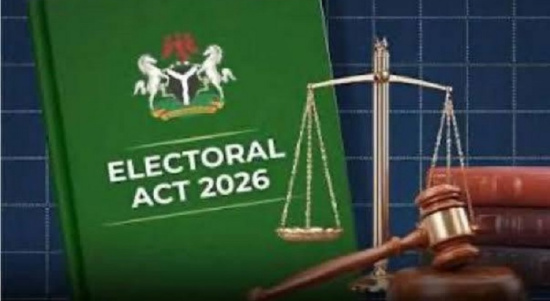
Political parties and candidates preparing for Nigeria’s 2027 general elections have been warned against using religion, ethnicity or tribal identity as tools for mobilising support, with the Electoral Act 2026 prescribing substantial financial penalties for violations.
The warning is coming as political activities intensify ahead of the next general election, with parties, aspirants and supporters increasingly engaging in campaigns, consultations and coalition-building across the country. The new electoral framework places clear restrictions on campaign messages considered capable of exploiting religious, tribal or sectional divisions.
Section 101 of the Electoral Act 2026 specifically prohibits a candidate, person or association from campaigning or broadcasting on religious, tribal or sectional grounds for the purpose of promoting or opposing a political party or a candidate. The provision applies to political communication intended to influence electoral support.
The law distinguishes between individuals and political parties in prescribing penalties. A candidate, person or association convicted of breaching the provision faces a fine ranging from N3 million to N5 million, or imprisonment for up to 12 months, or both.
For political parties, the financial consequences are significantly higher. Section 101 provides for a minimum fine of N30 million and a maximum of N50 million where a party engages in campaigning or broadcasting based on religious, tribal or sectional considerations.
The restriction forms part of a wider set of provisions governing political campaigns under the new law. Section 96 prohibits abusive campaign language that is directly or indirectly likely to injure religious, ethnic, tribal or sectional feelings. It also bars language, insinuations and innuendoes capable of provoking violent reactions.
The law equally places restrictions on the use of certain locations and methods during campaigns. Places designated for religious worship, police stations and public offices cannot be used for political campaigns, rallies or processions, or for promoting or attacking political parties, candidates or their programmes. Masquerades are also prohibited from being used for political purposes during campaigns.
Section 97 separately prohibits political parties, candidates, aspirants and other persons from threatening people with force or violence in an attempt to compel them to support or reject a political party or candidate. Depending on whether the offender is an individual or political party, violations can attract fines and, in certain circumstances, imprisonment.
The Electoral Act 2026 was enacted on February 18, 2026, replacing the Electoral Act 2022 and establishing the statutory framework for the conduct of federal, state and Federal Capital Territory Area Council elections. The legislation is therefore the governing electoral framework that political actors must comply with as preparations for the 2027 elections gather momentum.
The provisions have assumed greater significance amid concerns over the use of inflammatory rhetoric in Nigeria’s political space. INEC Chairman Joash Amupitan has previously stressed the importance of responsible political communication, warning that misinformation, hate speech and inflammatory content can undermine electoral integrity.
With the 2027 elections approaching, the provisions of the Electoral Act 2026 place a clear responsibility on political parties, candidates, campaign organisations and media platforms to keep their messaging issue-based and within the law. The N50 million maximum penalty for political parties engaging in religious, tribal or sectional campaigning underscores the seriousness with which the new legislation treats attempts to turn Nigeria’s religious and ethnic diversity into an electoral weapon.
- Bournemouth Humiliate Manchester United 3-0 at Old Trafford as Carrick Faces Mounting Pressure
 Bournemouth delivered another painful blow to Manchester United on Sunday,…
- Tragedy in Kogi: Police Corporal Allegedly Kills Female Colleague, Takes Own Life After Reported Relationship Crisis
 A tragic shooting incident involving two serving police officers has…