

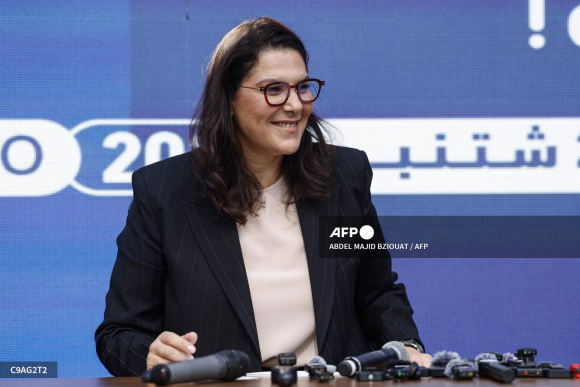
Morocco has made a historic political transition with the appointment of Fatima Ezzahra El Mansouri as the country’s first woman to serve as prime minister. King Mohammed VI announced the appointment on Tuesday, September 29, 2026, following her party’s victory in the country’s latest parliamentary election.
El Mansouri, who coordinates the collective leadership of the Authenticity and Modernity Party (PAM), was received by the King at the Royal Palace in Rabat before being formally appointed head of government. The Royal Palace said she had been tasked with forming a new government.
Her appointment followed the September 23 parliamentary election in which PAM emerged as the largest party in the 395-member House of Representatives. The party secured 97 seats, ahead of the National Rally of Independents (RNI), which won 66, and the Istiqlal Party, which took 65 seats.
Despite finishing first, PAM does not have enough seats to govern alone. A party would need at least 198 seats to command a majority in the House of Representatives, meaning El Mansouri must now negotiate with other political parties to assemble a governing coalition.
Morocco’s constitutional system requires the King to appoint the head of government from the political party that wins the largest number of seats in the parliamentary election. The arrangement dates from constitutional reforms adopted after the 2011 Arab Spring protests, which placed a restriction on the monarch’s choice of prime minister.
The 50-year-old El Mansouri is a lawyer and experienced public official who has held prominent positions at both local and national levels. She first became mayor of Marrakech in 2009, becoming the city’s first woman mayor, and later returned to the position following the 2021 elections.
She has also served as a member of Morocco’s parliament and, since 2021, as Minister of National Spatial Planning, Urban Development, Housing and Urban Policy. Her ministerial responsibilities included issues surrounding housing, urban development and the resettlement of people affected by the Al Haouz earthquake.
El Mansouri described her appointment as a historic moment for Morocco and said it represented a source of pride for Moroccan women. She said her immediate priority would be consultations within PAM and with other parties as she works towards forming a new administration.
The new government will inherit major economic and social challenges, while also overseeing extensive preparations for the 2030 FIFA World Cup, which Morocco will co-host with Portugal and Spain. Reports indicate that billions of dollars in investment are expected to be channelled into infrastructure and preparations for the tournament.
El Mansouri’s rise also places Morocco in a wider regional context. She becomes the second woman to serve as prime minister in the Arab world, following Tunisia’s Najla Bouden, who held the position from 2021 to 2023. Her appointment therefore represents a significant development in Morocco’s political history as attention now turns to the coalition she will build and the programme her government will present.
- Bournemouth Humiliate Manchester United 3-0 at Old Trafford as Carrick Faces Mounting Pressure
 Bournemouth delivered another painful blow to Manchester United on Sunday,…
- Tragedy in Kogi: Police Corporal Allegedly Kills Female Colleague, Takes Own Life After Reported Relationship Crisis
 A tragic shooting incident involving two serving police officers has…