

South Africa has formally expressed its displeasure to Nigeria’s newly appointed High Commissioner, Ambassador Femi Fani-Kayode, over developments surrounding his presentation of Letters of Credence to President Cyril Ramaphosa and subsequent comments on social media.
The South African Department of International Relations and Cooperation (DIRCO) disclosed this in an official statement issued on Tuesday, November 17, 2026, following a meeting between its Director-General, Zane Dangor, and the Nigerian envoy.
According to the statement, Dangor conveyed the South African government’s concerns over events that occurred after Fani-Kayode presented his diplomatic credentials to Ramaphosa, as well as remarks subsequently made by the Nigerian diplomat on social media.
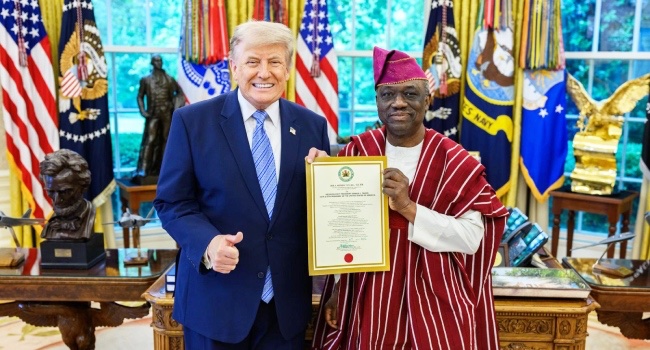
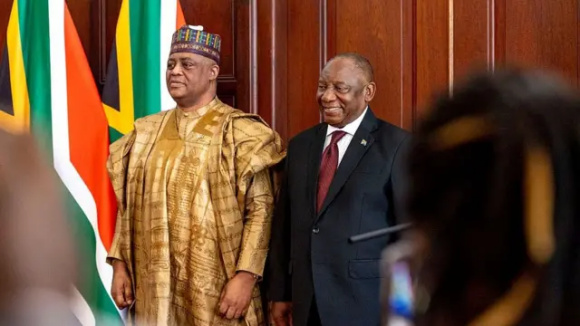
The meeting represents a significant diplomatic development barely four days after Fani-Kayode formally presented his Letters of Credence to the South African President at the Sefako Makgatho Presidential Guest House in Pretoria on November 13.
During that ceremony, the Nigerian envoy had pledged to rebuild relations between the two countries, describing Nigeria and South Africa as historic partners whose cooperation remained crucial to Africa’s political and economic advancement.
However, tensions emerged following the ceremony after Fani-Kayode publicly complained that the South African Presidency’s livestream of the event excluded his introduction and address, despite other diplomats being introduced and given opportunities to speak.
The controversy reportedly stemmed from Fani-Kayode’s allegation that Nigeria was deliberately excluded from the televised proceedings, an incident he described as disrespectful to Nigeria and its delegation. He also expressed dissatisfaction with the manner in which the Nigerian delegation was treated, although he acknowledged that Ramaphosa personally intervened when he raised the complaint.
During Tuesday’s meeting, Dangor specifically drew the Nigerian High Commissioner’s attention to Article 41 of the 1961 Vienna Convention on Diplomatic Relations, which outlines the obligations of diplomatic agents in their dealings with the receiving country. The provision requires diplomats to respect the laws and regulations of their host country, refrain from interfering in its internal affairs and conduct official business through the appropriate foreign affairs ministry or other mutually agreed government department.
South Africa emphasised that official communications between diplomatic missions and its government must follow established diplomatic procedures, particularly through DIRCO. The intervention underscored Pretoria’s expectation that Fani-Kayode would observe established diplomatic protocols in the discharge of his responsibilities as Nigeria’s representative.
Despite expressing its concerns, the South African government reiterated its commitment to protecting and strengthening its longstanding relationship with Nigeria, describing the bilateral partnership as one founded on mutual respect, friendship and cooperation. It also expressed its readiness to sustain constructive diplomatic engagement in the spirit of African solidarity and mutual understanding.
The South African statement did not explicitly describe the meeting as a formal diplomatic demarche or announce any punitive measure against the Nigerian envoy. Rather, it confirmed that Pretoria had conveyed its concerns and reminded him of the diplomatic conventions governing official engagement between accredited representatives and their host governments.
The development comes at a sensitive period in Nigeria-South Africa relations, with both countries seeking to strengthen economic cooperation and address longstanding diplomatic concerns. Fani-Kayode had, during his November 13 credentials presentation, expressed optimism that his assignment would help rebuild confidence, strengthen bilateral ties and advance the shared interests of the two African powers.
- South Africa Raises Diplomatic Concerns Over Fani-Kayode’s Conduct, Cites Vienna Convention
 South Africa has formally expressed its displeasure to Nigeria’s newly…
- 2027 Elections: Bauchi NDC Governorship Candidate, Ibrahim Kashim, Dumps Party for APC, Cites National Influence, Development Prospects
 The political landscape in Bauchi State has witnessed a significant…