
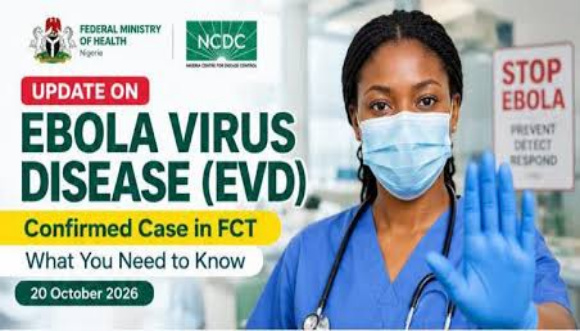
Nigeria’s latest Ebola case has been traced to a 42-year-old Ugandan-born woman married to a Swiss diplomat stationed in Abuja, as health authorities intensify investigations to determine where she contracted the potentially fatal viral disease. The case, confirmed through laboratory testing on October 20, marks Nigeria’s first confirmed Ebola infection in more than a decade.
The identification of the patient has drawn attention to the international dimensions of the outbreak, which has spread across several African countries. The woman, who lives in Nigeria’s capital with her diplomat husband, had recently travelled to Uganda before returning to Abuja in early October. Swiss authorities believe she may have contracted the virus during that trip, although the precise source of infection remains unconfirmed.
According to information released by Nigerian health officials and the Africa Centres for Disease Control and Prevention (Africa CDC), the woman returned to Nigeria on October 3 and began experiencing symptoms a few days later. She initially sought treatment at a private hospital, reportedly believing that she had malaria. When her condition failed to improve, she subsequently visited another private medical facility, where she was admitted on October 11.
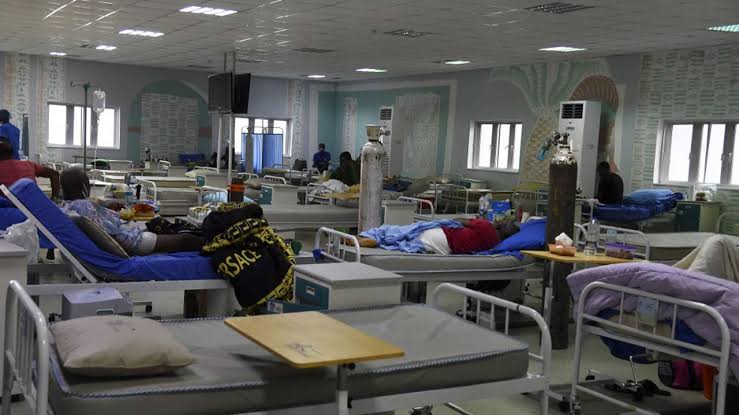
Her illness later triggered further medical investigations, leading to confirmation of Ebola on October 20 following laboratory tests. The delay between the onset of symptoms and confirmation of the infection has prompted concerns about possible exposure among people who may have encountered her before she was isolated. Authorities have therefore prioritised contact tracing and the reconstruction of her movements during the period when transmission might have occurred.
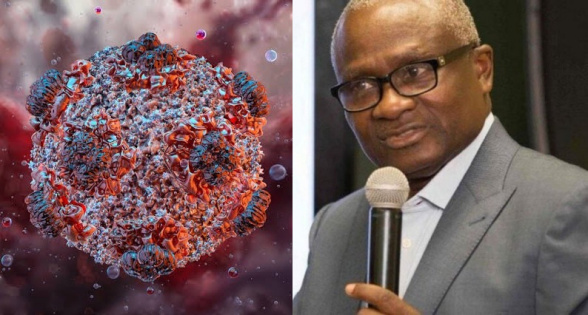
Nigeria’s Coordinating Minister of Health and Social Welfare, Muhammad Ali Pate, has said the patient is stable and showing signs of improvement. Health officials have also reported that the infection remains contained, with no confirmed evidence of wider community transmission. Her husband, who travelled with her, was placed in isolation as a precaution but had not developed symptoms at the time of the reports.
As part of the containment effort, authorities initially identified 44 people who had contact with the patient. Officials have been working to assess their level of exposure, monitor their health and ensure that anyone who develops suspicious symptoms receives prompt medical attention. Health authorities have emphasised that identifying and monitoring contacts is critical to interrupting possible chains of transmission.
However, conflicting accounts of the woman’s travel history have complicated efforts to establish the origin of the infection. Ugandan authorities previously suggested that she had travelled to the eastern Democratic Republic of the Congo (DR Congo) before passing through Uganda. Switzerland has disputed that account, stating that the woman and her husband did not visit DR Congo. The World Health Organization (WHO) and Africa CDC have also indicated that they lack verified information confirming that she travelled to the country.
Investigators are also examining whether the Nigerian patient could have crossed paths with Kenya’s first confirmed Ebola patient at Entebbe International Airport in Uganda on October 3. Africa CDC officials have raised the possibility because both patients reportedly travelled through the airport on the same day. Nevertheless, there is no confirmed evidence that they met or that transmission occurred between them, making the theory one of several possibilities under investigation.
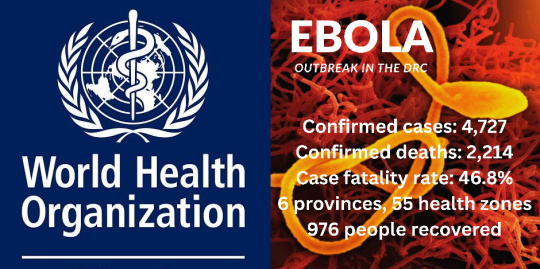
The case has heightened concern because Nigeria is the first country in West Africa to report an infection associated with the latest regional outbreak. The current outbreak involves the Bundibugyo species of the Ebola virus, a relatively uncommon variant for which there is no approved vaccine or specific treatment. Ebola can spread through direct contact with the blood or other bodily fluids of an infected person, or with contaminated materials.
Despite the concerns, Nigeria has previous experience in containing Ebola. In 2014, the country successfully halted an outbreak linked to an infected traveller from Liberia, recording 20 cases, including eight deaths. The experience strengthened the country’s disease surveillance and outbreak-response capabilities, which officials are now relying on as they work with international partners to contain the latest infection.
Public health authorities are urging Nigerians to remain calm while observing appropriate hygiene measures and reporting possible symptoms or exposure to health professionals. The immediate priorities remain identifying the source of the infection, completing contact tracing and preventing further transmission. Until investigations establish where the woman contracted the virus, the circumstances surrounding Nigeria’s latest Ebola case remain unresolved.
- Tottenham Stun Chelsea at Stamford Bridge as Palmer Sees Red and Maddison Suffers Fresh Injury Blow
 Tottenham Hotspur delivered a statement victory over London rivals Chelsea…
- AFCOM-HS: New Military Medical College Listed on JAMB Portal for 2026/2027 Admission
 The Armed Forces College of Medicine and Health Sciences (AFCOM-HS),…
Read More “AFCOM-HS: New Military Medical College Listed on JAMB Portal for 2026/2027 Admission” »