



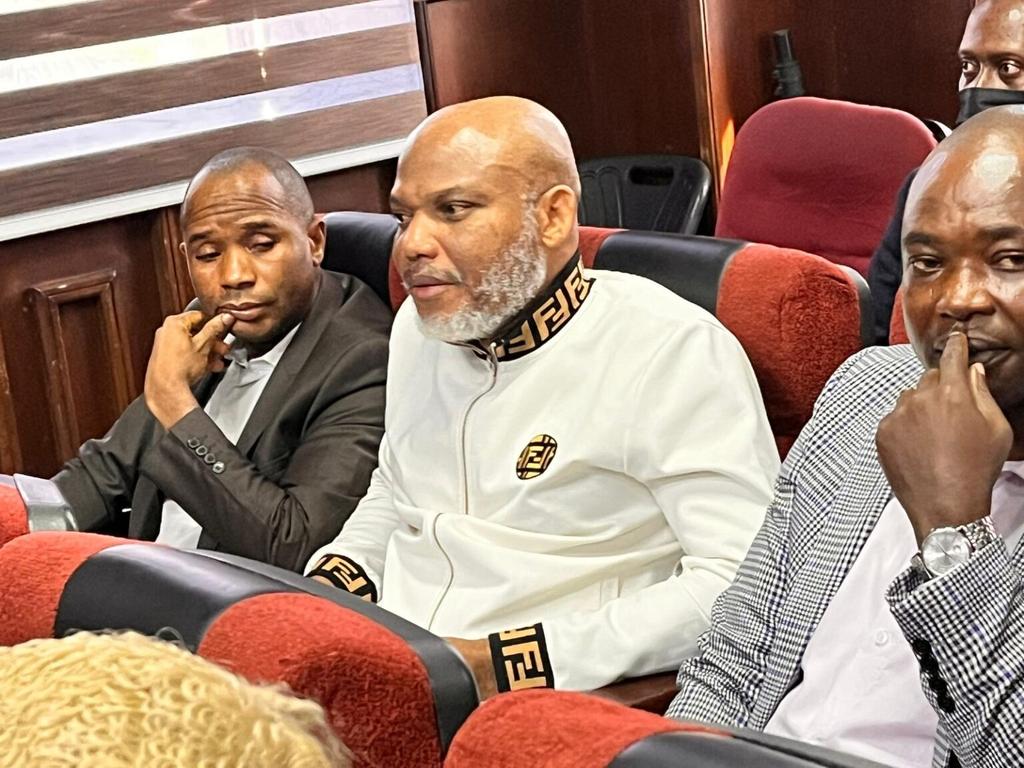
The trial of Nnamdi Kanu, leader of the Indigenous People of Biafra (IPOB), was on Thursday stalled at the Federal High Court in Abuja following a dramatic turn of events that saw him disengage his legal team and seek more time to access his case file before commencing his defence. The court, presided over by Justice James Omotosho, consequently adjourned the case to Monday, October 27, 2025, to allow Kanu to properly prepare for his defence.
During the resumed hearing, the prosecution team led by Adegboyega Awomolo (SAN) had informed the court that the day’s sitting was slated for Kanu to open his defence in line with the court’s earlier schedule. However, the IPOB leader immediately raised objections, explaining that he had been unable to access vital documents and materials necessary to begin his defence. He also announced the disengagement of his legal team headed by Senior Advocate of Nigeria, Kanu Agabi, who subsequently applied to withdraw their representation formally.
Kanu told the court that his case file and related documents were still in the custody of the Department of State Services (DSS), where he is being detained, and that efforts by those delegated to retrieve them had failed. He explained that without those documents, it would be impossible for him to commence defence proceedings effectively. The development, he said, was not a deliberate delay tactic but a matter of fundamental fair hearing.
Justice Omotosho, visibly concerned about the recurring procedural challenges in the high-profile trial, agreed to adjourn the matter but made it clear that the defence must make full use of the short window provided. He reminded Kanu that the court had earlier allocated six days for the defence stage and warned that the schedule would not be extended except under exceptional circumstances.
- Bournemouth Humiliate Manchester United 3-0 at Old Trafford as Carrick Faces Mounting Pressure
 Bournemouth delivered another painful blow to Manchester United on Sunday,…
- Tragedy in Kogi: Police Corporal Allegedly Kills Female Colleague, Takes Own Life After Reported Relationship Crisis
 A tragic shooting incident involving two serving police officers has…
In addition to seeking time to review his case file, Kanu informed the court of his intention to call 23 witnesses to testify in his favour, including individuals from Nigeria, the United Kingdom, the United States, Kenya, and Ethiopia. He therefore sought a court order allowing him extended visitation rights at the DSS facility, particularly on weekends, to enable consultations with his new legal representatives and witnesses.
The court granted Kanu’s request and ordered the DSS to ensure unhindered access to his visitors and legal counsel within the stipulated time. Justice Omotosho further directed that the DSS must facilitate adequate communication between Kanu and his legal team to prevent future complaints of denial of access or delays in the proceedings.
The development adds another chapter to a case that has been closely followed both within Nigeria and internationally. Nnamdi Kanu, a dual citizen of Nigeria and the United Kingdom, faces terrorism-related charges brought by the Federal Government over his role in the activities of the proscribed IPOB group. His prolonged detention and repeated procedural delays have continued to raise questions about due process and human rights compliance in Nigeria’s judicial system.
Observers say the latest adjournment underscores the complexity of the trial, which has moved between multiple judges since it began several years ago. Many human rights groups have argued that the continued detention of the IPOB leader and the repeated postponements of his case cast a shadow on the fairness of Nigeria’s justice system. However, government prosecutors maintain that due process is being followed and that the charges against Kanu are weighty enough to require meticulous handling.
As the next hearing date approaches, all eyes will again turn to the Federal High Court in Abuja to see whether the IPOB leader will finally be able to commence his defence after months of legal wrangling. The court’s decision in the coming days is expected to shape not only the direction of Kanu’s trial but also broader conversations about freedom of expression, secessionist movements, and the limits of state power in Nigeria.
With the adjournment to October 27 now in place, the defence is under pressure to organize its witnesses, retrieve all relevant files, and comply with the court’s timeline. The outcome of the next proceedings will determine whether Kanu’s long-awaited defence phase finally begins—or whether yet another procedural delay will keep one of Nigeria’s most controversial trials hanging in the balance.