







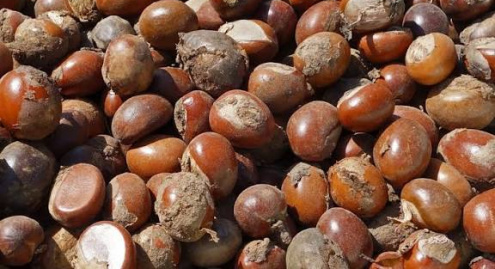
President Bola Ahmed Tinubu has approved a one-year extension of the federal government’s ban on the export of raw shea nuts, reinforcing Nigeria’s push to deepen local processing and expand value-added agricultural exports. The renewed restriction takes effect from February 26, 2026, and will remain in force until February 25, 2027.
The decision, conveyed through an official statement from the presidency, is aimed at strengthening Nigeria’s domestic shea value chain by ensuring that more of the commodity is processed locally rather than exported in its raw form. Shea nuts are a key agricultural resource across Nigeria’s savanna belt and form the base material for shea butter used globally in cosmetics, food, and pharmaceutical industries.
According to the presidency, extending the ban is intended to encourage investment in local processing facilities and reduce the long-standing pattern in which Nigeria exports unprocessed commodities while importing finished products at higher costs. By retaining raw shea nuts within the country, the government expects processors to scale up production and increase export earnings from higher-value shea derivatives.
The ban also aligns with the administration’s broader economic reform agenda focused on industrialisation, job creation, and non-oil export diversification. Officials say the policy is designed to improve incomes for rural communities, particularly women who dominate shea nut harvesting and initial processing activities across many northern and central states.
As part of the renewed directive, all waivers previously granted for the export of unprocessed shea nuts have been withdrawn. The government stressed that enforcement agencies have been instructed to ensure strict compliance at ports and border points to curb illegal exports and informal trade that undermine the policy.
- Tragedy in Kogi: Police Corporal Allegedly Kills Female Colleague, Takes Own Life After Reported Relationship Crisis
 A tragic shooting incident involving two serving police officers has…
- Tottenham Stun Chelsea at Stamford Bridge as Palmer Sees Red and Maddison Suffers Fresh Injury Blow
 Tottenham Hotspur delivered a statement victory over London rivals Chelsea…
To manage excess production, the presidency stated that any surplus raw shea nuts that cannot be absorbed by local processors must be exported only through approved channels, including the Nigerian Commodity Exchange, and in line with regulated guidelines. This, officials say, will provide transparency and prevent market distortions.
The Federal Ministry of Industry, Trade and Investment, working alongside other relevant agencies, has been tasked with coordinating a unified national framework to support the shea value chain. This includes improving access to finance, technology, and markets for processors and cooperatives involved in shea production.
In addition, the Federal Ministry of Finance has been directed to activate a support window under the Nigeria Export Supervision Scheme to pilot a livelihood finance mechanism aimed at boosting production capacity and easing constraints faced by small-scale processors.
Nigeria is among the world’s leading producers of shea nuts, yet it captures only a fraction of the global shea market value due to limited processing capacity. Analysts note that expanding local processing could significantly increase export revenues and reduce reliance on crude oil earnings.
While industry stakeholders have welcomed the extension as a step toward sustainable industrial growth, some farmer groups continue to urge the government to accelerate investments in processing infrastructure to ensure the policy does not disrupt incomes at the grassroots. The presidency, however, maintains that the extended ban is necessary to reposition Nigeria as a competitive exporter of finished agricultural products rather than raw materials.