


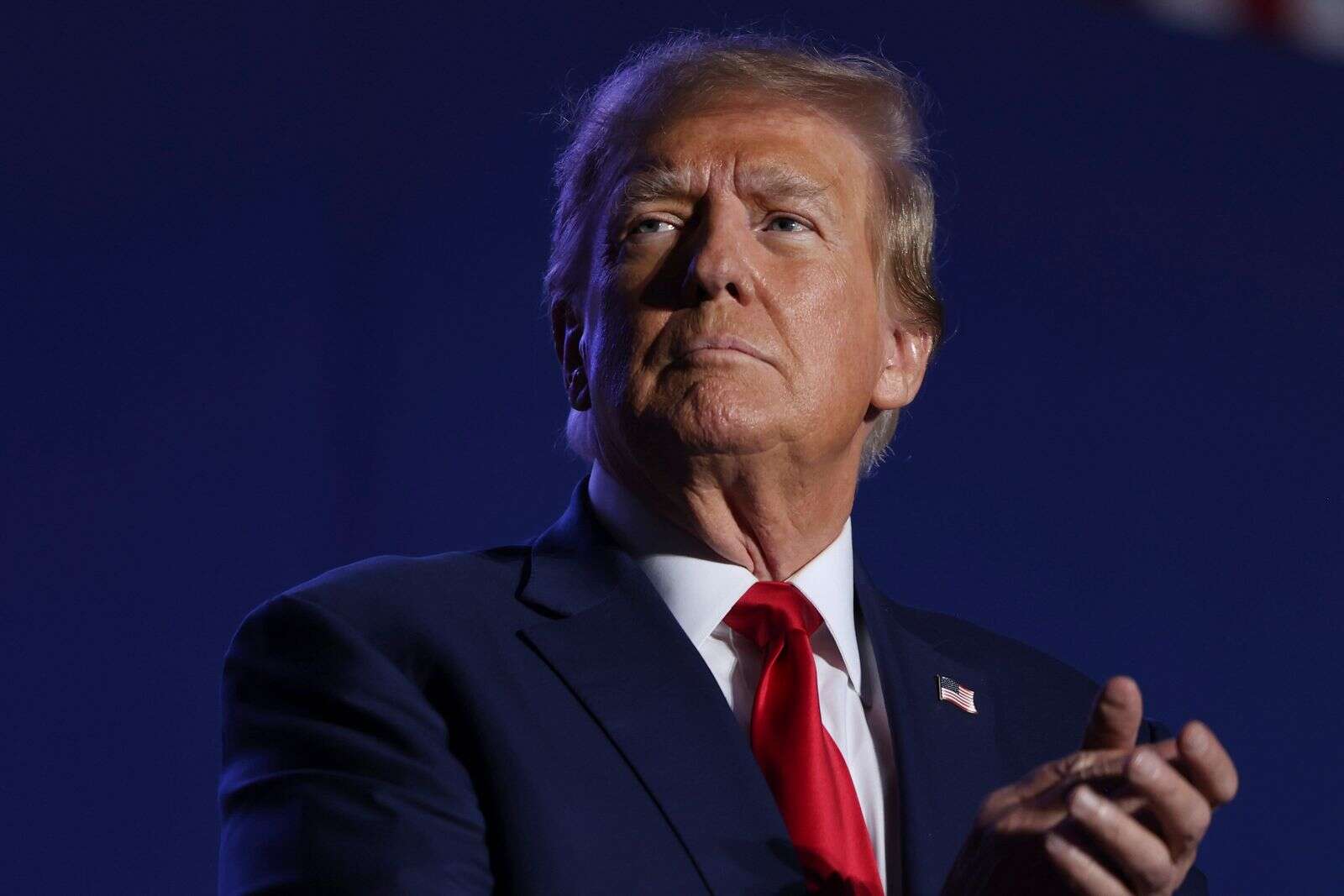
Colorado’s top court ruled on Tuesday that former President Donald J. Trump is disqualified from holding office again because he engaged in insurrection with his actions leading up to the Jan. 6 storming of the Capitol.

This explosive ruling is likely to put the basic contours of the 2024 election in the hands of the U.S. Supreme Court.
The Colorado Supreme Court was the first in the nation to find that Section 3 of the 14th Amendment — which disqualifies people who engage in insurrection against the Constitution after taking an oath to support it — applies to Mr. Trump, an argument that his opponents have been making around the country.
- US Removes 12-Year Security Hurdle on Nigerian Ships, Boosting Maritime Sector
 The United States Coast Guard has lifted a 12-year-old security…
Read More “US Removes 12-Year Security Hurdle on Nigerian Ships, Boosting Maritime Sector” »
- Modi Invites Tinubu to 2026 BRICS Summit in New Delhi as India Deepens Ties with Nigeria
 Indian Prime Minister Narendra Modi has invited President Bola Ahmed…
The ruling directs the Colorado secretary of state to exclude Mr. Trump’s name from the state’s Republican primary ballot.
“We do not reach these conclusions lightly,” a four-justice majority wrote, with three justices dissenting.
“We are mindful of the magnitude and weight of the questions now before us. We are likewise mindful of our solemn duty to apply the law, without fear or favor, and without being swayed by public reaction to the decisions that the law mandates we reach.”

Mr. Trump’s campaign said immediately that it would appeal the decision to the U.S. Supreme Court.
The Colorado justices anticipated that likelihood by putting their ruling on hold at least until Jan. 4; if Mr. Trump appeals before then, the hold will continue until the Supreme Court rules. And while Tuesday’s ruling applies only to one state, it could all but force the nation’s highest court to decide the question for all 50 states.
“It’s hard for me to see how they don’t take this one, because this certainly seems to be one of those questions that requires some national resolution,” said Anthony Michael Kreis, an assistant professor of law at Georgia State University who has closely followed the Colorado case and related lawsuits around the country.
If the justices take up the case, it will join a pile of other Trump-related matters they have agreed or are likely to decide, including whether he is immune from criminal prosecution for actions he took in office and the scope of an obstruction charge that is central to his federal Jan. 6 case.
Former President Donald Trump was charged with four counts in connection with his widespread efforts to overturn the 2020 election. The indictment was filed by the special counsel Jack Smith in Federal District Court in Washington. Here are some key takeaways:
The indictment portrayed an attack on American democracy. Smith framed his case against Trump as one that cuts to a key function of democracy: the peaceful transfer of power.
By underscoring this theme, Smith cast his effort as an effort not just to hold Trump accountable but also to defend the very core of democracy.
Trump was placed at the center of the conspiracy charges. Smith put Trump at the heart of three conspiracies that culminated on Jan. 6, 2021, in an attempt to obstruct Congress’s role in ratifying the Electoral College outcome. The special counsel argued that Trump knew that his claims about a stolen election were false, a point that, if proved, could be important to convincing a jury to convict him.
Trump didn’t do it alone. The indictment lists six co-conspirators without naming or indicting them. Based on the descriptions provided, they match the profiles of Trump lawyers and advisers who were willing to argue increasingly outlandish conspiracy and legal theories to keep him in power. It’s unclear whether these co-conspirators will be indicted.
Trump’s political power remains strong. Trump may be on trial in 2024 in three or four separate criminal cases, but so far the indictments appear not to have affected his standing with Republican voters. By a large margin, he remains his party’s front-runner in the presidential primaries.
The U.S. Supreme Court has a 6-to-3 conservative majority, with three justices appointed by Mr. Trump himself, and it is already under extraordinary political pressure and scrutiny both for its rulings and its justices’ ethics.
[New York Times]