



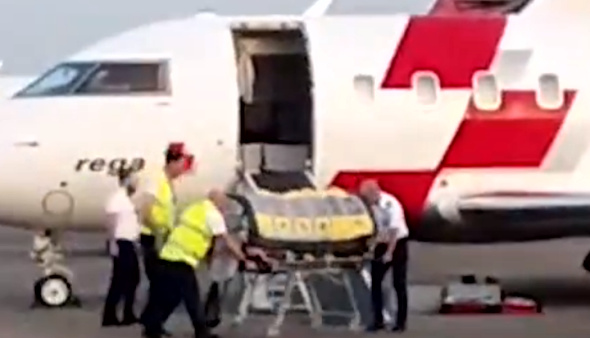
ABUJA, Nigeria — Nigeria’s first confirmed Ebola patient in more than a decade has been evacuated to Switzerland aboard a medical aircraft, following a carefully coordinated operation at the Nnamdi Azikiwe International Airport in Abuja early Monday, October 26, 2026.
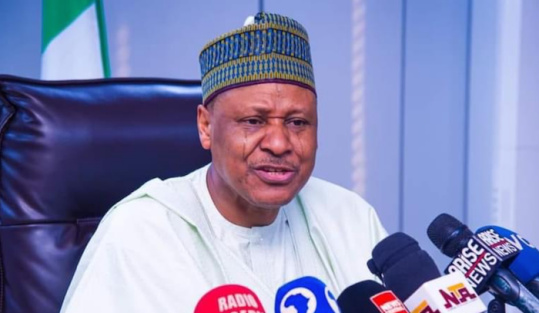
The evacuation was confirmed by the Coordinating Minister of Health and Social Welfare, Professor Muhammad Ali Pate. The patient, a 42-year-old Ugandan-born woman married to a Swiss diplomat based in Nigeria, departed the country for further medical care alongside her husband, who had remained asymptomatic. .
According to sources, preparations for the medical transfer began before dawn, with a medical evacuation aircraft positioned at the airport’s private aviation section. Earlier today, a convoy of ambulances and diplomatic vehicles arriving from Abuja city centre and entering the restricted area of the airport were observed.
The three-vehicle convoy reportedly included an international agency vehicle. Airport officials subsequently restricted access to the private aviation wing as arrangements for the transfer proceeded.
The operation attracted heightened attention because of the infectious nature of the patient’s illness and the need to minimise the risk of transmission during transportation. Although an earlier report indicated that the Federal Government planned to announce the evacuation after the aircraft had left Nigerian airspace, the Health Minister later publicly confirmed the departure and disclosed the patient’s destination.
In his statement, Pate said the patient’s clinical condition had improved considerably before the journey. He described her as stable, conscious and able to communicate, adding that her laboratory results were approaching baseline levels. However, he cautioned that the improvement did not necessarily mean she was no longer infectious.
The minister said the evacuation was carried out under strict public health protocols. He also commended the clinical personnel who had provided care for the patient and the public health teams responsible for coordinating the operation. Further updates were expected as authorities monitored the patient’s progress and the response to the imported infection. .
Nigeria confirmed the Ebola case on October 20, 2026, after laboratory testing identified the Bundibugyo virus in the patient. The infection was linked to international travel, with the woman having travelled to Uganda before returning to Nigeria. The case marked the country’s first confirmed Ebola infection in more than ten years, prompting renewed public health surveillance and containment measures.
As of the Nigeria Centre for Disease Control and Prevention’s October 25 update, health authorities had identified and begun monitoring 53 contacts associated with the case. Those listed included healthcare workers, domestic staff and the patient’s spouse. Contact tracing and infection-prevention measures remained central to efforts to determine whether any secondary transmission had occurred. .
The evacuation does not, by itself, bring Nigeria’s Ebola response to an end. Health authorities must continue monitoring identified contacts, assessing potential exposure and communicating verified information to the public. The World Health Organization has also reported imported Bundibugyo Ebola cases in several countries, underscoring the cross-border nature of the outbreak and the importance of coordinated surveillance, safe patient transfers and prompt reporting. .
With the patient now evacuated to Switzerland, attention is expected to remain on her clinical progress, the outcome of contact tracing in Nigeria and the effectiveness of measures put in place to prevent further transmission. The Federal Government and relevant health agencies face the continuing task of ensuring that the confirmed case remains contained while providing Nigerians with timely, accurate updates on the public health situation.
- Nigeria Evacuates First Ebola Patient to Switzerland as Health Minister Confirms Medical Flight
 ABUJA, Nigeria — Nigeria’s first confirmed Ebola patient in more…
- EFCC Raids Four Illegal Lithium Plants in Ogun, Arrests 14 Chinese Nationals and Nigerian
 The Economic and Financial Crimes Commission (EFCC) has arrested 15…