



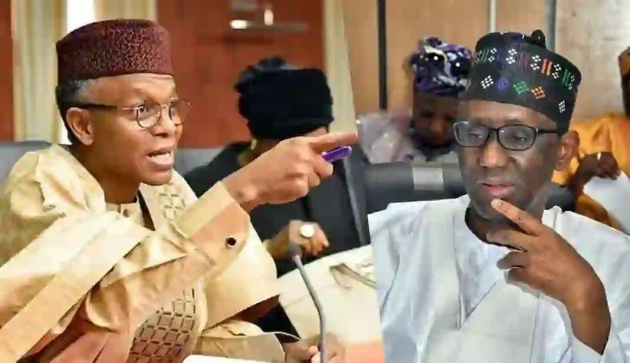
A civil society organisation, Democracy Watch Initiative (DWI), has called on former Kaduna State Governor, Nasir El-Rufai, to face ongoing investigations into his tenure rather than making statements it described as attempts to distract Nigerians from the issues at hand. The group said accountability must remain central in a democratic system governed by the rule of law.
In a statement issued on February 18, 2026, DWI criticised what it termed diversionary tactics allegedly deployed by the former governor amid mounting scrutiny from anti-corruption and security agencies. The group maintained that public commentary should not overshadow or derail lawful investigations.
DWI specifically referenced El-Rufai’s recent remarks concerning alleged breaches involving the Office of the National Security Adviser, noting that such admissions raise serious national security and ethical concerns. According to the organisation, such revelations require proper institutional review rather than public dramatization.
The group stressed that no individual, regardless of political standing or past office held, is above the law. It insisted that Nigeria’s democratic growth depends heavily on the willingness of leaders to submit themselves to lawful scrutiny when required.
El-Rufai, who governed Kaduna State from 2015 to 2023, is reportedly under investigation by the Economic and Financial Crimes Commission (EFCC) over alleged financial and administrative matters linked to his time in office. Authorities have not publicly released full details of the allegations, citing the ongoing nature of the probe.
In addition to the EFCC inquiry, the Department of State Services (DSS) is said to be examining security-related concerns connected to recent public disclosures. While official statements from the agency remain limited, sources indicate that the investigations are part of broader institutional procedures.
- Tottenham Stun Chelsea at Stamford Bridge as Palmer Sees Red and Maddison Suffers Fresh Injury Blow
 Tottenham Hotspur delivered a statement victory over London rivals Chelsea…
- AFCOM-HS: New Military Medical College Listed on JAMB Portal for 2026/2027 Admission
 The Armed Forces College of Medicine and Health Sciences (AFCOM-HS),…
Read More “AFCOM-HS: New Military Medical College Listed on JAMB Portal for 2026/2027 Admission” »
Reports also suggest that the Independent Corrupt Practices and Other Related Offences Commission (ICPC) may be involved in aspects of the review, particularly concerning procurement and governance decisions taken during the previous administration in Kaduna. None of the agencies has announced formal charges at the time of filing this report.
DWI noted that public protests and media debates surrounding the case should not overshadow the fundamental issue of due process. The organisation urged supporters and critics alike to allow investigative bodies to carry out their constitutional mandates without interference or political pressure.
The civil society group further argued that attempts to politicise investigations risk weakening public confidence in anti-corruption institutions. It added that Nigeria’s democratic integrity depends on transparent legal processes rather than media narratives or partisan rhetoric.
As developments continue to unfold, DWI reiterated its position that the former governor should cooperate fully with investigators and allow the legal process to run its course. The organisation concluded that accountability, not distraction, remains the pathway to strengthening Nigeria’s democratic institutions.