






In the fast-moving and competitive political terrain of Lagos State, one principle remains constant: performance endures in public memory, and leaders who deliver are seldom forgotten. This enduring reality is shaping renewed conversations around the possible return of Akinwunmi Ambode to the gubernatorial race—not as an exercise in nostalgia, but as a calculated, people-driven proposition anchored on proven results.
From Ikeja to Ikorodu, Surulere to Badagry, a growing chorus of voices continues to reference Ambode’s tenure as a benchmark for pragmatic governance. His time in office is widely associated with visible infrastructural development, improved urban management, and policies that resonated across social and economic divides. Rather than rhetoric, his legacy is largely framed by outcomes that remain evident across the state.
Characterized by a calm but deliberate leadership style, Ambode governed with a technocratic focus that prioritized efficiency and service delivery. His administration recorded progress in critical sectors, including road expansion, security architecture, environmental sustainability, and urban renewal initiatives. Equally significant was his emphasis on inclusivity—fostering a sense of shared ownership among Lagosians irrespective of background.
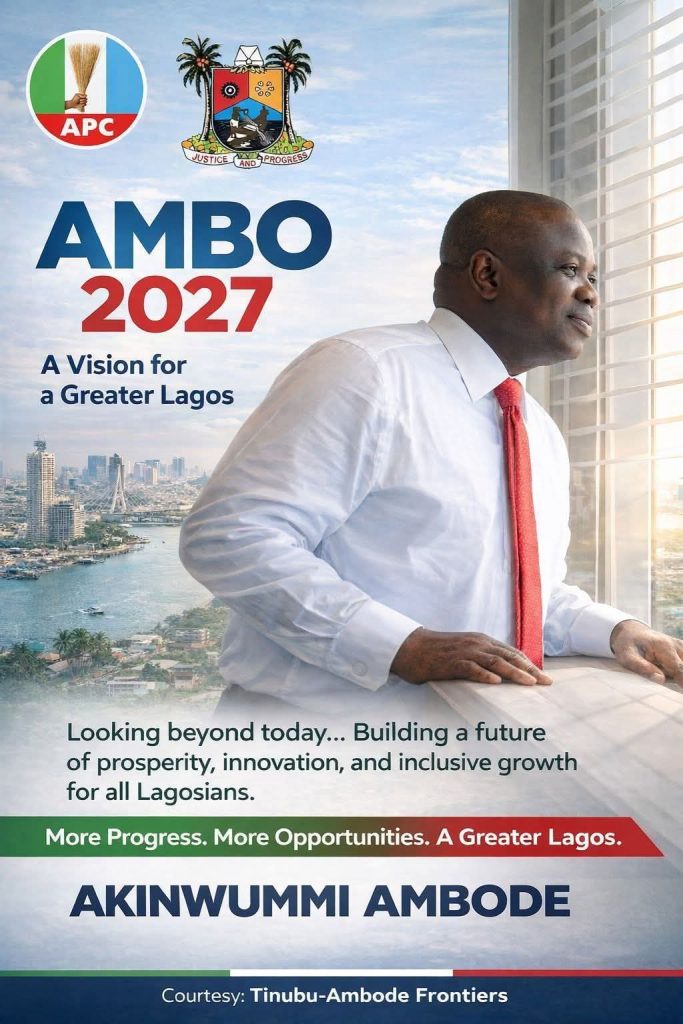
As the build-up to the 2027 governorship election gradually intensifies, his name continues to surface in grassroots conversations. Among traders, artisans, professionals, and young voters, there is a recurring narrative of a leader perceived to have placed public welfare at the forefront of governance. This sentiment, notably, appears organic rather than orchestrated.
For the All Progressives Congress (APC), the strategic implications of such widespread goodwill are difficult to ignore. Presenting a candidate with an established performance record and residual public trust could significantly consolidate electoral advantage. In this context, Ambode’s potential candidacy is framed not just as a political option, but as a reaffirmation of governance standards the party seeks to project.
His re-emergence on the ballot could also recalibrate campaign dynamics. With an existing base of public confidence, the burden of persuasion may shift, as segments of the electorate—motivated by past experience—could naturally assume the role of advocates. This, in effect, positions his candidacy as one capable of bridging internal divides while strengthening external appeal.
- Tottenham Stun Chelsea at Stamford Bridge as Palmer Sees Red and Maddison Suffers Fresh Injury Blow
 Tottenham Hotspur delivered a statement victory over London rivals Chelsea…
- AFCOM-HS: New Military Medical College Listed on JAMB Portal for 2026/2027 Admission
 The Armed Forces College of Medicine and Health Sciences (AFCOM-HS),…
Read More “AFCOM-HS: New Military Medical College Listed on JAMB Portal for 2026/2027 Admission” »
- Arsenal Sink Everton as Aston Villa Shock Man City in Dramatic Premier League Saturday
 Arsenal strengthened their challenge for the English Premier League title…
Read More “Arsenal Sink Everton as Aston Villa Shock Man City in Dramatic Premier League Saturday” »
- Nigeria’s First Ebola Patient Identified as Wife of Swiss Diplomat as Authorities Probe Source of Infection
 Nigeria’s latest Ebola case has been traced to a 42-year-old…
- MURIC Seeks Police Probe into Alleged Killing of Man Inside Oyo Mosque
 The Muslim Rights Concern (MURIC) has petitioned the police over…
Read More “MURIC Seeks Police Probe into Alleged Killing of Man Inside Oyo Mosque” »
Looking ahead to 2027, the decision before the APC carries both strategic weight and symbolic value: whether to field a candidate defined by familiarity and tested capacity, or to chart a different course. In Ambode, supporters see a convergence of administrative experience, public credibility, and a governance philosophy that aligns with continuity and measurable progress.
Ultimately, the evolving discourse reflects a broader democratic impulse—the desire for leadership that is both accountable and effective. If current sentiments are sustained, the argument for Ambode’s return will remain anchored on a simple proposition: that past performance can serve as a credible foundation for future expectations.
— Tinubu Ambode Support Group Media Team