

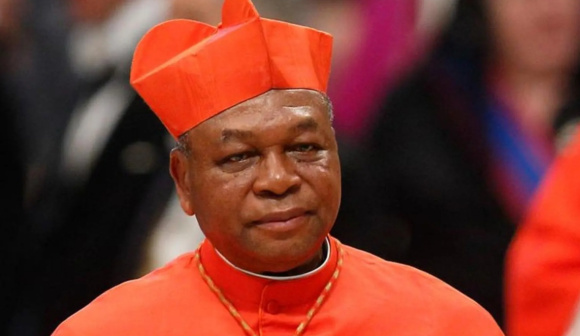
Federal Capital Territory Minister, Nyesom Wike, has taken aim at Catholic Cardinal John Onaiyekan over his recent criticism of President Bola Ahmed Tinubu’s administration, arguing that religious leaders should maintain balance when commenting on government policies and national affairs.
Wike made the remarks on Tuesday, August 4, 2026, during his monthly media parley in Abuja, which was broadcast live on TVC News. He was responding to the controversy generated by comments attributed to Onaiyekan following a recent meeting between President Tinubu and members of the Catholic Bishops’ Conference of Nigeria.
The meeting took place on July 28, after which Onaiyekan, Archbishop Emeritus of the Catholic Archdiocese of Abuja, spoke publicly about issues reportedly raised by the bishops. The cardinal said concerns were expressed over Nigeria’s economic difficulties, insecurity and governance, while also suggesting that some people around the President were giving him an overly positive picture of the country.
Onaiyekan also suggested that President Tinubu appeared concerned about securing victory in the 2027 presidential election. His comments subsequently attracted a response from the Presidency, with presidential aides criticising the manner in which the issues surrounding the closed-door meeting were made public.
Reacting to the controversy, Wike said he was not opposed to religious leaders criticising government. Rather, he argued that such criticism would be more credible if it acknowledged areas where an administration had performed well while also pointing out areas requiring improvement.
According to the former Rivers State governor, persistent criticism without any recognition of government achievements could create the impression that the person making the comments was politically opposed to the administration. He maintained that religious leaders should be able to commend government where appropriate and criticise it where necessary.
Wike specifically questioned Onaiyekan’s political neutrality, alleging that the cardinal had taken sides during the 2023 presidential election. The minister said the political preference of some religious leaders during that election was known publicly and argued that this history should be considered when assessing their subsequent political commentary.
“Don’t tell me they’re not partisan,” Wike said, insisting that religious leaders had openly supported different political interests during the 2023 election. He therefore rejected the suggestion that all religious leaders remained completely detached from partisan politics during the last presidential contest.
The FCT minister nevertheless acknowledged that religious leaders have a legitimate role in holding government accountable. His argument was that such interventions should be constructive and sufficiently balanced to retain public confidence, rather than appearing to consistently portray an administration negatively.
The dispute has added another dimension to the growing political debate ahead of the 2027 general elections, with the Tinubu administration facing criticism from opposition politicians, civil society voices and some religious figures over the state of the economy, security and governance. Wike, however, has continued to publicly defend the administration and its policies.
The latest exchange also highlights the increasingly prominent role of religious and political voices in Nigeria’s pre-2027 political environment. While Onaiyekan’s comments focused on concerns about the country’s direction, Wike’s response centred on the credibility and perceived neutrality of those making such assessments. The disagreement is therefore likely to remain part of the wider national conversation as political activities intensify ahead of the next presidential election.
- Tinubu Flags Off $100m Southeast Gas Pipeline Project to Boost Industrial Growth
 President Bola Tinubu has flagged off a $100 million gas…
Read More “Tinubu Flags Off $100m Southeast Gas Pipeline Project to Boost Industrial Growth” »
- NCC Raises Alarm Over AI-Powered Cyberattacks, Warns of Threats to Telecoms, Banks and National Security
 The Nigerian Communications Commission (NCC) has warned that the growing…