




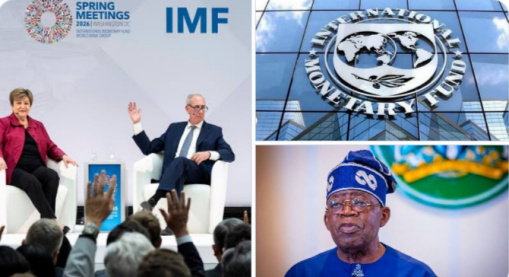
The International Monetary Fund (IMF) has advised the Federal Government of Nigeria to consider introducing new taxes on fuel products and telecommunications services as part of broader efforts to strengthen public revenue and create fiscal space for national development.
The recommendation was contained in the IMF’s latest assessment of Nigeria’s economy, where the Fund emphasized the need for sustained domestic revenue mobilization to support government spending, reduce fiscal pressures, and improve economic resilience. According to the IMF, Nigeria’s revenue-to-GDP ratio remains among the lowest globally, limiting the government’s ability to fund critical infrastructure, social services, and economic reforms.
As part of its proposals, the IMF suggested extending Value Added Tax (VAT) coverage to fuel products, introducing excise duties on telecommunications services, and considering further tax policy measures over the medium term. The Fund argued that these measures could help the government generate additional revenue while reducing dependence on borrowing.
However, the IMF also cautioned that the timing and implementation of any new taxes should take into account prevailing economic realities, particularly rising poverty levels, food insecurity, and the cost-of-living challenges facing many Nigerians. The organization stressed the importance of balancing revenue generation with measures that protect vulnerable households from additional economic hardship.
The recommendation comes at a time when Nigeria is implementing wide-ranging fiscal and tax reforms aimed at broadening the tax base, improving compliance, and enhancing revenue collection efficiency. Recent reforms have included the restructuring of tax administration systems and efforts to modernize revenue collection mechanisms.
The IMF acknowledged the progress made by Nigerian authorities in pursuing economic reforms but maintained that stronger domestic revenue generation remains essential for sustaining macroeconomic stability and funding long-term development priorities. The Fund further noted that savings from subsidy reforms and improved tax administration could complement future tax policy measures in strengthening government finances.
While the IMF’s recommendations are advisory and do not constitute binding policy directives, they are likely to generate debate among stakeholders, particularly given concerns about the potential impact of additional taxes on consumers and businesses already grappling with inflationary pressures and rising operational costs.
Economic analysts say any decision by the Federal Government to introduce new fuel or telecom taxes would require careful consultation with industry stakeholders and consideration of the broader economic implications to avoid worsening the financial burden on citizens.
- Tottenham Stun Chelsea at Stamford Bridge as Palmer Sees Red and Maddison Suffers Fresh Injury Blow
 Tottenham Hotspur delivered a statement victory over London rivals Chelsea…
- AFCOM-HS: New Military Medical College Listed on JAMB Portal for 2026/2027 Admission
 The Armed Forces College of Medicine and Health Sciences (AFCOM-HS),…
Read More “AFCOM-HS: New Military Medical College Listed on JAMB Portal for 2026/2027 Admission” »