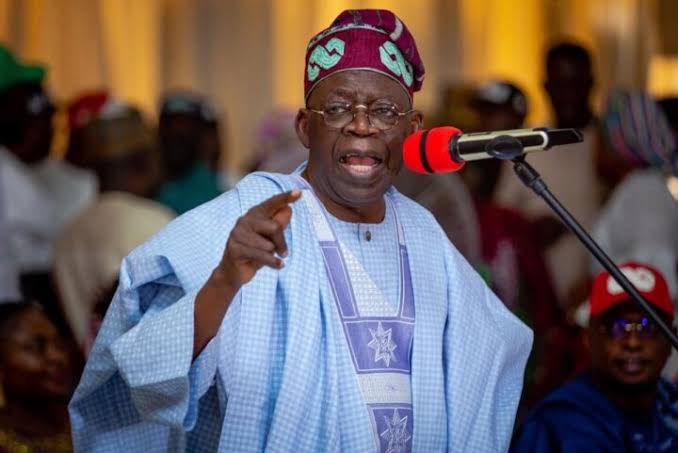






Former Kaduna State Governor, Nasir El-Rufai, has made a dramatic U-turn over his controversial claim that he and other opposition figures listened to telephone conversations of the National Security Adviser (NSA), Nuhu Ribadu, admitting before a Federal High Court in Abuja that his statement was exaggerated political rhetoric intended to make the Federal Government uncomfortable.
El-Rufai made the clarification on Wednesday, November 25, 2026, while testifying in his defence in the ongoing criminal proceedings instituted against him over allegations of unlawful interception of the NSA’s telephone communications.
Appearing as the first defence witness, the former governor told the court that he neither intercepted Ribadu’s telephone conversations nor instructed anybody to carry out such an operation. He also denied possessing the technical equipment or expertise required for telephone surveillance.
Led in evidence by his counsel, Paul Erokoro, a Senior Advocate of Nigeria (SAN), El-Rufai maintained that his February television interview, which triggered the investigation and subsequent prosecution, should not be interpreted as an admission of personal involvement in illegal phone tapping.
Explaining the controversial choice of words, the former governor said his reference to “we” was directed at opposition politicians and not necessarily an indication that he or members of his political circle had intercepted the NSA’s telephone. He described his use of the word “tapped” as an embellishment designed to provoke a reaction from the government.
“I used ‘we’ to refer to opposition politicians. When I said ‘tapped’, it was an embellishment intended to make the government feel the pain we are feeling. It was rhetorical and exaggerated. My objective was to engage in political retort and linguistic flourish,” he told the court.
The controversy originated from an interview El-Rufai granted Arise Television’s Prime Time programme on February 13, 2026, following an unsuccessful attempt by security operatives to arrest him at the Nnamdi Azikiwe International Airport, Abuja, upon his return from Cairo, Egypt. During the interview, he accused Ribadu of ordering his arrest, claiming that he knew about the alleged directive because he and others had listened to a telephone conversation involving the NSA.
In the widely publicised interview, El-Rufai had declared that someone tapped Ribadu’s telephone and subsequently relayed the NSA’s conversation to him. He further suggested that opposition politicians had their own means of accessing information, while alleging that the government routinely monitored the communications of political opponents without obtaining the necessary court authorisation.
The remarks prompted a criminal investigation by the Department of State Services (DSS) and subsequently resulted in charges against the former governor. The prosecution accused him of involvement in unlawful interception of the NSA’s telephone communications, failure to report an alleged accomplice and conduct capable of compromising national security. The charges were brought under relevant provisions of the Cybercrimes (Prohibition, Prevention, etc.) Amendment Act, 2024, and the Nigerian Communications Act, 2003.
During Wednesday’s proceedings, El-Rufai insisted that his controversial statement was intended to draw attention to what he described as alleged government surveillance of opposition figures, rather than confess to any illegal operation. He maintained that his comments were political expressions and not a literal account of an interception operation. He also declined to identify the individual he claimed had provided information about the alleged plan to arrest him, citing the need to protect his source.
The former governor’s latest testimony represents a significant development in a case that has attracted considerable public attention because of its implications for political accountability, national security and the protection of citizens’ private communications. His defence is seeking to establish that the February television interview, which formed a major basis of the prosecution’s allegations, was political rhetoric rather than evidence of an actual phone-tapping operation.
The proceedings are continuing before Justice Joyce Abdulmalik of the Federal High Court, Abuja, with El-Rufai expected to continue presenting his defence. His testimony, however, has introduced a new dimension to the controversy, shifting attention from his original claim of access to the NSA’s telephone conversations to his admission that the assertion was exaggerated for political effect.
- El-Rufai Makes U-Turn in Ribadu Phone-Tapping Saga, Admits Exaggerating Claim to Unsettle Tinubu Government
 Former Kaduna State Governor, Nasir El-Rufai, has made a dramatic…
- 2027 Elections: Media Must Lead Fight Against Electoral Misinformation, INEC Insists
 The Independent National Electoral Commission (INEC) has called on journalists,…
Read More “2027 Elections: Media Must Lead Fight Against Electoral Misinformation, INEC Insists” »