




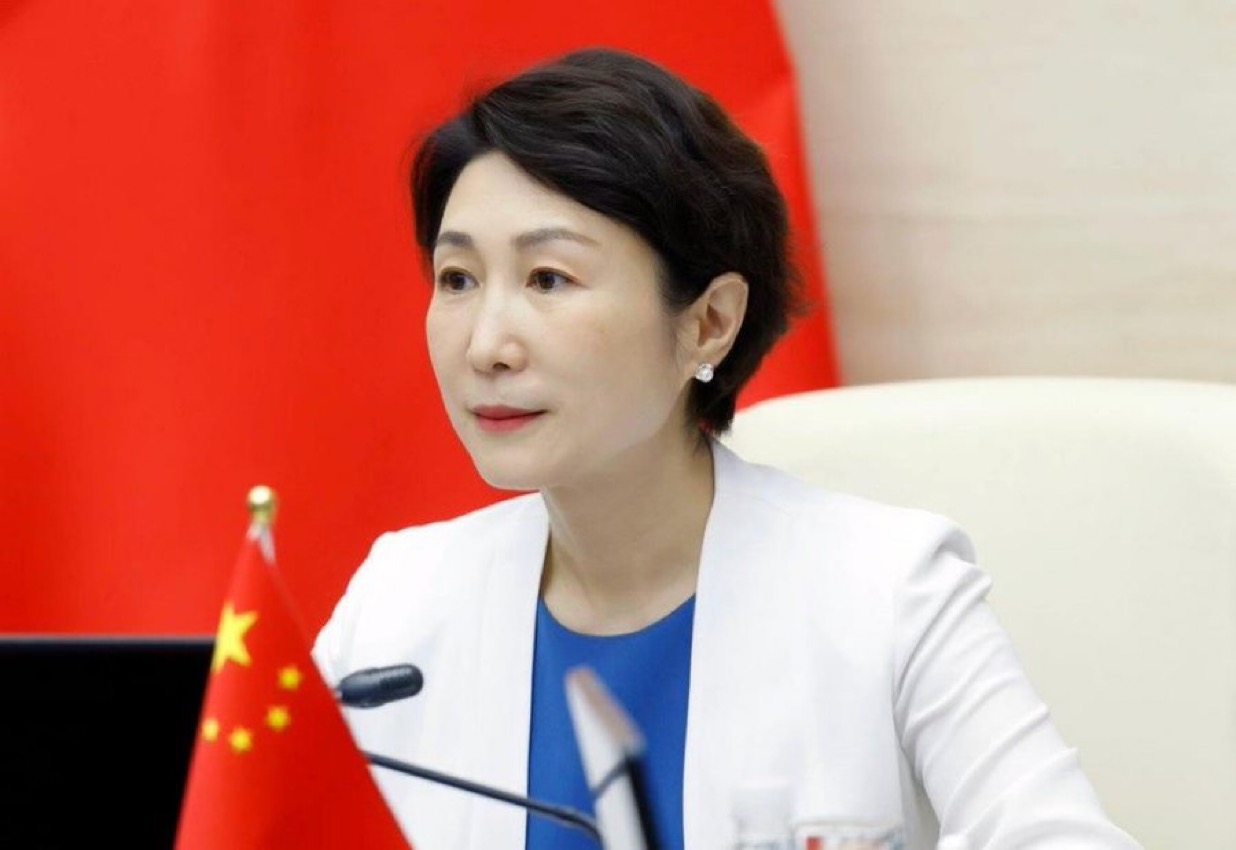
China has openly declared its opposition to foreign interference in Nigeria’s internal affairs, expressing strong support for President Bola Ahmed Tinubu’s administration. The Chinese Foreign Ministry spokesperson, Mao Ning, made this known during a press briefing in Beijing on Tuesday while reacting to threats made by former U.S. President Donald Trump against the Nigerian government. Mao Ning described Nigeria as a “comprehensive strategic partner” of China and emphasized that Beijing firmly stands with the Tinubu administration in charting a development path that aligns with the country’s national realities.
Her remarks came after Trump issued a controversial statement warning of possible military action and a suspension of U.S. aid to Nigeria over alleged killings of Christians. The former U.S. leader accused the Nigerian government of turning a blind eye to attacks on Christians and vowed to take drastic measures if the situation did not improve. His comments drew sharp criticism from global observers, who viewed the remarks as reckless and inflammatory, given Nigeria’s sensitive multi-religious composition and ongoing security challenges.
Responding to Trump’s threat, Mao Ning stressed that China “firmly opposes any country using religion and human rights as excuses to interfere in another nation’s internal affairs.” She cautioned against “the wanton threat of sanctions or the use of force” and reiterated Beijing’s long-standing diplomatic principle of non-interference. According to her, every country has the right to pursue peace and development without undue pressure from external powers, adding that China remains committed to safeguarding the sovereignty of its African partners, including Nigeria.
The Chinese government’s position comes at a time when Nigeria is facing renewed scrutiny from Western nations following the U.S. redesignation of the country as a “Country of Particular Concern” for alleged religious persecution. Nigeria’s Ministry of Foreign Affairs, however, has rejected the label, insisting that the country remains committed to protecting the rights and freedoms of all citizens irrespective of faith. The Nigerian government maintains that acts of violence in the country are largely driven by terrorism, banditry, and economic hardship, not religion.
- Tottenham Stun Chelsea at Stamford Bridge as Palmer Sees Red and Maddison Suffers Fresh Injury Blow
 Tottenham Hotspur delivered a statement victory over London rivals Chelsea…
- AFCOM-HS: New Military Medical College Listed on JAMB Portal for 2026/2027 Admission
 The Armed Forces College of Medicine and Health Sciences (AFCOM-HS),…
Read More “AFCOM-HS: New Military Medical College Listed on JAMB Portal for 2026/2027 Admission” »
Analysts say China’s support highlights its growing influence in Africa and its strategic interest in Nigeria, one of the continent’s largest economies and a key partner in the Belt and Road Initiative. Over the years, China has funded and built several infrastructure projects across Nigeria, including railways, highways, and power plants, positioning itself as a critical development partner. By taking a stand against U.S. threats, Beijing appears to be reinforcing its reputation as a defender of national sovereignty and a counterweight to Western pressure.
For Nigeria, the Chinese backing provides diplomatic relief amid increasing tensions with Washington. The Tinubu administration, which has been navigating complex domestic and foreign policy challenges, can now rely on Beijing’s support as a sign of international legitimacy. Experts believe the development could strengthen bilateral cooperation between Nigeria and China in areas such as trade, security, and technology while sending a message that Nigeria will not be intimidated by external threats.
Meanwhile, Trump’s comments have sparked mixed reactions globally. Supporters argue that the former president is standing up for persecuted Christians, while critics warn that such statements risk destabilizing fragile peace efforts in Africa’s most populous country. The U.S. State Department has yet to formally endorse Trump’s remarks, indicating that his position does not necessarily reflect official U.S. foreign policy. However, the comments have already created diplomatic friction between Washington, Abuja, and Beijing.
Observers also point out that China’s intervention reflects the broader competition between global powers for influence in Africa. As the U.S. continues to frame its engagement around democracy and human rights, China promotes a development-centered partnership model that prioritizes mutual respect and non-interference. This contrast has made Beijing a preferred ally for many African governments seeking alternatives to Western aid conditionalities.
With tensions rising, Nigeria now finds itself at the center of an unfolding diplomatic tug-of-war between the world’s two largest economies. The Tinubu administration has so far maintained a balanced foreign policy approach, strengthening ties with China while keeping dialogue open with the U.S. and other Western partners. Whether this latest episode will tilt Nigeria’s foreign alignment toward Beijing remains to be seen, but one thing is clear: China’s open support has added a new dimension to the geopolitical discourse surrounding Nigeria’s sovereignty.
As global attention turns to Africa’s strategic importance, China’s firm backing of Nigeria serves as a powerful signal that the continent’s nations are no longer passive players in global politics. By standing up against perceived Western interference, Beijing not only protects its economic interests but also reinforces its image as a champion of national sovereignty and equal partnership, a stance that will continue to shape Africa’s diplomatic future in the years ahead.