

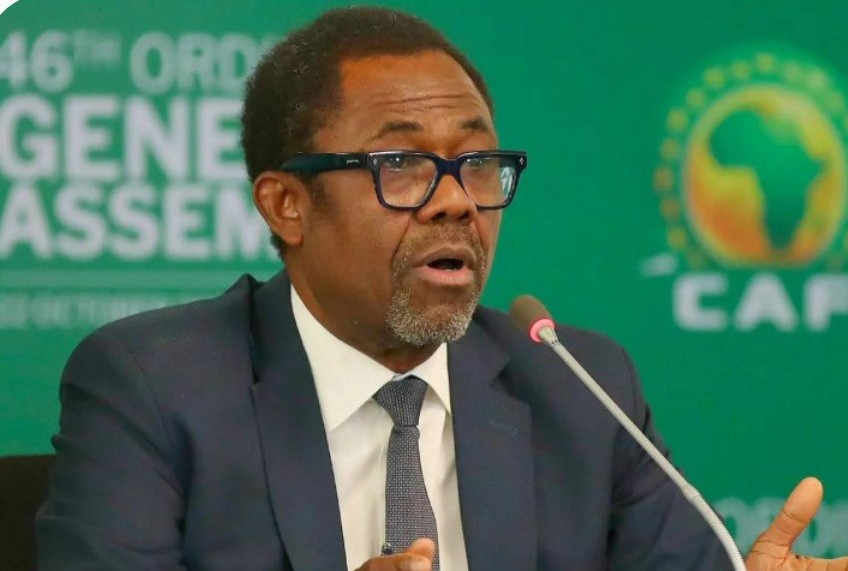
The Confederation of African Football (CAF) has been thrown into renewed institutional uncertainty following the resignation of its Secretary-General, Véron Mosengo-Omba, as controversy surrounding the 2025 Africa Cup of Nations (AFCON) continues to escalate.
Mosengo-Omba, who has served as CAF’s top administrative officer since 2021, stepped down after mounting pressure linked to governance concerns, regulatory breaches, and the fallout from the disputed AFCON 2025 final. His departure comes at a time when the credibility of African football’s governing body is under intense scrutiny.
Mounting Pressure and Governance Questions
At the core of the crisis are long-standing questions about Mosengo-Omba’s continued stay in office beyond CAF’s statutory retirement framework. Under Regulation 130, the retirement age is set at 63, with only a limited extension permissible. Critics argue that his tenure extended beyond this legal threshold, raising concerns about the legitimacy of decisions taken under his leadership.
Calls for his resignation had intensified in recent months, with stakeholders warning that failure to adhere to internal statutes undermines institutional integrity and exposes CAF to legal and reputational risks.
AFCON 2025 Controversy Deepens Crisis
The resignation also coincides with a major controversy stemming from the AFCON 2025 final, which has triggered widespread backlash across the football community.
In a dramatic turn of events, the final match—initially decided on the pitch—became the subject of post-match rulings and legal disputes. CAF’s decision to alter the outcome after the game, citing procedural breaches, sparked outrage among fans, analysts, and football officials, many of whom described the move as damaging to the sport’s credibility.
The fallout has since escalated into a broader governance crisis, with legal challenges and appeals threatening to further erode confidence in CAF’s disciplinary and regulatory systems.
- Nigeria’s First Ebola Patient Identified as Wife of Swiss Diplomat as Authorities Probe Source of Infection
 Nigeria’s latest Ebola case has been traced to a 42-year-old…
- MURIC Seeks Police Probe into Alleged Killing of Man Inside Oyo Mosque
 The Muslim Rights Concern (MURIC) has petitioned the police over…
Read More “MURIC Seeks Police Probe into Alleged Killing of Man Inside Oyo Mosque” »
A Pattern of Controversies
Mosengo-Omba’s tenure has not been without controversy. Prior allegations relating to governance practices, internal decision-making, and administrative conduct had already cast a shadow over his leadership.
Investigations and reports in recent years raised issues ranging from alleged procedural irregularities to concerns about management style and institutional transparency. While some legal probes did not result in prosecution, they contributed to a growing perception of instability within CAF’s leadership structure.
Leadership Vacuum and Reform Pressure
His exit now leaves a leadership vacuum at CAF at a critical moment. With no clear long-term successor immediately in place, the organization faces the dual challenge of restoring administrative stability while addressing the systemic issues exposed by the AFCON controversy.
CAF President Patrice Motsepe has already acknowledged the need for reforms, with the body reportedly reviewing its statutes, refereeing standards, and judicial processes in collaboration with FIFA to rebuild trust and credibility.
A Defining Moment for African Football
Mosengo-Omba’s resignation marks more than just a leadership change—it underscores a defining moment for African football governance.
As CAF grapples with legal disputes, internal dissent, and public criticism, the path forward will likely depend on its ability to enforce its own rules, strengthen transparency, and restore confidence among stakeholders across the continent.
Whether this moment becomes a turning point for reform or deepens existing fractures remains to be seen.