



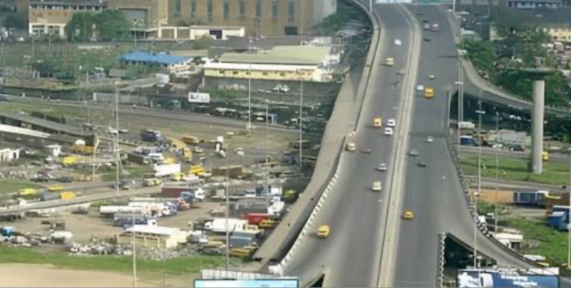
The Federal Government has commenced the process of removing the ageing Carter Bridge in Lagos, paving the way for the construction of a new bridge estimated at ₦548.98 billion. The project is expected to replace the deteriorating structure with a longer and redesigned crossing aimed at improving movement between Lagos Island and the mainland.
The decision follows years of technical assessments which found serious deterioration in critical components of the bridge, particularly the structures located beneath the water. Minister of Works, David Umahi, said investigations conducted in 2013, 2019 and again under the present administration reached the conclusion that the existing bridge could no longer be sustainably rehabilitated.
According to the minister, the underwater piles and pile caps had deteriorated severely, with prolonged exposure to the marine environment contributing to the structural problems. The government subsequently concluded that attempting another major rehabilitation would not provide the long-term safety and reliability required of such an important transport link.
The Federal Executive Council approved the ₦548.98 billion reconstruction contract in April 2026 after the government reviewed the findings from the various technical investigations. The approval marked a major shift from periodic repairs towards complete replacement of the historic bridge.
The replacement will not simply reproduce the existing structure. The planned bridge will measure approximately 1.93 kilometres, compared with the current bridge’s 1.525-kilometre length. The redesign includes a flyover ramp intended to remove a longstanding traffic bottleneck around the corridor.
The new structure is also planned to accommodate two navigational waterways, each measuring 105 metres. The design is therefore intended not only to provide a safer road crossing but also to improve the movement of marine traffic around the Lagos Lagoon.
China Civil Engineering Construction Corporation (CCECC) was awarded the reconstruction contract following a competitive procurement process. Other major construction companies, including Julius Berger, CBC and China Harbour High Tech, were among the firms involved in the bidding process.
The Federal Ministry of Works formally handed over the new Carter Bridge project to CCECC on May 6, 2026. The ministry said the reconstruction was part of the Federal Government’s efforts to protect critical infrastructure and address safety concerns associated with ageing transport assets.
Carter Bridge has long been one of the major transport links connecting Lagos Island with the mainland. Its strategic importance means the demolition and construction activities are expected to create traffic-management challenges for motorists and commuters who depend on the route, making effective alternative-route planning particularly important during the construction period.
The government maintains that replacing the bridge is ultimately necessary because of the extent of deterioration discovered in its submerged components. With demolition now underway and the ₦548.98 billion replacement project moving forward, attention will increasingly shift to construction timelines, traffic management and whether the new bridge can deliver the improved safety, capacity and connectivity promised by the Federal Government.
- Tinubu Flags Off $100m Southeast Gas Pipeline Project to Boost Industrial Growth
 President Bola Tinubu has flagged off a $100 million gas…
Read More “Tinubu Flags Off $100m Southeast Gas Pipeline Project to Boost Industrial Growth” »
- NCC Raises Alarm Over AI-Powered Cyberattacks, Warns of Threats to Telecoms, Banks and National Security
 The Nigerian Communications Commission (NCC) has warned that the growing…