





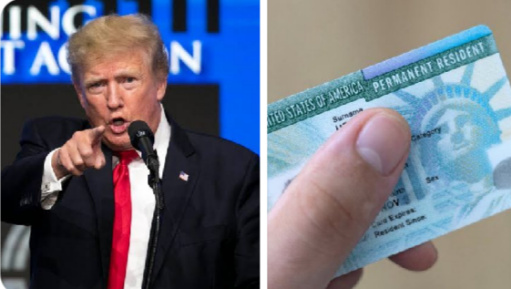
The administration of Donald Trump has announced a sweeping change to America’s immigration process, directing most foreigners seeking permanent residency, commonly known as a Green Card, to leave the United States and complete their applications from their home countries.
The new directive, issued Friday by the U.S. Citizenship and Immigration Services (USCIS) under the supervision of the Department of Homeland Security (DHS), effectively ends a decades-long practice that allowed many immigrants already living legally in the US to adjust their status without leaving the country.
Under the policy, temporary visa holders — including students, tourists, temporary workers and some humanitarian parolees — will generally be required to return to their countries of origin and apply for immigrant visas through US consulates abroad. USCIS said only applicants facing “extraordinary circumstances” may still be allowed to process their Green Cards from inside the United States.
In a statement explaining the decision, USCIS spokesman Zach Kahler said the administration was “returning to the original intent of the law” and argued that temporary visits to the US should not automatically become pathways to permanent residency.
The policy is expected to affect hundreds of thousands of pending applicants and could significantly reshape America’s legal immigration system. Federal data cited in reports show that more than half of the over one million Green Cards issued annually are granted through “adjustment of status” applications filed from within the US.
Immigration lawyers, advocacy organisations and Democratic lawmakers have sharply criticised the move, warning it may separate families, worsen visa backlogs and force skilled workers to abandon jobs and businesses in the US. Aid groups also expressed concerns that vulnerable applicants, including trafficking survivors and abused children, could be compelled to return to unsafe environments while awaiting decisions on their cases.
The Trump administration, however, defended the directive as a necessary measure to close immigration “loopholes,” discourage visa overstays and redirect immigration agency resources toward other priorities such as naturalisation applications and crime-victim visas.
- Troops, DSS Rescue Six Kidnap Victims in Kogi, Including Naval Officer
 Troops of Operation Whirl Stroke (OPWS), working alongside operatives of…
Read More “Troops, DSS Rescue Six Kidnap Victims in Kogi, Including Naval Officer” »
- Dangote Refinery’s N2.15 Trillion IPO Closes Today as Investors Make Final Push
 LAGOS, Nigeria — The highly anticipated initial public offering (IPO)…
Read More “Dangote Refinery’s N2.15 Trillion IPO Closes Today as Investors Make Final Push” »
Reports indicate that certain applicants considered to provide “economic benefit” or serve the “national interest” may still receive exemptions permitting them to remain in the US during processing, although officials have not yet clarified how such determinations will be made.
Legal experts expect the policy to face immediate court challenges, particularly over its potential impact on spouses of US citizens, temporary workers and immigrants already deep into the adjustment-of-status process.
The announcement marks another major escalation in the Trump administration’s hardline immigration agenda, which has already included expanded visa restrictions, tougher vetting measures and broader limitations on legal migration pathways.