




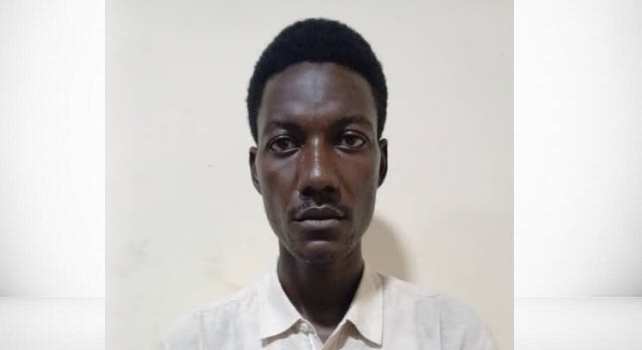
The Department of State Services (DSS) has initiated a three-count criminal case against Mubarak Abdullahi, popularly known as Sardaunan Samari, over the alleged circulation of a fabricated letter purportedly written by President Bola Ahmed Tinubu and addressed to the President of the United States.
The case, which has drawn attention to the potential legal consequences of circulating allegedly false official documents online, centres on accusations of cybercrime and defamation. The charges have been filed at the Federal High Court in Kaduna State, according to reports published on October 26 and 27, 2026.
Abdullahi was reportedly arrested on September 28, 2026, following the circulation of the disputed document on his Facebook page. The post allegedly carried the caption, “ATIKU IS COMING,” a phrase that appeared to connect the controversy to Nigeria’s unfolding political contest ahead of the 2027 general elections.
The document was presented online as correspondence from Tinubu to the American president. However, the DSS alleges that it was not a genuine presidential communication, prompting an investigation into its circulation and the circumstances surrounding its publication.
Reports indicate that Abdullahi was questioned by DSS investigators and admitted sharing the document, reportedly offering an apology during the investigation. The reported admission concerns the sharing of the material; the criminal allegations against him remain subject to determination by the courts.
Before the Federal High Court proceedings, Abdullahi appeared before Chief Magistrate Court No. 10 in Kabala Doki, Kaduna. The magistrate reportedly ordered that he be remanded at the Nigerian Correctional Centre in Kaduna pending further proceedings.
The DSS subsequently filed a three-count charge at the Federal High Court, Kaduna, covering alleged cybercrime and defamation. However, the available reports do not provide the complete charge sheet or establish the precise statutory provisions invoked by the prosecution.
The case also highlights the challenges authorities face in addressing the circulation of potentially fabricated documents on social media. Content presented as official correspondence from a country’s president can attract public attention and influence political debate, particularly when it concerns diplomatic relations or sensitive national issues.
Nevertheless, the distinction between sharing a document and knowingly creating or presenting false information as authentic remains important to the legal process. The prosecution will be required to establish the allegations against Abdullahi in accordance with the applicable law, while the defendant retains the right to challenge the evidence and present his defence.
As of the latest reports reviewed, a date for Abdullahi’s formal arraignment before the Federal High Court had not been confirmed. His reported remand by the magistrate court and the filing of charges at the federal court are separate procedural developments, and the available information does not establish that a trial has commenced or that a conviction has been secured.
The case is expected to draw further attention as proceedings advance, particularly over the evidence supporting the allegation that the document was fabricated and the legal basis for the charges. Until the court reaches a determination, Abdullahi remains presumed innocent under the law.
- Tinubu Flags Off $100m Southeast Gas Pipeline Project to Boost Industrial Growth
 President Bola Tinubu has flagged off a $100 million gas…
Read More “Tinubu Flags Off $100m Southeast Gas Pipeline Project to Boost Industrial Growth” »
- NCC Raises Alarm Over AI-Powered Cyberattacks, Warns of Threats to Telecoms, Banks and National Security
 The Nigerian Communications Commission (NCC) has warned that the growing…