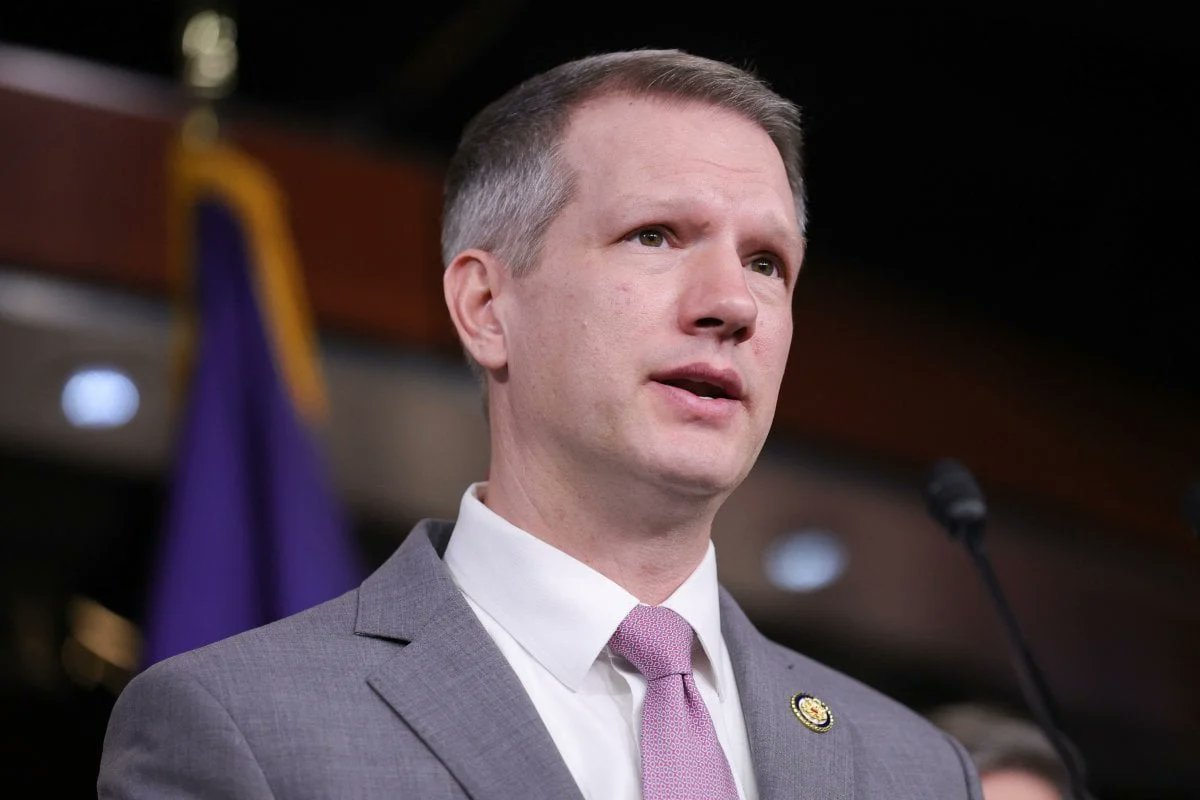
In a bold diplomatic exchange that has stirred global attention, United States Representative Riley Moore has fired back at the Chinese government, declaring that Beijing has no authority to dictate America’s foreign policy. Moore’s statement came in response to China’s criticism of former U.S. President Donald Trump’s recent threat of military action in Nigeria, which Trump said was aimed at “protecting Christians from persecution.”
The controversy began when Mao Ning, spokesperson for China’s Ministry of Foreign Affairs, publicly condemned Trump’s remarks. Speaking at a press conference in Beijing, Mao asserted that as Nigeria’s comprehensive strategic partner, China “firmly opposes any country using religion and human rights as an excuse to interfere in other countries’ internal affairs, and threatening other countries with sanctions and force.” Her statement reflected Beijing’s long-standing position on sovereignty and non-interference, especially in African affairs where China has strong economic and diplomatic ties.è
In response, Representative Moore issued a strongly worded statement on X (formerly Twitter), defending Washington’s right to act in defense of persecuted religious groups. “President Trump is absolutely right to defend our brothers and sisters in Christ who are suffering horrific persecution, and even martyrdom, for their faith in our Lord and Savior Jesus Christ,” Moore wrote. He added pointedly, “China will not dictate our foreign policy to us, and we will not be lectured by a Communist autocracy that imprisons pastors and ethnic minorities.”
Moore’s remarks reignited the debate over global religious freedom and U.S. involvement in Africa. His comments also spotlighted the growing ideological divide between the U.S. and China, as both powers vie for influence across the continent. Washington has long accused Beijing of overlooking human rights abuses in exchange for economic leverage, while China insists its focus is on mutual development and respect for sovereignty.
- Bournemouth Humiliate Manchester United 3-0 at Old Trafford as Carrick Faces Mounting Pressure
 Bournemouth delivered another painful blow to Manchester United on Sunday,…
- Tragedy in Kogi: Police Corporal Allegedly Kills Female Colleague, Takes Own Life After Reported Relationship Crisis
 A tragic shooting incident involving two serving police officers has…
China’s position was further underscored by Mao Ning’s emphasis on Nigeria’s independence and stability. She reiterated that Beijing views Nigeria as an equal strategic ally, not a subject of international interference. “Nigeria has the right to choose its own path of development,” she said, cautioning against what China sees as Western attempts to use religion and human rights as political tools.
Meanwhile, Nigeria’s government has sought to remain neutral amid the escalating rhetoric. Officials in Abuja have repeatedly dismissed allegations of religious persecution, describing them as exaggerated and politically motivated. The Tinubu administration maintains that ongoing security challenges, including attacks by armed groups in northern Nigeria are not faith-based but rooted in terrorism and criminality.
Analysts believe the dispute goes beyond the immediate issue of Nigeria and points to a deeper struggle for global influence. The U.S. is keen to reassert its presence in Africa after years of waning engagement, while China continues to expand its footprint through infrastructure investment and diplomatic partnerships. Nigeria, as Africa’s largest economy, has emerged as a central player in this geopolitical tug-of-war.
Observers warn that the U.S.–China confrontation could place Nigeria in a delicate position, forcing it to balance relations with two superpowers that hold competing visions for global order. A foreign policy analyst in Lagos noted that “while Nigeria values its partnership with China, it cannot afford to alienate the United States, given its historical ties and economic benefits.” The growing friction, he added, underscores Africa’s evolving role as a stage for global rivalries.
Despite the tense rhetoric, there has been no concrete move by Washington toward military intervention in Nigeria. However, Trump’s remarks coupled with Moore’s endorsement have raised concerns about potential diplomatic fallout. Experts caution that any U.S. military action or sanctions could destabilize the region and strain relations with African nations wary of external interference.
As tensions continue to rise, Moore’s defiant message, “China will not dictate our foreign policy” captures the broader sentiment of Washington’s renewed assertiveness on the world stage. For Beijing, it’s a reminder that its growing influence in Africa will continue to face resistance from a United States eager to reassert moral and political leadership. The unfolding saga underscores that Nigeria has become more than just a domestic issue, it’s now a testing ground for the world’s two most powerful nations and their competing global agendas.