



… And Why the Real Battle Starts Now
By Oyez Olatunde Rex
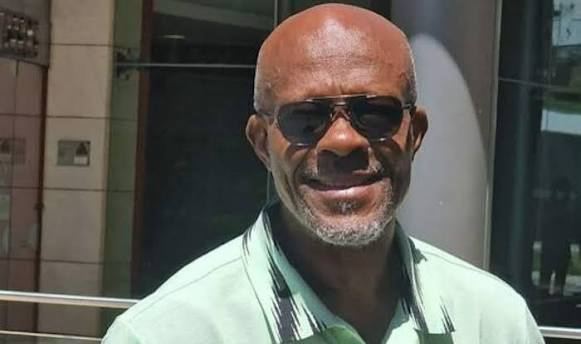
Against the calculations of entrenched political forces, the carefully managed succession script within the Kwara chapter of the ruling All Progressives Congress unraveled dramatically on Friday as Speaker of the Kwara State House of Assembly, Rt. Hon. Saliu Yakubu Danladi, emerged the party’s governorship candidate for the 2027 election.
Danladi’s victory was not merely another primary election triumph. It was the climax of weeks of subterranean negotiations, tactical withdrawals, regional calculations, and last-minute political reversals that exposed deep cracks within the Kwara APC succession architecture.
The APC primary, initially projected as a coronation for Ambassador Abdulfatai Yahaya Seriki, widely perceived as the preferred successor of Governor AbdulRahman AbdulRazaq, eventually transformed into a fierce internal rebellion against imposed consensus politics.
Official results announced by the chairman of the APC Primary Election Committee, Senator Musiliu Obanikoro, showed Danladi polling over 94,000 votes to defeat Yahaya Seriki and other contenders.
But beneath the numbers lies a far more consequential political story.
The Horse Trading That Changed Everything
In the days preceding the primary, multiple aspirants reportedly came under intense pressure to collapse their structures into a consensus arrangement favorable to Yahaya Seriki. Reports indicated that at least eight aspirants publicly pledged support for Seriki after a marathon stakeholders’ meeting. Among those initially listed as backing the consensus move was Danladi himself.
Yet, insiders within the APC disclosed that the so-called consensus arrangement never truly enjoyed universal acceptance across the three senatorial districts.
Several party blocs, particularly from Kwara North and segments of Kwara South, were said to be uncomfortable with what they viewed as an attempt to narrow the contest before delegates could express themselves freely.
The resistance was driven by three major factors:
First was the growing insistence on zoning and equity. Since 1999, power in Kwara has largely oscillated between Kwara Central and Kwara South. Agitations had intensified that Kwara North deserved a realistic opportunity to produce the next governor. Danladi, from Baruten in Kwara North, became the rallying symbol of that sentiment.
Second was concern over grassroots acceptability. While Yahaya Seriki possessed formidable financial and establishment backing, many ward-level operatives reportedly feared that the APC could enter the general election weakened if its candidate emerged through elite imposition rather than competitive legitimacy.
Third was generational recalibration within the APC. At 40, Danladi represents a younger political tendency that many party youths and first-term stakeholders quietly preferred over older establishment actors.
Sources within the party suggested that the final hours before the primary witnessed frantic negotiations between Abuja power centers, Kwara legislators, local government party chairmen, and influential northern APC blocs.
- Tottenham Stun Chelsea at Stamford Bridge as Palmer Sees Red and Maddison Suffers Fresh Injury Blow
 Tottenham Hotspur delivered a statement victory over London rivals Chelsea…
- AFCOM-HS: New Military Medical College Listed on JAMB Portal for 2026/2027 Admission
 The Armed Forces College of Medicine and Health Sciences (AFCOM-HS),…
Read More “AFCOM-HS: New Military Medical College Listed on JAMB Portal for 2026/2027 Admission” »
What eventually broke the consensus project was said to be the realization that forcing a single candidate risked post-primary implosion, defections, and silent sabotage during the governorship election.
By dawn on primary day, the race had effectively reopened.
And Danladi capitalized ruthlessly.
Why Danladi’s Emergence Matters
Danladi’s political rise has been unusually rapid.
Born in Baruten Local Government Area, he emerged Speaker of the Kwara State House of Assembly in 2019 at age 34 and retained the position in 2023, becoming one of the most stable legislative leaders under the AbdulRazaq administration.
Within APC circles, he cultivated an image of calm loyalty while simultaneously building a deep grassroots network across Kwara North and sections of Kwara Central.
His emergence now reshapes the 2027 electoral conversation in at least four ways:
It revives the Kwara North governorship project with unprecedented seriousness.
It weakens the perception that Governor AbdulRazaq retains absolute control over succession politics.
It introduces a generational transition narrative into Kwara politics.
It potentially neutralizes opposition arguments around exclusion and regional imbalance.
Yet victory at the primary may ultimately prove easier than victory at the general election.
Can Danladi Win the General Election?
The answer depends less on his personal popularity and more on whether the APC can quickly heal the fractures exposed during the primary.
Kwara remains one of Nigeria’s most volatile political states. Electoral dominance in the state has historically collapsed whenever ruling coalitions became internally divided.
The APC’s greatest strength entering 2027 remains its statewide structure and incumbency advantage. Governor AbdulRazaq’s administration still controls the critical local government machinery, legislative influence, and substantial political patronage networks.
However, the party also faces several vulnerabilities:
Growing economic dissatisfaction among segments of urban voters.
Lingering grievances among aspirants and supporters who lost out in the primary.
Quiet regional distrust between party blocs.
Fatigue among some voters after eight years of APC rule by 2027.
In all these, which notable electoral assets does Danladi himself possess?
He is relatively young, has legislative experience, enjoys strong grassroots connections in Kwara North, and may benefit from a sympathy-driven equity narrative centered on power rotation.
But he also faces clear challenges.
Unlike some older Kwara political heavyweights, Danladi has not yet been tested in a statewide executive election. His popularity outside core APC structures remains uncertain. In Kwara Central especially, he must still convince influential elite blocs and urban voters that he can independently command the state politically.
What APC Must Do to Avoid Losing Kwara
For the APC to retain Kwara in 2027, political observers believe the party must urgently undertake five strategic steps.
Immediate Reconciliation
The APC cannot afford a prolonged post-primary bitterness.
The party leadership must rapidly reconcile Yahaya Seriki’s camp, Senator Ibrahim Oloriegbe’s supporters, Prof. Wale Sulaiman’s structure, and other disappointed aspirants before grievances harden into covert anti-party activity.
Build a Genuine North-Central-South Coalition
Danladi’s candidacy cannot survive solely on Kwara North sentiment. The APC must construct a balanced ticket and campaign structure capable of reassuring Kwara Central, while also consolidating support in Kwara South.
Sell Competence, Not Just Zoning
Equity may secure emotional support, but governance credibility wins elections.
The APC must present Danladi not merely as “Kwara North’s turn” but as a competent administrator capable of sustaining development, managing security, attracting investment, and stabilizing state finances.
Prevent Internal Sabotage
Historically, many Kwara elections have been lost not in public rallies but inside party structures.
The APC must monitor silent rebellion from disgruntled elites who may outwardly support Danladi while covertly undermining his campaign.
Reconnect With Grassroots Voters
The ruling party’s biggest mistake would be assuming incumbency guarantees victory.
Economic realities, youth unemployment, infrastructure deficits, and local grievances will shape voter behavior more than party slogans.
The Bigger Political Message
Perhaps the most enduring lesson from the APC primary is this: Kwara politics may be entering a post-godfather transition phase.
Danladi’s emergence demonstrated that while political endorsements still matter, they are no longer absolute guarantees of victory inside increasingly fragmented party systems.
The APC has succeeded in producing a candidate, whether it can now produce unity may determine if Danladi eventually becomes governor or merely the latest casualty of Kwara’s famously unpredictable political history.