






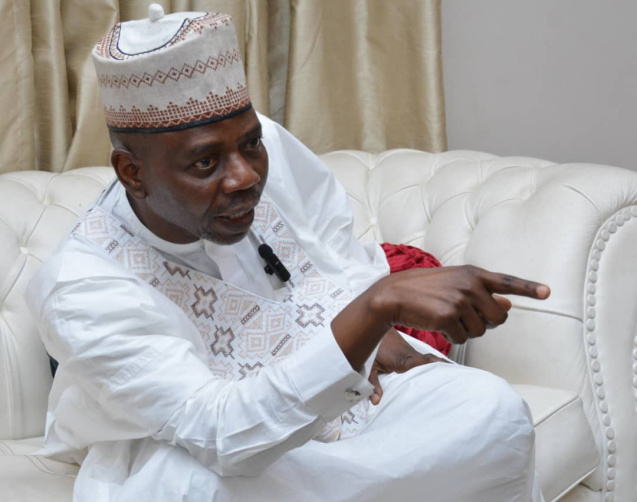
Former Speaker of the Kwara State House of Assembly, Ali Ahmad, has called for urgent federal intervention to address the growing wave of insecurity affecting communities in Kwara State. His appeal follows a deadly attack on Woro community, an incident he described as a troubling sign of escalating violence in the region.
Speaking during a Monthly Interface programme organised by the Guild of Digital Journalists in Ilorin, Ahmad warned that the state is witnessing a dangerous shift in the scale and coordination of criminal attacks. He stressed that what was once considered isolated security breaches is fast evolving into more organised and brazen operations.
According to him, the attackers reportedly overran security formations, including military posts, before unleashing terror on the community. He expressed concern that such incidents reveal vulnerabilities in both surveillance systems and rapid response mechanisms, leaving rural populations exposed for extended periods.
Ahmad argued that Nigeria’s security architecture must urgently transition from conventional methods to intelligence-led, technology-driven operations. He recommended the deployment of advanced surveillance tools, including thermal imaging systems and modern reconnaissance equipment, to improve detection capacity and forestall attacks before they occur.
The former Speaker maintained that without a significant upgrade in intelligence gathering and inter-agency coordination, security forces may continue to struggle against increasingly sophisticated threats. He urged the Federal Government of Nigeria to prioritise strategic investment in digital monitoring systems and real-time intelligence sharing across states.
While acknowledging the intervention of the National Emergency Management Agency in providing relief to affected residents, Ahmad emphasised that post-attack humanitarian assistance cannot substitute for preventive security strategies. He insisted that proactive engagement must become the cornerstone of Nigeria’s security response.
- Nigeria Evacuates First Ebola Patient to Switzerland as Health Minister Confirms Medical Flight
 ABUJA, Nigeria — Nigeria’s first confirmed Ebola patient in more…
- EFCC Raids Four Illegal Lithium Plants in Ogun, Arrests 14 Chinese Nationals and Nigerian
 The Economic and Financial Crimes Commission (EFCC) has arrested 15…
Beyond the immediate security concerns, Ahmad also addressed broader political issues, formally declaring his intention to contest the 2027 governorship election under the platform of the Peoples Democratic Party. He expressed confidence that internal disagreements within the party would be resolved ahead of the electoral cycle.
He criticised the state chapter of the All Progressives Congress, accusing it of failing to demonstrate adequate empathy in the face of recurring security challenges. Ahmad further advocated legal reforms that would require elected officials who defect from their political parties to relinquish their seats and seek fresh mandates.
In a gesture aimed at promoting unity, he announced plans to distribute food items to vulnerable residents during both Ramadan and Lent, calling on citizens of all faiths to remain prayerful and supportive of peace-building efforts. He underscored the importance of communal solidarity during periods of uncertainty.
Concluding his remarks, Ahmad reiterated that security must remain a shared responsibility between federal and state authorities, supported by modern technology and strengthened intelligence systems. He warned that without decisive intervention and innovation, rural communities may continue to bear the brunt of evolving security threats.