

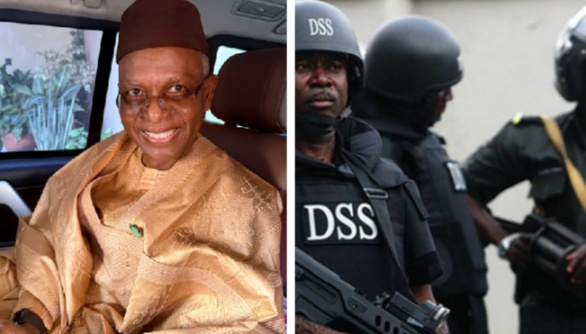
Former Kaduna State Governor Nasir El-Rufai was rearrested on Wednesday night by security operatives shortly after being granted bail by the Economic and Financial Crimes Commission (EFCC), in a development that has deepened national attention on multiple high-profile investigations involving the ex-governor.
El-Rufai had spent two nights in the custody of the EFCC, which detained him on Monday after he voluntarily honoured an invitation in connection with an ongoing probe into alleged corruption and financial misconduct during his eight-year tenure as governor of Kaduna State.
On Wednesday evening, the anti-graft agency granted him administrative bail at around 8 p.m., allowing what initially appeared to be his release from detention. However, security operatives were reportedly waiting outside the EFCC headquarters in Abuja and took him into custody immediately as he exited the premises.
Eyewitness accounts and multiple media reports indicate that the operatives involved in the rearrest were from the Department of State Services (DSS), also known as the State Security Service (SSS), though some outlets suggested the Independent Corrupt Practices and Other Related Offences Commission (ICPC) may have been involved as part of separate inquiries.
The DSS has filed a three-count charge against El-Rufai at the Federal High Court in Abuja over allegations that he unlawfully intercepted the phone communications of the National Security Adviser (NSA), Nuhu Ribadu, in what prosecutors say violated provisions of the Cybercrimes (Prohibition, Prevention, etc.) (Amendment) Act, 2024 and the Nigerian Communications Act, 2003.
These cybercrime charges stem from comments El-Rufai made during a televised interview on Arise Television’s Prime Time programme, in which he claimed he heard the NSA directing security operatives to detain him, a statement that triggered strong reactions from authorities and led to the fresh legal action.
- Bournemouth Humiliate Manchester United 3-0 at Old Trafford as Carrick Faces Mounting Pressure
 Bournemouth delivered another painful blow to Manchester United on Sunday,…
- Tragedy in Kogi: Police Corporal Allegedly Kills Female Colleague, Takes Own Life After Reported Relationship Crisis
 A tragic shooting incident involving two serving police officers has…
Earlier last week, security agents attempted to arrest El-Rufai at Nnamdi Azikiwe International Airport in Abuja when he returned to the country from Cairo, Egypt, an encounter that escalated into a brief confrontation and saw his international passport temporarily seized before he continued his travel.
In addition to the DSS cybercrime case, El-Rufai is facing scrutiny from anti-corruption agencies over alleged financial improprieties during his time in office, including claims that more than ₦423 billion was misappropriated, issues that have prompted investigations by both the EFCC and the Independent Corrupt Practices and Other Related Offences Commission (ICPC).
At the time of his rearrest, neither the DSS nor the EFCC had issued detailed official statements on the circumstances of his fresh detention, and as of the latest reports there is no publicly announced court date for his arraignment on the cybercrime charges.
The unfolding situation has sparked reactions across political and legal circles in Nigeria, intensifying debate about due process, accountability, and the roles of enforcement agencies in high-profile cases involving former public office holders.