



Nigeria is moving towards a major transformation of its domestic gas market, with the Nigerian Midstream and Downstream Petroleum Regulatory Authority (NMDPRA) setting September 24, 2028 as the target date for the transition to a fully established willing-buyer, willing-seller framework.
The NMDPRA Chief Executive, Rabiu Umar, announced the target on Thursday at a Gas Market Maturity Workshop held in Abuja under the Federal Government’s Decade of Gas initiative. The workshop focused on identifying the conditions and measurable indicators required to move the domestic gas industry towards a more commercially driven market.
Under the proposed framework, gas prices and transactions would increasingly be determined through commercial negotiations between buyers and sellers rather than through direct regulatory price coordination. Umar said the transition is expected to take about 24 months, subject to the market achieving the necessary conditions for effective competition.
The plan is linked to provisions of the Petroleum Industry Act (PIA), which envisages the gradual development of Nigeria’s domestic gas market towards stronger commercial contracting and competition. Section 167 of the Act provides for movement away from a predominantly regulated pricing structure as the market becomes sufficiently mature.
Umar stressed that the proposed deadline would not automatically mean that regulation disappears regardless of market conditions. According to him, the transition must be guided by measurable benchmarks, thresholds and safeguards capable of demonstrating that the different segments of the gas market are ready for greater liberalisation.
Among the factors identified by the NMDPRA are the availability and diversity of gas supplies, the number and quality of buyers and sellers, access to transportation infrastructure, the strength of commercial contracts, payment reliability, delivery obligations, availability of market information and the emergence of credible price signals.
Despite Nigeria’s substantial gas reserves, Umar acknowledged that domestic gas supply remains tight. He said the country must therefore ensure that new infrastructure is supported by sufficient gas volumes, particularly if major investments are to operate commercially. The Ajaokuta-Kaduna-Kano (AKK) pipeline was specifically cited as infrastructure that will require adequate gas supply to achieve its intended economic purpose.
The regulator is also preparing for a changing role as the market develops. Rather than focusing primarily on price coordination, the NMDPRA expects to place greater emphasis on establishing market rules, ensuring fair access to infrastructure, protecting competition and monitoring market conduct. The authority has also commenced consultations on proposed regulations addressing anti-competitive practices.
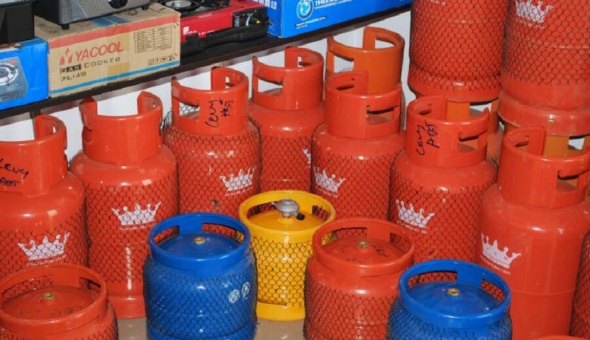
Another component of the transition is the expansion of gas distribution infrastructure. Umar said the NMDPRA was nearing completion of its gas distribution licensing process, with licences for qualified companies expected to be issued in the fourth quarter of 2026. The authority is also working to increase domestic utilisation of LPG and LNG while supporting wider adoption of CNG.
The broader Decade of Gas programme has identified increased production and consumption as important milestones. Ed Ubong, Coordinating Director of the Decade of Gas Secretariat, said the programme is targeting gas supply of 12.6 billion cubic feet per day by 2030, alongside infrastructure and demand-side projects designed to expand the country’s gas economy.
The proposed September 2028 transition therefore represents a roadmap rather than simply an announcement of immediate price deregulation. Industry stakeholders, including the Nigerian Gas Association, have called for clearly defined milestones and proper sequencing to ensure that the market is sufficiently prepared. The objective is to develop a commercially viable gas sector capable of attracting long-term investment while maintaining reliable supply for industries, power generation and consumers.
- Dangote Refinery’s N2.15 Trillion IPO Closes Today as Investors Make Final Push
 LAGOS, Nigeria — The highly anticipated initial public offering (IPO)…
Read More “Dangote Refinery’s N2.15 Trillion IPO Closes Today as Investors Make Final Push” »
- NCAA to Probe Airline After Passenger Reportedly Bleeds Amid Extreme Heat on Abuja–Calabar Flight
 The Nigeria Civil Aviation Authority (NCAA) is set to investigate…
