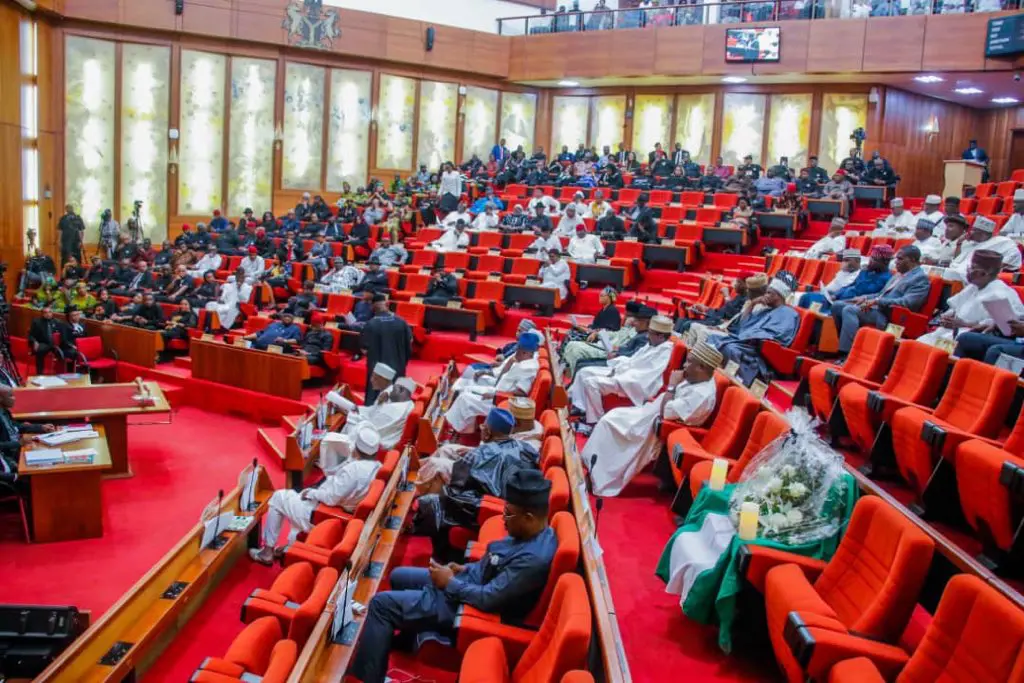








Nigeria moved a step closer to adopting a decentralized policing system on Thursday after the House of Representatives approved the constitutional amendment bill seeking the establishment of state police across the federation. The development is being regarded as one of the most significant security reforms in the country’s democratic history.
The bill, which received overwhelming support from lawmakers during plenary, seeks to amend the 1999 Constitution to allow each of Nigeria’s 36 states to establish and operate its own police force alongside the existing federal Nigeria Police Force. According to reports from the National Assembly, 289 lawmakers voted in favour of the proposal, while only four members opposed it.
The push for state police has gained momentum amid growing concerns over insecurity across the country, including terrorism, banditry, kidnapping, communal violence, separatist attacks, and other criminal activities that have stretched the capacity of the centrally controlled police system. Supporters of the reform argue that state-controlled police forces will improve intelligence gathering, enhance rapid response to security threats, and enable law enforcement personnel to better understand local communities and their unique security challenges.
Before the vote, Deputy Speaker Benjamin Kalu, who also chairs the House Committee on Constitution Review, had described the proposal as a critical legislative response to Nigeria’s worsening security situation. He noted that extensive consultations had been held with key stakeholders, including state governors, security agencies, and representatives of the executive arm of government.
President Bola Ahmed Tinubu is among prominent supporters of the initiative. Advocates believe that granting states greater control over policing will strengthen local security management and complement federal efforts to combat crime nationwide.
However, the proposal has also attracted criticism from some stakeholders who fear that state governments could misuse police formations for political purposes. Concerns have also been raised about funding, operational standards, training, and coordination between state and federal security agencies, particularly in less economically viable states.
Despite these concerns, the passage of the bill by the House represents a major legislative milestone. For the constitutional amendment to take effect, it must still secure approval from at least two-thirds of Nigeria’s state Houses of Assembly before being transmitted to the President for assent. The Senate was also expected to consider the measure as part of the broader constitutional amendment process.
If eventually enacted, the reform would fundamentally alter Nigeria’s policing structure, ending decades of exclusive federal control and ushering in a new era of shared responsibility for internal security across the country.
- Tottenham Stun Chelsea at Stamford Bridge as Palmer Sees Red and Maddison Suffers Fresh Injury Blow
 Tottenham Hotspur delivered a statement victory over London rivals Chelsea…
- AFCOM-HS: New Military Medical College Listed on JAMB Portal for 2026/2027 Admission
 The Armed Forces College of Medicine and Health Sciences (AFCOM-HS),…
Read More “AFCOM-HS: New Military Medical College Listed on JAMB Portal for 2026/2027 Admission” »