



Kwara’s next Governor must be an Institutional Thinker.
By Oyez Olatunde Rex
Kwara’s politics has reached a curious moment, one where the old arguments still speak loudly, but cannot fully explain the tension in the polity. Across the state, people are talking past one another with familiar words, rotation, fairness, entitlement, continuity, yet what many are feeling is something harder to name: a quiet exhaustion with formulas that manage power but fail to transform governance.
The anxiety is not about who gets a turn next; it is about whether the next turn will finally change the texture of everyday life.
Different zones in the state feel this moment differently, but they are perhaps, unknowingly circling about the same concerns, and desiring the same conclusion.
Kwara Central: Stability Is an Asset, But It Must Now Deliver the Next Leap
Kwara Central has enjoyed political centrality and administrative continuity more than any other zone under the current ruling party. This has brought stability, visibility, and infrastructure concentration, particularly in Ilorin.
But stability is only valuable if it evolves.
Ilorin today sits at a crossroads. It is no longer just an administrative capital; it is quietly becoming a knowledge and service city, with universities, two teaching hospitals, private health facilities, professionals, and a growing middle class. Yet much of this potential remains fragmented.
The challenge for Kwara Central is not leadership access, it is leadership imagination.
The next leap for Ilorin and its environs will not come from more roads alone, but from:
Turning educational density into economic engines
Converting healthcare presence into medical tourism value
Reforming public service to support complex institutions
Attracting partnerships that trust governance systems.
These are not grassroots politics. They are institutional governance tasks.
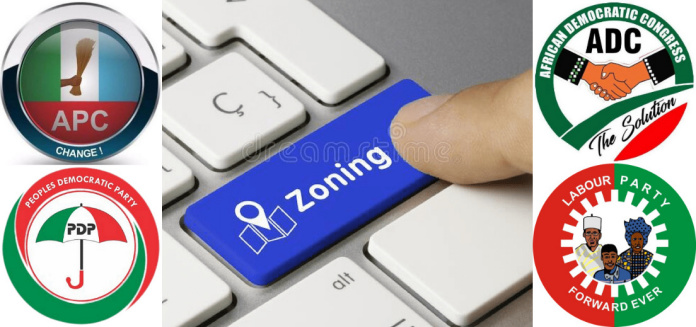
This is why voices in Kwara Central should increasingly seek beyond zoning and ask a harder question: who can protect what we have built and scale it sustainably?
The question here is not access to power, but how power can be used to convert existing assets into enduring institutions.
The appeal of a systems-oriented leader lies precisely here, not in replacing stability, but deepening it and Kwara Central should be seriously looking towards an Institutional Thinker as the next Governor of the state, to preserve the legacies.
Kwara North: Beyond Moral Claims, Why Inclusion Must Translate Into Capacity
No honest discussion of Kwara politics can ignore Kwara North’s long-standing sense of exclusion from the governorship.
The argument is emotionally powerful, morally resonant, and politically potent, especially within parties where historical rotation has not favored the zone.
But for inclusion to be meaningful, it must be matched with capacity for the moment.
Kwara North’s most pressing challenges are: education gaps, healthcare access, youth migration, and public service underrepresentation and these cannot be solved simply by symbolic rotation of governance.
They require institutional repairs and expansion.
What Kwara North needs most is not a governor from the zone at all costs, but a governor who:
Understands how to build institutions in underserved regions
Can deploy systems that outlive political tenures
Sees equity as policy, not rhetoric
Has the credibility to attract resources and partnerships to the zone
If this is found in the region, Good.
This reframes the conversation. The question becomes: who is most likely to design institutions that deliberately lift Kwara North, and not just rhetorically include it?
Kwara North must be careful what they ask for.
A symbolic inclusion as governance symbol without structural change may simply recycle their many years of disappointment.
Rather, a systems-driven leadership approach, focused on institutional care, youth capacity, public service reform, and knowledge-based economic diversification, offers Kwara North something rotation alone cannot, which is durable inclusion.
Kwara South: From Sentiment to Strategy, Why This Moment Requires More Than Turn-Taking
In Kwara South, political conversations often begin with a sense of unfinished business. There is a lingering belief that the zone has contributed significantly to the state’s progress, yet remains underrepresented in the highest office. This sentiment is understandable, but sentiment alone has never built enduring prosperity.
The deeper question is not whether Kwara South “deserves” leadership, but whether it can offer a model of leadership suited to Kwara’s next phase.
Kwara South has always been a zone of institutions, learning, and professional migration. From Offa to Omu-Aran, its most valuable exports have not been raw materials, but people: teachers, professionals, academics, and skilled workers who excel elsewhere. The tragedy is that much of this excellence never cycles back home institutionally.
What Kwara South represents today is not entitlement, but readiness.
The readiness in terms of wider Educational gap and Institutional thinking advancement.
The positions of the three zones may appear divergent. In truth, they are converging.
What unites these zones is an unspoken realisation: the next phase of Kwara’s development cannot be managed by sentiment alone.
For Kwara South, this represents the chance to move from exporting excellence to hosting institutions.
For Kwara Central, it offers a pathway to protect stability while scaling it into global relevance.
And for Kwara North, it promises something rotation alone cannot guarantee: durable inclusion through deliberate institutional investment.
This is where the conversation around Prof. Wale Sulaiman has gradually shifted from personality to paradigm.
The Quiet Appeal of Institutional Thinking
Much has already been said about Prof. Sulaiman’s professional accomplishments. Repeating them adds little value. What matters more is what those experiences produce: a way of thinking shaped by environments where institutions, not individuals, carry societies forward.
Across academic governance, medical education, and complex professional systems, he has operated in spaces where continuity matters, standards are non-negotiable, and leadership is judged by what endures after one exits.
This exposure cultivates a mindset that sees governance as architecture, not theatre.
Why This Moment Is Different
Kwara is no longer competing with neighbouring states. It is competing for relevance in a Nigeria where subnational governments must increasingly:
Attract partnerships
Retain talent and Monetise knowledge
Build social systems that reduce vulnerability
This is not the traditional, ageing, and archaic grassroots politics in the traditional sense. It is governance for a more complex era.
The kind of leader required now is one who understands how hospitals become health economies, how universities anchor industries, how public services gain credibility, and how care for the vulnerable is institutionalised, not politicised.
These are not ideas rooted in any single zone. They are state-wide necessities.
- Tinubu Flags Off $100m Southeast Gas Pipeline Project to Boost Industrial Growth
 President Bola Tinubu has flagged off a $100 million gas…
Read More “Tinubu Flags Off $100m Southeast Gas Pipeline Project to Boost Industrial Growth” »
- NCC Raises Alarm Over AI-Powered Cyberattacks, Warns of Threats to Telecoms, Banks and National Security
 The Nigerian Communications Commission (NCC) has warned that the growing…