


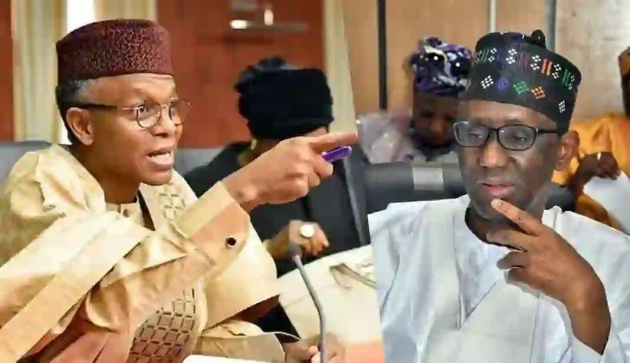
The Federal Government has directed that a comprehensive investigation be carried out into claims made by former Kaduna State Governor Nasir El-Rufai that he had access to intercepted communications of the National Security Adviser (NSA), Nuhu Ribadu.
The call for a probe came after Mr. El-Rufai’s appearance on Arise Television’s Prime Time programme, where he alleged that “someone tapped” the NSA’s phone, allowing him and his associates to listen to conversations involving Mr. Ribadu. In that interview, the former governor said the intercepted call included what he described as a directive from the NSA to security operatives to detain him at an Abuja airport. El-Rufai acknowledged that intercepting communications is illegal but argued that the government itself frequently engages in such practices without court orders.
Reacting to the television remarks, Bayo Onanuga, Special Adviser to President Bola Tinubu on Information and Strategy, said the matter raises serious concerns and must be thoroughly examined by appropriate authorities. In a post on his official X account, Onanuga asked whether El-Rufai and his collaborators possess wiretapping capabilities and stressed that “this should be thoroughly investigated and punishment meted out”. He added that no one — regardless of status — is above the law.
The presidency’s response underscores the sensitivity of issues involving surveillance and national security. Security experts and legal analysts note that unauthorised interception of communications is subject to criminal sanctions under Nigerian law, and any credible claim of such actions could have far-reaching legal consequences.
Meanwhile, members of El-Rufai’s family have weighed in. His son Bashir El-Rufai stated on social media that his father did not say he personally tapped any phone, but rather that someone else shared the intercepted information with him. This clarification seeks to distance El-Rufai from direct involvement in the act of interception.
- Nigeria’s First Ebola Patient Identified as Wife of Swiss Diplomat as Authorities Probe Source of Infection
 Nigeria’s latest Ebola case has been traced to a 42-year-old…
- MURIC Seeks Police Probe into Alleged Killing of Man Inside Oyo Mosque
 The Muslim Rights Concern (MURIC) has petitioned the police over…
Read More “MURIC Seeks Police Probe into Alleged Killing of Man Inside Oyo Mosque” »
The government has not yet disclosed which agency will lead the investigation, but observers expect that security and law enforcement bodies may be involved, including the Department of State Services (DSS) and other relevant national security institutions given the nature of the allegations.
As of now, Mr. Ribadu has not publicly responded to the specific wiretapping claim, and there has been no official comment from the Office of the NSA regarding the ongoing controversy. However, previous denials have been issued in related disputes between the former governor and the NSA involving other allegations.
The unfolding situation has drawn attention from civil society groups and political commentators, many of whom see the investigation as a test of Nigeria’s commitment to the rule of law and respect for privacy rights in an era of growing concerns over surveillance and information security.