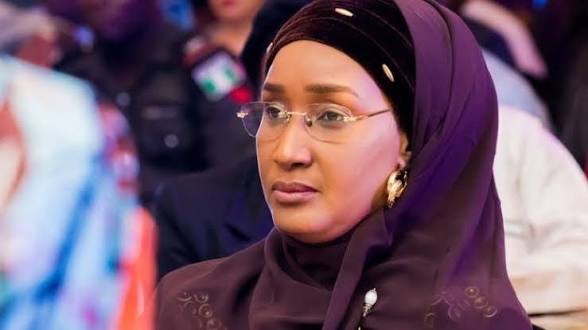





Former Nigerian Minister of Petroleum Resources, Diezani Alison-Madueke, has told a London court that she had limited authority over the awarding of oil contracts during her time in office, describing her role as largely procedural within a complex government system.
Testifying at the Southwark Crown Court during her ongoing corruption trial, Alison-Madueke said decisions on oil and gas contracts were typically concluded before reaching her desk. According to her, the approval process involved multiple agencies, leaving her with little room to alter outcomes.
“I was a rubber stamp,” she told the court, insisting that by the time contract documents arrived for ministerial sign-off, “the choice had been made.”
She further explained that operational control in Nigeria’s oil sector resided primarily with the leadership of the Nigerian National Petroleum Corporation (NNPC), while the ministry she headed functioned mainly in an oversight capacity.
Alison-Madueke, who served as petroleum minister between 2010 and 2015, is facing charges in the United Kingdom including five counts of accepting bribes and one count of conspiracy to commit bribery. Prosecutors allege that she benefited from lavish gifts and luxury expenses funded by businessmen seeking favourable treatment in the award of oil contracts.
However, she has consistently denied all allegations, maintaining that she neither solicited nor received bribes during her tenure. She told the court that any expenses incurred during official duties were reimbursed through government channels, and that her actions were always within the bounds of her office.
- Tottenham Stun Chelsea at Stamford Bridge as Palmer Sees Red and Maddison Suffers Fresh Injury Blow
 Tottenham Hotspur delivered a statement victory over London rivals Chelsea…
- AFCOM-HS: New Military Medical College Listed on JAMB Portal for 2026/2027 Admission
 The Armed Forces College of Medicine and Health Sciences (AFCOM-HS),…
Read More “AFCOM-HS: New Military Medical College Listed on JAMB Portal for 2026/2027 Admission” »
The former minister also argued that the sheer scale and complexity of Nigeria’s petroleum industry made direct ministerial control impractical. She noted that the sector comprises numerous agencies, extensive infrastructure, and thousands of personnel, making it impossible for a single office to dictate outcomes unilaterally.
Her defence comes amid broader claims that she has been unfairly portrayed in connection with alleged corruption in Nigeria’s oil sector. The trial, one of the most high-profile international corruption cases involving a Nigerian official, is ongoing in London.
Alison-Madueke’s testimony marks a central plank of her defence strategy, positioning her not as a decision-maker, but as a functionary within a layered bureaucratic system now under scrutiny.