





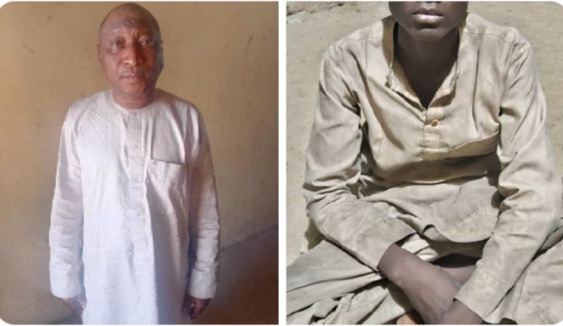
Troops of Operation Hadin Kai (OPHK) have apprehended Shariff Umar, also known as Yusuf, who is alleged to be the key coordinator of a suicide bombing network responsible for recent attacks and attempted attacks in Nigeria’s North-East. The arrest was confirmed in an official military statement on Friday, following intelligence-led cordon-and-search operations in the Kalmari area of Maiduguri on December 31, 2025.
According to the Army, Umar played a central role in planning and coordinating suicide bombings and other terror-related operations in the region. He was arrested after troops acting on credible intelligence successfully isolated him during the operation. Military sources described the arrest as a significant breakthrough in ongoing efforts to dismantle terror networks operating across Borno State and neighboring areas.
The operation forms part of OPHK’s broader counter-insurgency campaign targeting Boko Haram and its splinter groups, which have continued to carry out attacks on civilian and military targets despite intensified security measures. Analysts say the arrest may disrupt ongoing plans by insurgent networks to launch further attacks.
Local residents reported heightened military presence in Kalmari in the days leading up to the arrest, with checkpoints and patrols aimed at preventing movement by suspected insurgents. The successful operation follows a series of recent suicide bombings and attempted attacks, including incidents at crowded marketplaces and religious centers in Maiduguri.
The military statement noted that Umar’s network had been under surveillance for several weeks. Authorities believe the group was responsible for coordinating both the recruitment of suicide bombers and the logistics for their attacks. Security forces have also recovered materials used in the manufacture of improvised explosive devices (IEDs) in connection with the network.
- Nigeria’s First Ebola Patient Identified as Wife of Swiss Diplomat as Authorities Probe Source of Infection
 Nigeria’s latest Ebola case has been traced to a 42-year-old…
- MURIC Seeks Police Probe into Alleged Killing of Man Inside Oyo Mosque
 The Muslim Rights Concern (MURIC) has petitioned the police over…
Read More “MURIC Seeks Police Probe into Alleged Killing of Man Inside Oyo Mosque” »
Following the arrest, OPHK commanders called on residents to remain vigilant and report suspicious activities to security agencies. The operation underscores the Nigerian Army’s commitment to proactively countering terrorism and neutralizing threats before they materialize.
Security experts highlighted that the apprehension of a high-level coordinator could provide valuable intelligence on the broader network, potentially leading to additional arrests and the disruption of planned attacks. However, they caution that the threat of asymmetric attacks in the North-East remains significant.
The Army is conducting further interrogations of Umar to uncover the full scope of his activities and identify other collaborators. Authorities have assured the public that those found responsible for attacks on civilians will face the full weight of the law.
Community leaders in Maiduguri have welcomed the arrest, describing it as a positive development that could restore confidence among residents and reduce the atmosphere of fear created by repeated bombings. Many residents expressed hope that security forces would sustain pressure on insurgent networks throughout the region.
As investigations continue, the Nigerian military has promised regular updates on the progress of operations against terror groups in the North-East. The arrest of Shariff Umar marks a significant step in the ongoing fight against insurgency, highlighting the importance of intelligence-driven operations and collaboration between the military and local communities.