


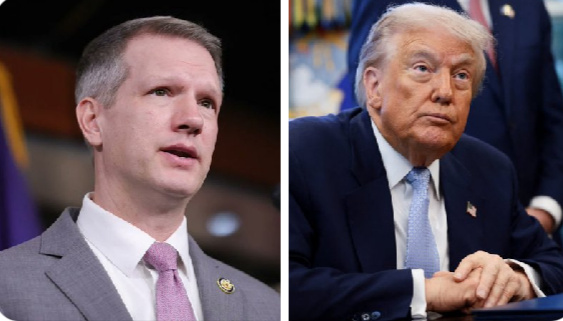
A United States congressional delegation led by Congressman Riley Moore has concluded its fact-finding mission to Nigeria over allegations of widespread killings and claims of a possible genocide targeting Christian communities. The high-level delegation arrived in the country earlier this week and spent several days meeting survivors, security officials, religious leaders and displaced families affected by the persistent violence.
The team visited Benue State, one of the worst-hit regions, where they interacted with internally displaced persons and documented personal testimonies of attacks on villages and worship centres. Travelling in armoured vehicles due to security concerns, lawmakers gathered firsthand accounts that formed the basis of what Moore described as one of the most disturbing humanitarian situations he has witnessed.
Congressman Moore said the testimonies painted a grim picture of communities devastated by repeated attacks. He highlighted stories of women who had lost their children, men who had lost entire families, and villages struggling to recover from cycles of violence that have left thousands displaced. According to him, survivors consistently linked the attacks to targeted assaults on Christian communities, contradicting narratives that present the crisis solely as a farmer-herder or climate-related dispute.
The delegation also met with key Nigerian government officials in Abuja, including the National Security Adviser, Nuhu Ribadu, and the Attorney-General of the Federation, Lateef Fagbemi. These meetings focused on security responses, ongoing investigations and efforts by the government to stabilise affected regions and support victims of the violence.
- Bournemouth Humiliate Manchester United 3-0 at Old Trafford as Carrick Faces Mounting Pressure
 Bournemouth delivered another painful blow to Manchester United on Sunday,…
- Tragedy in Kogi: Police Corporal Allegedly Kills Female Colleague, Takes Own Life After Reported Relationship Crisis
 A tragic shooting incident involving two serving police officers has…
During the trip, the lawmakers held closed-door sessions with Christian leaders, traditional rulers and civil society groups. These engagements were designed to provide a balanced understanding of the crisis, with participants urging the United States to put pressure on global bodies to intervene and support Nigeria in curbing the escalating attacks.
Congressman Moore criticised what he termed the “downplaying” of the severity of the killings, insisting that the destruction of churches, displacement of predominantly Christian communities and the scale of casualties suggested a pattern that demanded immediate international attention. He said the team was returning to Washington with evidence that would help shape America’s next steps regarding Nigeria.
The fact-finding mission follows President Donald Trump’s recent designation of Nigeria as a “Country of Particular Concern” under the International Religious Freedom Act, a move that triggered widespread debate across diplomatic circles. While some U.S. lawmakers insist the situation in Nigeria amounts to targeted violence, the Nigerian government has rejected the characterization of the crisis as genocide, stressing that insecurity affects various groups across the country.
As part of their assignment, Congressman Moore and House Appropriations Chairman Tom Cole will prepare a comprehensive report for President Trump. The report, expected before the end of the month, will outline the delegation’s findings, recommendations and potential policy steps the U.S. government may consider.
The upcoming briefing is anticipated to influence U.S.–Nigeria relations, international intervention policies and global responses to religious-based violence. Analysts say the report could determine whether the U.S. intensifies sanctions, expands humanitarian support or launches new diplomatic engagements with Nigeria.
With the delegation now back in the United States, attention turns to the White House as President Trump awaits the findings. The global community also watches closely, as the outcome of this briefing may shape international understanding and future action regarding Nigeria’s complex security challenges.