






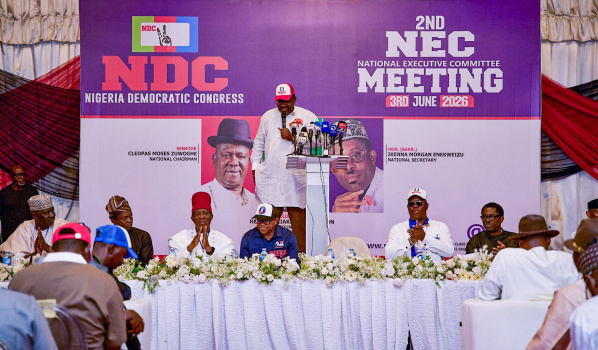
The Nigeria Democratic Congress (NDC) has announced plans to broaden its funding base ahead of the 2027 general elections by relying substantially on donations and contributions from ordinary Nigerians, as the emerging opposition platform seeks to build a nationwide political structure.
The party’s funding strategy was disclosed amid questions surrounding how it intends to finance its operations and election preparations as a relatively new political organisation without elected officials controlling government resources. The NDC says its activities are being financed through donations, levies and contributions from members, aspirants, stakeholders and supporters.
According to the party’s National Publicity Secretary, Osa Director, the NDC’s constitution permits financial contributions from members of the public, stakeholders and aspirants to support party activities. He said the arrangement was adopted because the party does not have a president, governor, minister or other public office holder through whom government resources could be accessed.
Director said the contributions are expected to be channelled into designated party accounts and managed by the appropriate organs. The party has also promised to account for its finances in accordance with the Electoral Act and guidelines issued by the Independent National Electoral Commission (INEC).
The proposed approach represents a notable attempt to move away from the heavy dependence on wealthy political financiers that has characterised election campaigns in Nigeria. By seeking smaller contributions from a broader base of supporters, the NDC hopes to create a model in which ordinary party members and sympathisers have a direct financial stake in its 2027 campaign.
The party has, however, faced allegations concerning payments allegedly demanded from aspirants during its candidate-selection process. The NDC has rejected the allegations, insisting that its fundraising activities are legitimate and that contributions paid to the party are properly documented and accounted for.
The controversy has also brought National Leader Senator Seriake Dickson into focus. The NDC has specifically denied claims that the former Bayelsa State governor personally demanded or collected money from aspirants for his own use, saying there was no record of such conduct.
Director maintained that the party’s leadership was committed to transparency and challenged anyone who claimed to have paid money to an individual instead of the party’s designated account to provide evidence. He added that the party would not shield any official found to have breached its financial procedures.
The NDC argues that raising funds is essential to its ambition of establishing structures across the country and fielding candidates at multiple levels in the 2027 elections. The party has described the task as particularly demanding because it is attempting to build a national opposition organisation within a relatively short period before the polls.
The funding debate comes as the NDC continues efforts to present itself as a broad-based political movement rather than a platform controlled by a handful of powerful individuals. Dickson previously said the party was being built around democratic institutions and structures rather than individual personalities, while other party figures have stressed collective ownership.
With the 2027 elections drawing closer, the NDC’s proposed grassroots fundraising strategy could become an important test of whether an emerging political party can mobilise substantial electoral resources through widespread small-scale contributions. For the party, success will depend not only on how much money it raises, but also on whether it can demonstrate transparent management of those funds and convince Nigerians that their contributions will translate into a credible nationwide political campaign.
- Tragedy in Kogi: Police Corporal Allegedly Kills Female Colleague, Takes Own Life After Reported Relationship Crisis
 A tragic shooting incident involving two serving police officers has…
- Tottenham Stun Chelsea at Stamford Bridge as Palmer Sees Red and Maddison Suffers Fresh Injury Blow
 Tottenham Hotspur delivered a statement victory over London rivals Chelsea…