



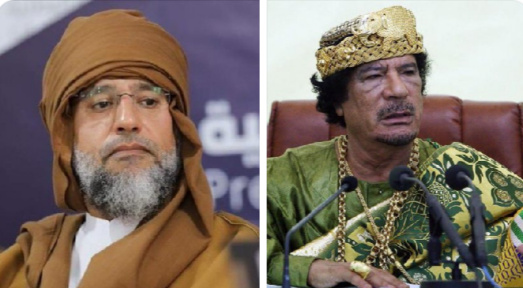
Saif al-Islam Gaddafi, the internationally known son of former Libyan ruler Muammar Gaddafi, has been assassinated in the western Libyan city of Zintan, Libyan media, family sources and officials confirmed on Tuesday, 3 February 2026. His death marks one of the most dramatic developments in Libya’s ongoing political turmoil since the 2011 revolution that toppled his father’s regime.
According to multiple sources, including Gaddafi’s lawyer and political adviser, the 53-year-old was killed at his residence after a group of four unidentified armed men reportedly stormed the property and disabled surveillance cameras before the fatal confrontation. Authorities have launched a criminal investigation, though no suspects have yet been publicly named.
Details on what triggered the assassination remain unclear, and Libyan security institutions have not issued an official statement on the precise motives or the identities of those responsible. Local media reports and statements from his team described the attack as deliberate, with some calling for a transparent inquiry into the circumstances surrounding his death.
Saif al-Islam was long viewed as the most prominent surviving member of the Gaddafi family and was once considered the heir apparent to his father’s rule before the 2011 uprising. Though he held no formal government position, his influence in Libyan politics before and during the early stages of the revolt was widely noted.
Born in Tripoli in June 1972, Saif al-Islam was educated in the West and was initially seen by some as a potential reformer within his father’s regime. He played key roles in diplomatic efforts, including negotiations on Libya’s abandonment of weapons of mass destruction and compensation related to the Pan Am Flight 103 bombing.
However, when the Libyan revolution erupted in 2011, Saif al-Islam aligned himself with his father’s government and oversaw efforts to suppress the uprising, actions that later led to widespread condemnation. Following the fall of Tripoli and his father’s death, he attempted to flee but was captured by rebel fighters and held in Zintan until 2017.
- Tottenham Stun Chelsea at Stamford Bridge as Palmer Sees Red and Maddison Suffers Fresh Injury Blow
 Tottenham Hotspur delivered a statement victory over London rivals Chelsea…
- AFCOM-HS: New Military Medical College Listed on JAMB Portal for 2026/2027 Admission
 The Armed Forces College of Medicine and Health Sciences (AFCOM-HS),…
Read More “AFCOM-HS: New Military Medical College Listed on JAMB Portal for 2026/2027 Admission” »
In 2015, a Libyan court convicted him in absentia and sentenced him to death for crimes committed during the uprising, and he was also subject to a warrant from the International Criminal Court for alleged crimes against humanity. After his release under a general amnesty, Saif al-Islam largely kept a low public profile while maintaining some political influence.
Despite his controversial past, he attempted a return to the forefront of national politics by registering as a presidential candidate in 2021, though that election was ultimately aborted amid legal and political confusion. His involvement in the process was deeply polarizing, reflecting the ongoing divisions in Libyan society.
Libya has struggled with political fragmentation, militia influence and repeated delays to national elections since the fall of the Gaddafi era, and Saif al-Islam’s assassination adds a new layer of uncertainty to the country’s future. Analysts say his death could further complicate efforts to unify Libya’s institutions and hold credible national polls scheduled for later this year.
As investigations continue and details remain scarce, world leaders and local political figures are likely to watch closely how Libya responds to this latest high-profile killing amid its protracted journey toward stability and governance.