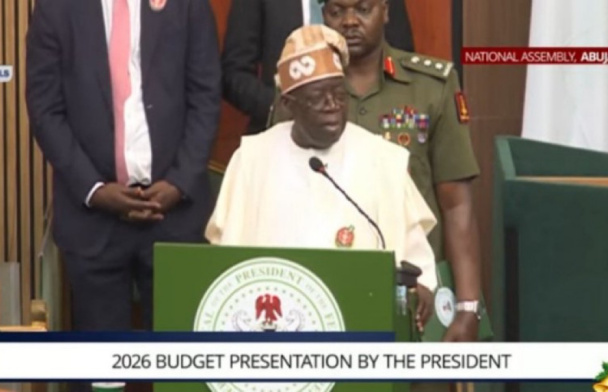



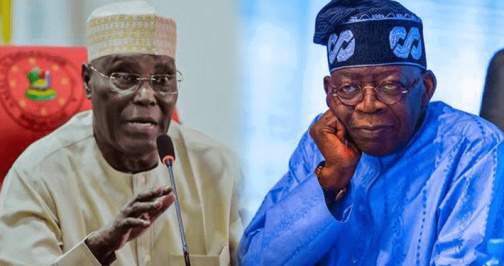
Former Vice President Atiku Abubakar has criticised the Bola Tinubu administration over the Federal Government’s allocation of N22.15 billion in the 2026 budget for the construction, renovation and furnishing of 106 palaces for traditional rulers across Nigeria.
Atiku, the presidential candidate of the African Democratic Congress (ADC), argued that the Federal Government has no constitutional mandate to undertake such projects, insisting that responsibility for traditional institutions largely falls within the purview of state governments.
The former vice president made his position known in a statement issued on Thursday by his Senior Special Assistant on Public Communication, Phrank Shaibu.
He questioned the constitutional basis for the Federal Government to commit public funds to the projects, asking why such expenditure should be undertaken at the federal level when traditional institutions are primarily recognised and regulated through state laws.
According to Atiku, the allocation represents an inappropriate use of federal resources and raises questions about constitutional boundaries, transparency and accountability in public spending.
He also criticised the lack of detailed public information about the 106 projects, including the identities of the traditional rulers involved, the specific locations of the proposed projects and the amounts assigned to individual palaces.
The former vice president called on the Presidency, the Budget Office and relevant government ministries, departments and agencies to publish comprehensive details of the projects and explain the legal and administrative basis for their inclusion in the federal budget.
The controversy follows an analysis of the 2026 budget by Tracka, a public accountability initiative of the BudgIT Foundation, which identified N22.15 billion earmarked for 106 palace-related projects. The review reportedly found that 11 projects valued at about N5.85 billion had no clearly identified locations in the budget documents, potentially making independent monitoring and verification difficult.
The projects are reportedly distributed among 45 federal ministries, departments and agencies, including institutions whose statutory mandates do not appear directly connected to the construction or renovation of traditional rulers’ palaces.
Atiku said the issue should not be interpreted as opposition to traditional institutions, which he acknowledged as important components of Nigeria’s social and cultural structure. Rather, he argued that public expenditure should comply with constitutional responsibilities and meet the standards of transparency expected in the management of national resources.
He urged the Federal Government to disclose the full details of the projects, including their locations, individual financial allocations, procurement arrangements and the legal justification for using federal funds for the interventions.
The debate has also renewed broader questions about the inclusion of constituency-style and community-based projects in federal budgets through agencies whose core mandates may lie elsewhere.
While traditional institutions remain influential across Nigeria, their legal and administrative frameworks are primarily established under state-level laws. The 1999 Constitution does not recognise traditional institutions as a separate tier of government, although it provides for state-level structures, including councils of chiefs, in relation to traditional and customary matters.
The controversy over the N22.15 billion allocation therefore extends beyond the immediate question of palace construction. It raises wider issues about the proper division of responsibilities between the federal and state governments, the transparency of budgetary allocations and the mechanisms available to citizens for tracking the implementation of publicly funded projects.
As pressure mounts for greater disclosure, the Federal Government may face increasing demands to explain the rationale, locations and implementation framework for the 106 projects contained in the 2026 budget.
- Troops, DSS Rescue Six Kidnap Victims in Kogi, Including Naval Officer
 Troops of Operation Whirl Stroke (OPWS), working alongside operatives of…
Read More “Troops, DSS Rescue Six Kidnap Victims in Kogi, Including Naval Officer” »
- Dangote Refinery’s N2.15 Trillion IPO Closes Today as Investors Make Final Push
 LAGOS, Nigeria — The highly anticipated initial public offering (IPO)…
Read More “Dangote Refinery’s N2.15 Trillion IPO Closes Today as Investors Make Final Push” »