




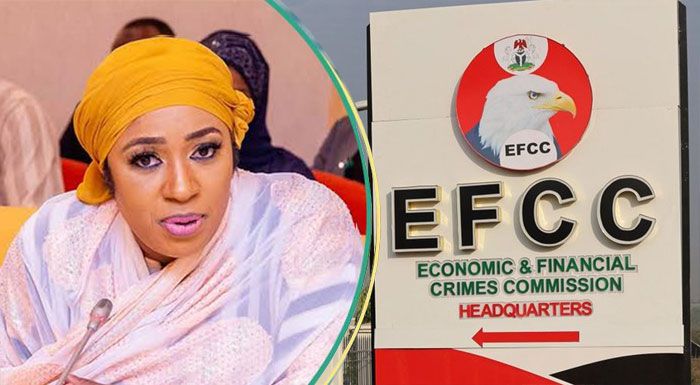
Investigators of the Economic and Financial Crimes Commission (EFCC) have questioned several civil servants over the financial scandal rocking the Ministry of Humanitarian Affairs and Poverty Alleviation.
The EFCC is investigating the suspended Minister of Humanitarian Affairs and Poverty Alleviation, Betta Edu, ex-minister Sadiya Umar-Farouq, and Halima Shehu, the suspended National Coordinator and CEO of the National Social Investment Programme, an agency under the humanitarian ministry.
Edu is being investigated for authorising the transfer of N585 million into the private account of an accountant in the ministry, Bridget Oniyelu. At the same time, Sadiya Umar-Farouq, who served as a minister under former President Muhammadu Buhari, is being probed over alleged N37bn money laundering.
- Bournemouth Humiliate Manchester United 3-0 at Old Trafford as Carrick Faces Mounting Pressure
 Bournemouth delivered another painful blow to Manchester United on Sunday,…
- Tragedy in Kogi: Police Corporal Allegedly Kills Female Colleague, Takes Own Life After Reported Relationship Crisis
 A tragic shooting incident involving two serving police officers has…
Halima Shehu, on the other hand, is being questioned for allegedly moving N44bn NSIP funds into some private and corporate accounts without presidential approval.
The EFCC operatives on Wednesday questioned many senior civil servants in the humanitarian affairs ministry.
It was gathered that the ministry’s top officials gave the investigators useful information that could help them unravel the financial malfeasance in the Ministry.
An EFCC source stated, “The women came today (Wednesday), and they’re cooperating with the commission.
“Also, director-generals and other senior officials under the Ministry of Humanitarian Affairs have been and are still being interrogated by the EFCC. Senior officials of some banks are still answering questions too over the alleged money laundering.’’
Recall that President Bola Ahmed Tinubu had on Monday suspended Betta Edu for requesting payment of N585 million naira into private accounts allegedly meant for vulnerable groups in Akwa Ibom, Cross River, Ogun, and Lagos States.