






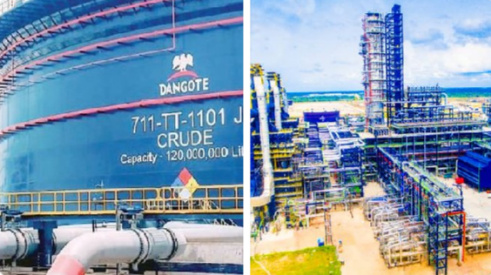
The management of the $20 billion Dangote Petroleum Refinery has opened up on the reasons behind the recent mass dismissal of workers, revealing that the decision followed 22 documented cases of sabotage at the facility since its operations began.
According to Devakumar Edwin, the Vice President for Oil and Gas at Dangote Industries Limited, the refinery had suffered multiple coordinated attempts to disrupt its operations, incidents ranging from the deliberate opening of critical valves to the manipulation of sensitive control instruments.
Speaking to journalists, Edwin described the acts as “well-coordinated internal sabotage” aimed at undermining the refinery’s output and integrity. He explained that the company was forced to carry out an internal reorganisation to safeguard the multi-billion-dollar project from further compromise.
“We recorded 22 separate incidents of sabotage. I have the dates, the units where they occurred, and the data to prove it. These weren’t mistakes — they were deliberate attempts to damage our systems,” he stated.
Edwin said that while the refinery’s world-class safety and automation systems prevented any major damage, the management could no longer ignore the pattern. He added that the company’s response, which included the dismissal of several staff was strictly based on internal security investigations, not union politics as speculated in some quarters.
“This has nothing to do with PENGASSAN. The reorganisation was necessary to protect our people, our investment, and our national energy goals,” he clarified.
- Tragedy in Kogi: Police Corporal Allegedly Kills Female Colleague, Takes Own Life After Reported Relationship Crisis
 A tragic shooting incident involving two serving police officers has…
- Tottenham Stun Chelsea at Stamford Bridge as Palmer Sees Red and Maddison Suffers Fresh Injury Blow
 Tottenham Hotspur delivered a statement victory over London rivals Chelsea…
The statement follows weeks of tension between the refinery and the Petroleum and Natural Gas Senior Staff Association of Nigeria (PENGASSAN), which had accused the company of unfair labour practices and replacing Nigerian workers with foreign nationals. In response, the union had ordered a temporary suspension of gas and crude supply to the refinery, sparking nationwide discussions about the standoff.
However, Dangote Refinery insists its decisions were driven by safety, not discrimination or union confrontation. The company maintained that protecting the refinery’s integrity and by extension, Nigeria’s energy security, remained its top priority.
The refinery, located in the Lekki Free Trade Zone in Lagos, is Africa’s largest single-train refinery, designed to process up to 650,000 barrels of crude oil per day. It was commissioned with the promise of ending Nigeria’s decades-long dependence on imported refined products and making the country a net exporter of petrol, diesel, and aviation fuel.
Security experts say the revelation of 22 sabotage attempts is alarming, given the refinery’s national importance. Industrial sabotage, they warn, could lead to fires, explosions, or environmental disasters not to mention the loss of billions in revenue.
Edwin noted that the refinery’s advanced safety systems, including automated fire suppression and real-time monitoring were instrumental in preventing any catastrophe.
“When someone tried to start a fire, the system detected it instantly and extinguished it. That’s how we’ve been able to avert disaster,” he said.
Meanwhile, the Federal Government has pledged to mediate between Dangote Refinery and the oil workers’ union to ensure a peaceful resolution and restore normal operations.
With Nigeria relying on the refinery to stabilise domestic fuel supply and drive industrial growth, the coming weeks will be crucial in determining how the company rebuilds trust and strengthens internal security.