

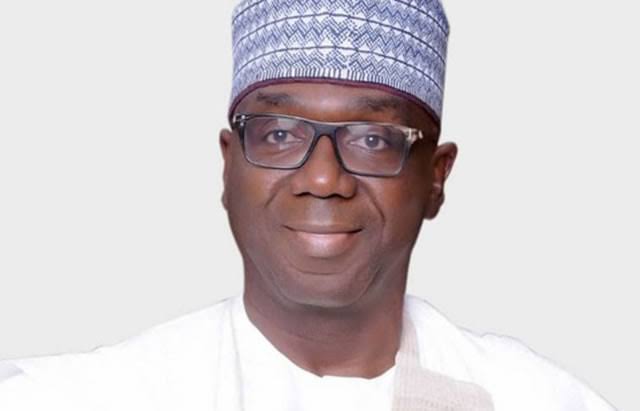
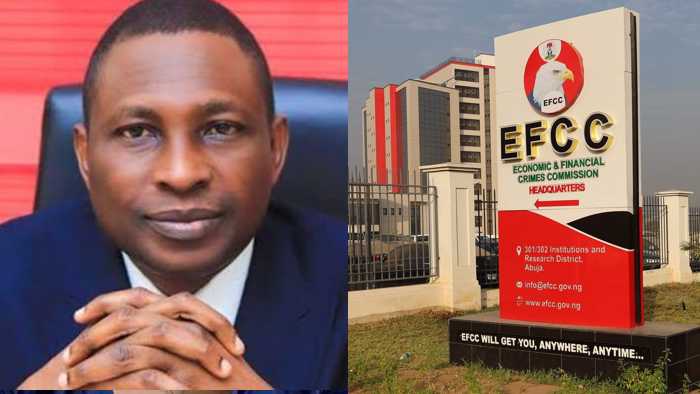
The Chairman of the Economic and Financial Crimes Commission (EFCC), Ola Olukoyede, has sparked public interest after revealing that a private university recently forfeited to the Federal Government has a residence built for its vice-chancellor that he described as potentially larger than President Bola Tinubu’s official residence at the Aso Rock Presidential Villa.
Olukoyede made the disclosure in a video shared on his official X account on Friday, September 4, 2026, while highlighting how assets recovered through anti-corruption investigations are being redirected toward productive public use.
Although the EFCC chairman did not identify the university by name, reports and EFCC records indicate that the institution he was referring to was likely Rayhaan University in Kebbi State. The commission has linked the university and associated properties to former Attorney-General of the Federation, Abubakar Malami, SAN.
According to Olukoyede, the institution comprises a temporary site and a permanent site, with the vice-chancellor’s residence standing out because of its extraordinary size. He said the residence was so expansive that it was “probably bigger” than the President’s house in the Villa, adding that photographs of the property were already publicly available.
The revelation came as Olukoyede explained the broader philosophy behind the EFCC’s asset-recovery programme. Rather than allowing properties recovered from alleged criminal proceeds to remain idle, he said the commission was working toward ensuring that such assets ultimately serve the public interest.
The EFCC chairman pointed to another major example in Kaduna State, where NOK University in Kachia, after being forfeited to the Federal Government, was converted into the Federal University of Applied Sciences, Kachia (FUASK). He disclosed that 1,909 students matriculated at the institution in December 2025.
In the case of the unnamed high-value university, the EFCC said the final forfeiture order obtained on July 15, 2026, covered the permanent and temporary campuses, a third site, a radio station and the vice-chancellor’s residence. The breadth of the forfeited assets underscores the substantial value of the institution and properties involved.
Olukoyede used the development to argue that the fight against corruption should not be measured solely by the amount of cash recovered. According to him, recovered schools, factories, hotels, land, vehicles, machinery and other properties can be transformed into productive assets capable of supporting communities and strengthening the economy.
The EFCC disclosed that between October 2023 and July 2026, the commission secured interim or final forfeiture of 10,053 assets, covering real estate, land, vehicles, electronics, schools, factories, hotels, oil rigs, barges, machinery and aircraft, in addition to 102 tonnes of solid minerals.
The commission also reported that disposals from assets under final forfeiture orders had so far generated ₦12.07 billion for the Federal Government, while recoveries during the same October 2023-to-July 2026 period amounted to ₦1.233 trillion and convictions stood at 10,872.
The striking comparison between the university’s vice-chancellor’s residence and Aso Rock has nevertheless become the headline-grabbing element of Olukoyede’s disclosure. Beyond the size of one building, the episode has renewed attention on the scale of assets allegedly accumulated through illicit wealth and the government’s ability to convert forfeited properties into institutions and infrastructure that benefit Nigerians.
- Tragedy in Kogi: Police Corporal Allegedly Kills Female Colleague, Takes Own Life After Reported Relationship Crisis
 A tragic shooting incident involving two serving police officers has…
- Tottenham Stun Chelsea at Stamford Bridge as Palmer Sees Red and Maddison Suffers Fresh Injury Blow
 Tottenham Hotspur delivered a statement victory over London rivals Chelsea…