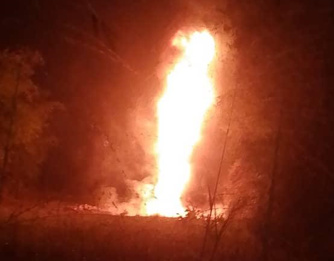





Eight Nigerian soldiers have reportedly been killed after their patrol vehicle struck a landmine suspected to have been planted by Islamic State West Africa Province (ISWAP) fighters in Borno State, close to Nigeria’s border with Cameroon. The deadly explosion occurred on Saturday, October 17, 2026, in Kinuba village, approximately 25 kilometres from Gamboru, according to reports citing military and local militia sources.
The soldiers were travelling along a highway outside Gamboru when the vehicle hit the explosive device. All eight personnel aboard reportedly died in the blast, a military officer operating in the area told the Agence France-Presse (AFP). The incident adds to the growing security concerns confronting troops deployed against insurgents in Nigeria’s North-East.
Reports indicate that the soldiers were monitoring members of an anti-jihadist militia engaged in clearing thick vegetation along the highway. The operation was aimed at removing roadside cover that insurgents could exploit to conceal themselves and launch surprise attacks against military personnel and unsuspecting travellers.
Ibrahim Liman, a member of the local militia supporting military operations, corroborated the reported death toll. He explained that the explosive had been planted along the dusty road and detonated remotely using a detonating cord. Liman also disclosed that a militia member supervising the vegetation-clearing exercise sustained shrapnel injuries in the explosion.
Security sources attributed the attack to ISWAP, an armed group affiliated with the Islamic State organisation and active across parts of the Lake Chad region. However, the attribution was based on accounts provided by sources cited in the reports, rather than a publicly documented claim of responsibility by the group.
The latest incident occurred on the same day the Chief of Army Staff, Lieutenant General Waidi Shaibu, visited Maiduguri, the Borno State capital, following another deadly assault on a military base earlier in the week. Reports said that attack claimed the lives of 15 soldiers and five members of an anti-jihadist militia, further highlighting the risks faced by security personnel and local fighters involved in counterinsurgency operations.
The back-to-back reports of casualties underscore the continuing threat posed by insurgent attacks in Borno, despite sustained military operations against armed groups in the region. ISWAP and its rival, Boko Haram, have targeted military formations, patrols and civilian traffic, with roadside explosives providing a means of attacking moving vehicles without engaging security personnel directly.
The use of thick roadside vegetation as concealment has also remained a challenge for troops and motorists travelling through vulnerable communities. The circumstances surrounding the latest blast illustrate the danger faced by personnel working to clear such hiding places, particularly when explosive devices may have been planted along routes used by military patrols.
Nigeria’s insurgency in the North-East began in 2009 and has resulted in widespread deaths, displacement and destruction. Although the conflict has experienced periods of reduced intensity, armed groups continue to threaten communities and security forces in Borno and neighbouring areas, while the violence has also affected countries bordering the Lake Chad Basin.
- Dangote Refinery’s N2.15 Trillion IPO Closes Today as Investors Make Final Push
 LAGOS, Nigeria — The highly anticipated initial public offering (IPO)…
Read More “Dangote Refinery’s N2.15 Trillion IPO Closes Today as Investors Make Final Push” »
- NCAA to Probe Airline After Passenger Reportedly Bleeds Amid Extreme Heat on Abuja–Calabar Flight
 The Nigeria Civil Aviation Authority (NCAA) is set to investigate…