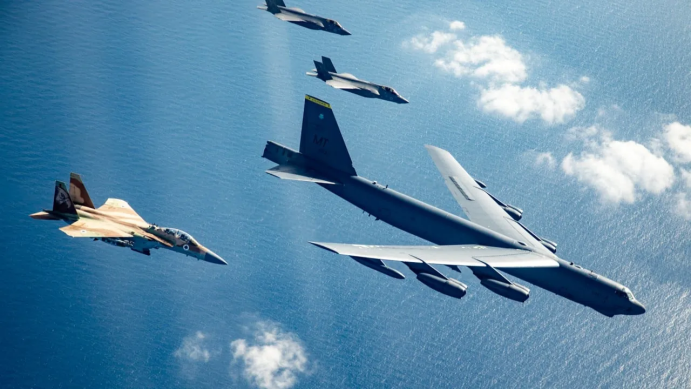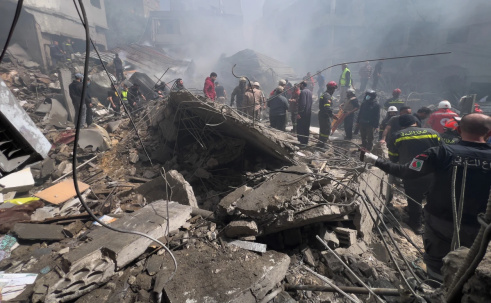



The world is torn between several reports amid counter reports of who is winning and who is losing the war between Israel and Iran. The truth is that there has been casualties on both sides. The entrance of United States military into the conflict abruptly made further hostilities senseless. Israel has claimed it cannot bear the existential threat of Iranian nuclear weapons development and Iran was bent on developing it’s nuclear program.
With the divisive bombing and utter destruction of the three nuclear weapons development sites in Iran by the unsurpassed military sophistication of American bunker busters, there is now nothing to fight for beyond ego.

As of 11:25 AM WAT on Tuesday, June 24, 2025, the state of the war between Iran, Israel, and the United States appears to be in a transitional phase following a recently brokered ceasefire. Based on the available information, web results, and current developments, here’s an analysis of the situation:
Current Status
Ceasefire Announcement:
Iran’s state media has confirmed a ceasefire deal, reportedly brokered with assistance from Qatar and mediated through negotiations involving U.S. President Donald Trump, Israeli Prime Minister Benjamin Netanyahu, and other U.S. officials (e.g., Vice President JD Vance, Secretary of State Marco Rubio, and Special Envoy Steve Witkoff). This was reported by CNN on June 24, 2025, at 09:21 UTC.
The ceasefire was agreed upon with the condition that Iran cease its attacks on Israel, as noted by a senior White House official. However, Israel has not yet officially commented, and the exact timing of the ceasefire’s implementation remains unclear.
- Tottenham Stun Chelsea at Stamford Bridge as Palmer Sees Red and Maddison Suffers Fresh Injury Blow
 Tottenham Hotspur delivered a statement victory over London rivals Chelsea…
- AFCOM-HS: New Military Medical College Listed on JAMB Portal for 2026/2027 Admission
 The Armed Forces College of Medicine and Health Sciences (AFCOM-HS),…
Read More “AFCOM-HS: New Military Medical College Listed on JAMB Portal for 2026/2027 Admission” »
Recent Military Actions:
Iran’s Operation Triumph Message: On June 23, 2025, Iran announced “Operation Triumph Message,” described as a retaliatory strike against American forces in the region following U.S. aggression on Iranian soil.
Several sources suggests this attack targeted empty U.S. bases with minimal impact, hinting at a symbolic rather than decisive military action.
Israeli and U.S. Strikes:
Israel reported identifying missiles launched from Iran early on June 24, with one striking a residential building in southern Israel, killing three. Iranian state media also reported fresh Israeli attacks on Tehran overnight, indicating ongoing hostilities just prior to the ceasefire announcement.
Hezbollah and Regional Dynamics:
The Hudson Institute’s analysis suggests Iran’s regional allies (e.g., Hezbollah, Houthis) may be reevaluating Tehran’s reliability due to its limited response, potentially weakening the “anti-Israel axis.”
Public Perception and Propaganda:
Many commentaries view Iran’s operation as a propaganda effort to control the domestic narrative and justify a ceasefire after a perceived defeat. This aligns with historical patterns of Iranian media manipulation, as noted in the Oxford Internet Institute’s 2021 study on propaganda during the COVID-19 pandemic.
Broader Context Historical Tensions:
Iran-U.S. relations have been hostile since the 1979 Islamic Revolution, with key escalations including the 1953 CIA-backed coup, the 2020 killing of Qasem Soleimani, and recent U.S. sanctions and military actions. The current conflict escalated with Israel’s Operation Rising Lion and U.S. strikes on Iranian nuclear sites, as detailed by the Hudson Institute and Wikipedia.
Strategic Implications:
The ceasefire appears to be a U.S.-Israel initiative to de-escalate after demonstrating military superiority (e.g., Mossad’s infiltration successes, U.S. precision strikes). Iran’s retaliation may have been a face-saving measure, as suggested by the minimal damage reported and the timing of the ceasefire talks.
Current State Assessment De-escalation in Progress:
The ceasefire, if implemented, marks a pause in active hostilities, likely driven by Iran’s weakened position and U.S.-Israel leverage. However, the lack of official Israeli confirmation and ongoing reports of strikes suggest the situation remains fragile.
Unresolved Tensions:
Key issues like Iran’s nuclear program, U.S. sanctions, and support for proxies (Hezbollah, Houthis) remain contentious. There are indications of mutual distrust, with both sides accusing the other of propaganda and weakness.
Regional Uncertainty:
The involvement of Qatar and the potential shift in Hezbollah’s stance could reshape Middle East dynamics, but no immediate resolution is evident.
Outlook Short-Term:
The next few hours to days will be critical to confirm the ceasefire’s start and assess compliance. Any violation (e.g., further strikes) could reignite conflict.
Long-Term:
The ceasefire’s permanence depends on diplomatic follow-through, which Trump has expressed hope for, but historical patterns suggest ongoing friction unless underlying issues (e.g., nuclear ambitions) are addressed.
In summary, as of now, the war is in a tentative ceasefire phase following intense recent exchanges, with the U.S. and Israel holding a strategic upper hand, while Iran appears to be repositioning through propaganda and limited military action. Stay tuned for updates, as the situation could evolve rapidly!