
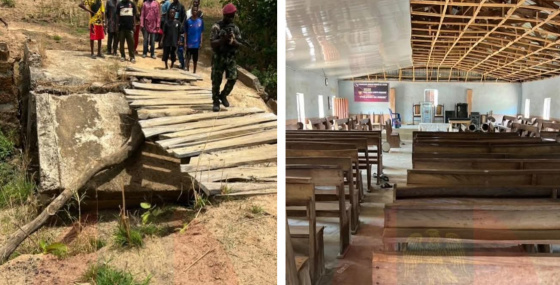






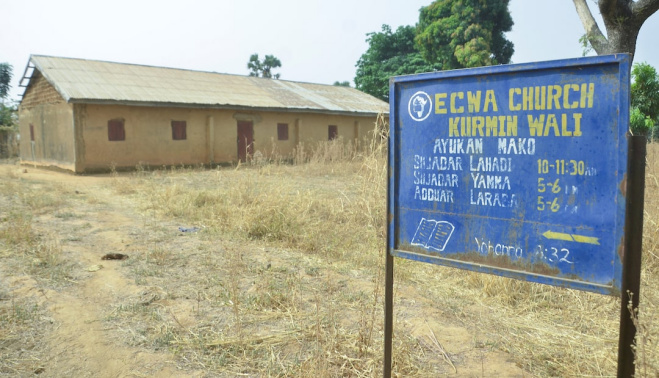
In one of the most shocking security incidents in northern Nigeria this year, the identities of 177 worshippers abducted during coordinated attacks on three church services in Kurmin Wali community, Kajuru Local Government Area of Kaduna State, have been publicly revealed, underscoring the deep trauma inflicted on families and the wider Christian community.
On Sunday, January 18, 2026, gunmen wielding sophisticated weapons struck during Sunday services at the Evangelical Church Winning All (ECWA) and two Cherubim and Seraphim churches in Kurmin Wali, a remote agrarian village in southern Kaduna. According to a police situation report the attackers fired sporadically around 11:25 a.m., forcing worshippers out of their churches and into nearby forests.
In the chaos that followed, entire families were reportedly taken away, leaving the village nearly deserted as residents fled for safety.
The list of victims, compiled from multiple community and church records and shows the extent of the attack.
Whole families were abducted, Families such as the Jonathan household (12 members), Amos family (13 members), Markus/Makudi (10), Ishaya and Danisa (seven each), and several others were seized en masse.
The oldest person taken is 71-year-old Augustina Matthew, while the youngest is a 6-year-old child named Salvation Idris. Other abducted children include Likita Amos (6), Tessy Amos (8), and Yahaya Joshua (9).
Several other children aged 10 and under are also on the list, highlighting the breadth of the tragedy.
- Tragedy in Kogi: Police Corporal Allegedly Kills Female Colleague, Takes Own Life After Reported Relationship Crisis
 A tragic shooting incident involving two serving police officers has…
- Tottenham Stun Chelsea at Stamford Bridge as Palmer Sees Red and Maddison Suffers Fresh Injury Blow
 Tottenham Hotspur delivered a statement victory over London rivals Chelsea…
Controversial Official Response
The abductions triggered a political and security controversy.
There was an initial police denial. Soon after the attacks, the Kaduna State Police Command publicly dismissed reports of any mass kidnapping, labelling them falsehoods and demanding those claiming abductions produce names and particulars of victims.
State and local authorities even claimed they found no evidence of an attack during on-site checks.
The Christian Association of Nigeria (CAN) disputed the official denials, insisting the kidnappings occurred and accusing security agencies of obstructing independent verification efforts. CAN leaders said armed men blocked access to the community and that credible local sources confirmed the abductions.
International and domestic rights organisations criticised the government’s initial stance, calling for transparent investigation and rescue operations.
This divergence between official statements and community accounts has fueled nationwide debate about security in rural Kaduna, the credibility of state reporting, and the protection of vulnerable communities.
The attacks in Kurmin Wali are the latest in a string of mass kidnappings that have plagued remote regions of northern and central Nigeria where banditry, militia violence, and security gaps have made civilians frequent targets for abduction and ransom.
Security forces have since been deployed to the area, and intensified operations are reportedly underway to locate and rescue the victims.