


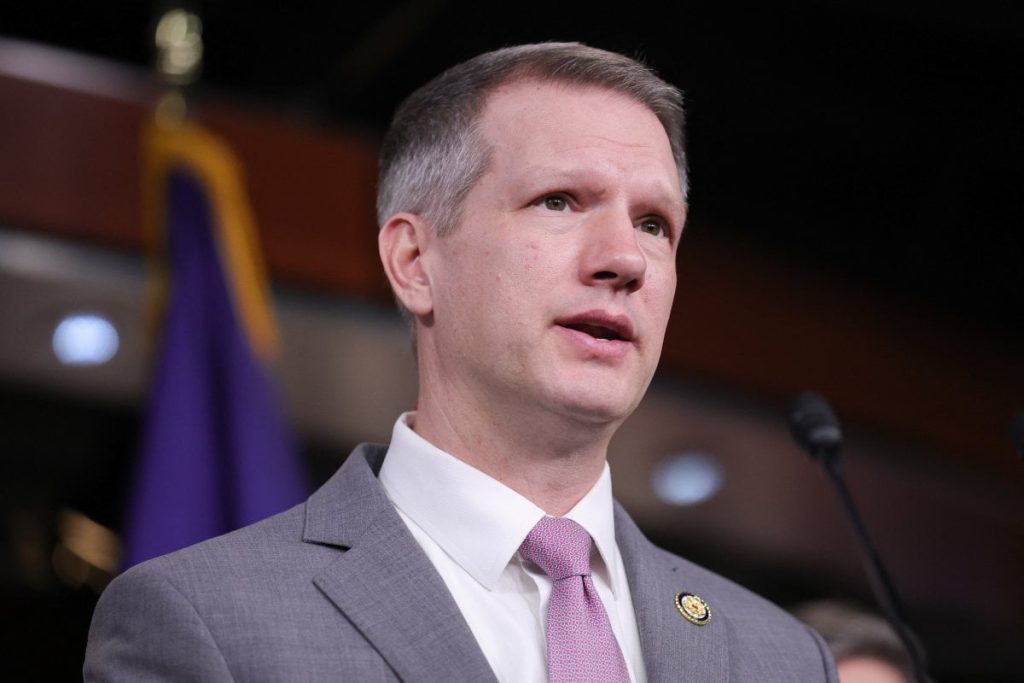
A United States Congressman, Rep. Riley Moore, has announced plans to formally brief the White House on the worsening security situation facing Christians in Nigeria, saying the administration will be presented with concrete policy options to address the crisis.
Moore disclosed this in a statement shared on his verified X (formerly Twitter) account on Tuesday, following comments by Catholic Bishop Robert Barron, who recently drew international attention to the persistent killings and persecution of Christians in parts of Nigeria.
Reacting to Barron’s remarks, the lawmaker expressed gratitude for what he described as much-needed global awareness of the violence. He noted that religious persecution in Nigeria has continued to claim lives and undermine fundamental human rights, particularly freedom of worship.
“Thank you, Bishop Barron, for shedding light on how our brothers and sisters in Christ are being persecuted for their faith in Nigeria,” Moore wrote. “Thanks for the shout-out. You’re right—I will be briefing the White House on this topic very soon.”
According to Moore, the planned briefing will focus on actionable options the US government can adopt to help protect vulnerable Christian communities in Nigeria, including diplomatic, security, and humanitarian measures.
He also linked the upcoming briefing to recent legislative actions in Washington, referencing the Fiscal Year 2026 National Security, Department of State, and Related Programs (NSRP) bill, which he said reinforces US commitments to national security, human rights, and religious freedom worldwide.
- Nigeria’s First Ebola Patient Identified as Wife of Swiss Diplomat as Authorities Probe Source of Infection
 Nigeria’s latest Ebola case has been traced to a 42-year-old…
- MURIC Seeks Police Probe into Alleged Killing of Man Inside Oyo Mosque
 The Muslim Rights Concern (MURIC) has petitioned the police over…
Read More “MURIC Seeks Police Probe into Alleged Killing of Man Inside Oyo Mosque” »
Moore further revealed that the House Appropriations Committee is preparing a detailed report on Nigeria for President Donald Trump. The document, he said, will outline verified facts on the ground, provide congressional oversight, and propose leadership-driven responses to the situation.
The congressman’s comments come amid growing international concern over insecurity in Nigeria, where attacks attributed to insurgents, bandits, and armed groups have disproportionately affected rural communities, including faith-based populations.
Advocacy groups have repeatedly called on global powers to increase pressure on Nigerian authorities to improve civilian protection, accountability, and long-term peacebuilding efforts across the country.