




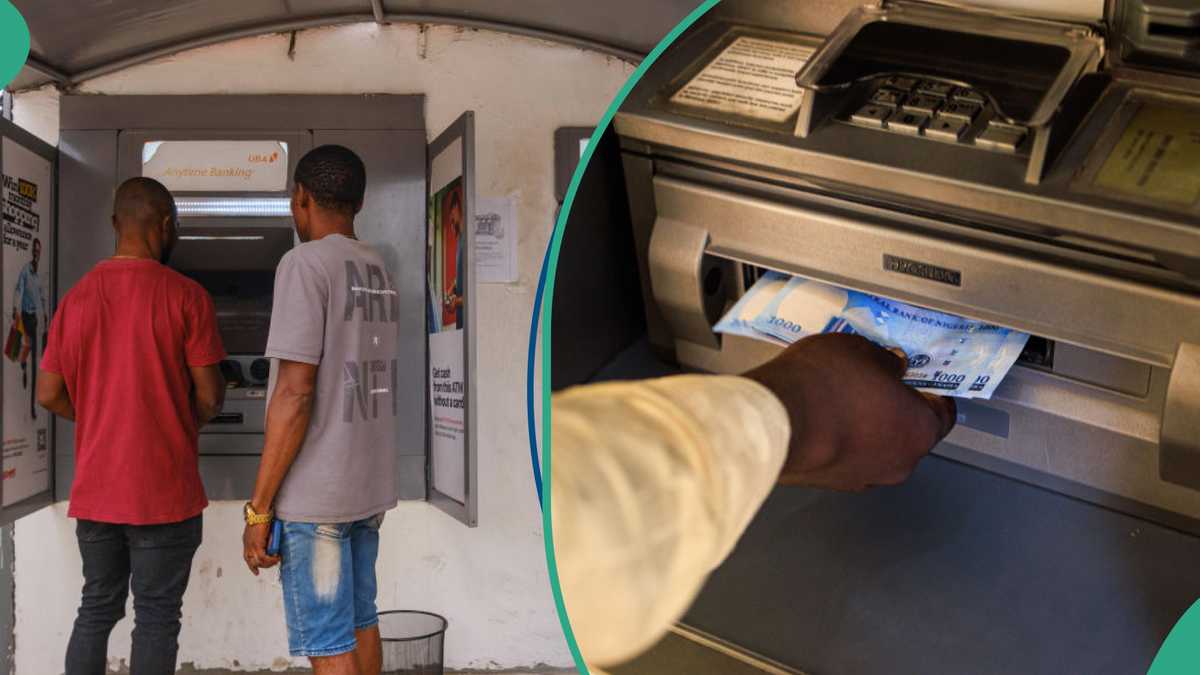
The Central Bank of Nigeria (CBN) has unveiled a new draft guidelines that will compel Deposit Money Banks (DMBs), payment service providers, card schemes and independent ATM operators to refund customers for failed Automated Teller Machine (ATM) transactions without undue delay.
Under the proposed framework, titled “Exposure of the Draft Guidelines on the Operations of Automated Teller Machines in Nigeria”, “on-us” failed transactions (those performed on one’s own bank’s ATM) are to be reversed instantly. If system glitches prevent instant reversal, the bank is mandated to process the refund manually within 24 hours.
For “not-on-us” transactions (i.e., when a customer’s card is used at another bank’s ATM), refunds must be completed within 48 hours.
The draft document, signed by Musa I. Jimoh, Director of the Payments System Policy Department at CBN, was circulated internally on October 11, 2025, and stakeholders have been given until October 31, 2025 to submit feedback.
CBN’s rationale for the intervention includes persistent complaints from customers over slow reversals, poor service delivery, and the erosion of public confidence in the banking system.
The new rules are part of a broader push to modernize Nigeria’s payments infrastructure and bring its operations closer to global best practices.
- Tottenham Stun Chelsea at Stamford Bridge as Palmer Sees Red and Maddison Suffers Fresh Injury Blow
 Tottenham Hotspur delivered a statement victory over London rivals Chelsea…
- AFCOM-HS: New Military Medical College Listed on JAMB Portal for 2026/2027 Admission
 The Armed Forces College of Medicine and Health Sciences (AFCOM-HS),…
Read More “AFCOM-HS: New Military Medical College Listed on JAMB Portal for 2026/2027 Admission” »
Beyond refund timing, the draft guidelines propose sweeping reforms to how ATMs are deployed, secured, and managed nationally.
Some of the key provisions include:
Each bank/card issuer must deploy at least one ATM for every 5,000 active cards, with 30% compliance by 2026, 60% by 2027, and full compliance by 2028.
Any installation, relocation or decommissioning of ATMs demands prior approval from the CBN.
ATMs must be installed in enclosed or well-lit locations and equipped with anti-skimming devices, CCTV surveillance, and backup power.
Machines are required to comply with Payment Card Industry Data Security Standards (PCI DSS), maintain audit logs, and display customer helpline contact details.
At least 2% of all ATMs must include tactile (Braille) features for visually impaired users.
ATMs must dispense cash before returning cards, allow free PIN changes, issue receipts for all transactions (except balance inquiries), display transaction fees clearly, and only dispense clean banknotes.
Downtime for any ATM must not exceed 72 consecutive hours. If an outage extends beyond that, operators must publicly disclose the cause and estimated restoration time.
To monitor adherence, the CBN will conduct audits, inspections, and require monthly deployment reports from ATM operators detailing machine numbers and locations.
Institutions failing to comply will face sanctions (though the draft does not yet specify the penalties).
If adopted, the guidelines are expected to take effect before the end of 2025.