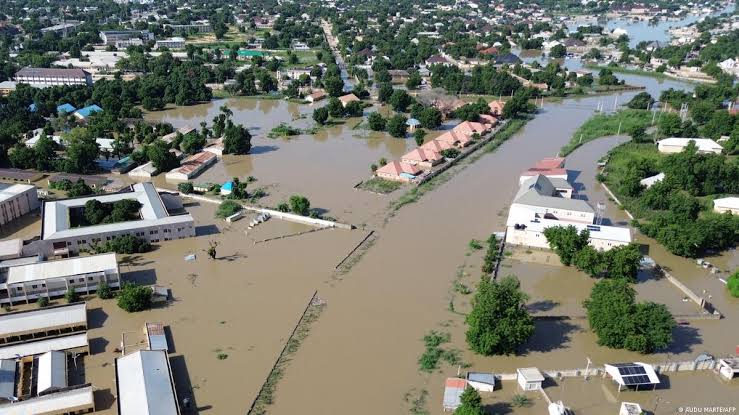








The Lagos State Government has directed residents living in flood-prone and low-lying communities to temporarily relocate to higher ground following a fresh seven-day flood alert issued by the Nigerian Hydrological Services Agency (NiHSA).
The directive was issued by the Commissioner for the Environment and Water Resources, Tokunbo Wahab, in a statement released on Monday, September 21, 2026, through the ministry’s Director of Public Affairs, Kunle Adeshina.
The NiHSA warning covers September 19 to 25 and includes Lagos and 14 other states. The agency warned that rising river levels could result in flooding in vulnerable communities and potentially affect critical facilities such as schools, healthcare centres, markets, farms and places of worship.
Among the Lagos communities specifically identified as vulnerable are parts of Eti-Osa, Lagos Island, Oke-Ira Nla in Ajah, Kirikiri, Ilaje Waterfront Jetty and Jetty Terminal B. The state government has consequently urged residents in these areas to take the warning seriously and make preparations before floodwaters rise.
Wahab said residents should not wait until flooding becomes severe before taking protective measures. He urged those living in vulnerable locations to move to safer, elevated areas and remain there until the heightened flood risk associated with the current rainy-season period subsides.
The commissioner also raised concerns about communities situated along the Ogun River and other major waterways. According to the state government, heavy rainfall upstream and rising water levels in connected river systems could increase the risk of flooding in downstream communities within Lagos.
Several communities around the Ogun River corridor were specifically advised to remain on high alert between September 19 and 25. They include Isheri North, Kara, Itowolo, Ajegunle, Majidun, Ogolonto and parts of Agboyi, as well as other settlements downstream of Isheri Olofin.
The government has also intensified monitoring of riverine, waterfront and other flood-prone locations across the state. Wahab said officials would continue tracking rainfall patterns, river levels and other hydrological developments in collaboration with relevant federal agencies.
Residents living close to rivers, lagoons, wetlands, drainage channels and other waterways were advised to monitor official flood forecasts and prepare for temporary relocation where necessary. The government also called on local councils, emergency management agencies, community leaders and residents to activate early-warning and emergency-response arrangements.
The commissioner further advised households facing an imminent flood threat to move people, livestock and valuable belongings to safer locations. Residents were also warned against walking or driving through flooded roads and fast-moving water, while the government urged the public to avoid dumping refuse into drains, canals and waterways.
The latest warning comes as Lagos enters another phase of its annual rainy season, when rainfall, river levels and tidal influences can heighten flood risks in vulnerable locations. The state government has therefore urged residents in exposed communities to treat the NiHSA advisory as a precautionary safety warning and act early where relocation becomes necessary.
- Troops, DSS Rescue Six Kidnap Victims in Kogi, Including Naval Officer
 Troops of Operation Whirl Stroke (OPWS), working alongside operatives of…
Read More “Troops, DSS Rescue Six Kidnap Victims in Kogi, Including Naval Officer” »
- Dangote Refinery’s N2.15 Trillion IPO Closes Today as Investors Make Final Push
 LAGOS, Nigeria — The highly anticipated initial public offering (IPO)…
Read More “Dangote Refinery’s N2.15 Trillion IPO Closes Today as Investors Make Final Push” »