





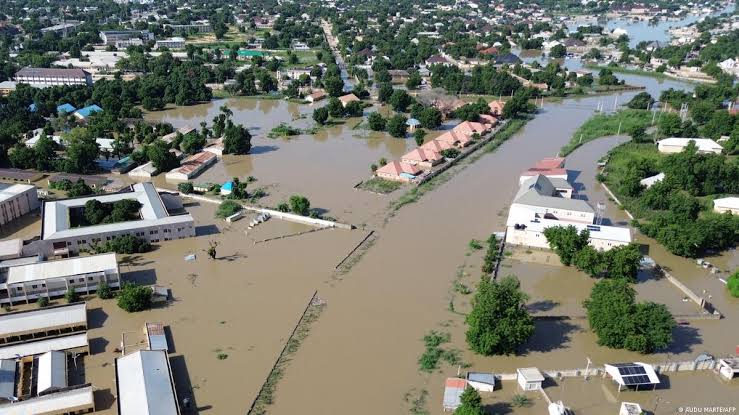
The Nigeria Hydrological Services Agency (NiHSA) has warned that flooding is likely to continue across several parts of the country until September, with authorities cautioning that the situation could intensify during the peak of the rainy season in August and September.
The agency’s Director-General, Umar Mohammed, said the current flooding incidents were consistent with earlier forecasts issued by NiHSA, stressing that the country is only at the beginning of the most critical phase of the rainy season. He noted that unless urgent preventive measures are taken, communities in flood-prone areas could experience more severe flooding over the next 12 weeks.
Speaking through the Head of the agency’s Geographic Information System (GIS) and Remote Sensing Department, Emmanuel Tuna, Mohammed explained that NiHSA had already issued advance flood forecasts, emphasizing that the unfolding events were anticipated.
According to him, the period between July and September traditionally represents the height of Nigeria’s rainy season, with August and September expected to witness the most significant flood impacts if rainfall patterns persist.
Beyond the immediate destruction of homes, roads and farmlands, NiHSA expressed concern over the growing threat to public health, warning that floodwaters could contaminate drinking water sources by introducing sewage, waste and other harmful pollutants into rivers, streams and wells.
The agency urged residents in vulnerable communities to avoid consuming untreated water during flood periods and encouraged relevant authorities to strengthen water quality monitoring to reduce the risk of outbreaks of waterborne diseases.
NiHSA also called on federal, state and local governments to intensify flood preparedness efforts by clearing blocked drainage channels, sensitising residents in high-risk communities, and implementing timely evacuation plans where necessary.
The warning aligns with the agency’s 2026 Annual Flood Outlook, which projected increased flood risks across many parts of Nigeria during the peak rainy months and advised proactive measures to minimise the impact on lives, infrastructure and livelihoods.
- Tottenham Stun Chelsea at Stamford Bridge as Palmer Sees Red and Maddison Suffers Fresh Injury Blow
 Tottenham Hotspur delivered a statement victory over London rivals Chelsea…
- AFCOM-HS: New Military Medical College Listed on JAMB Portal for 2026/2027 Admission
 The Armed Forces College of Medicine and Health Sciences (AFCOM-HS),…
Read More “AFCOM-HS: New Military Medical College Listed on JAMB Portal for 2026/2027 Admission” »


