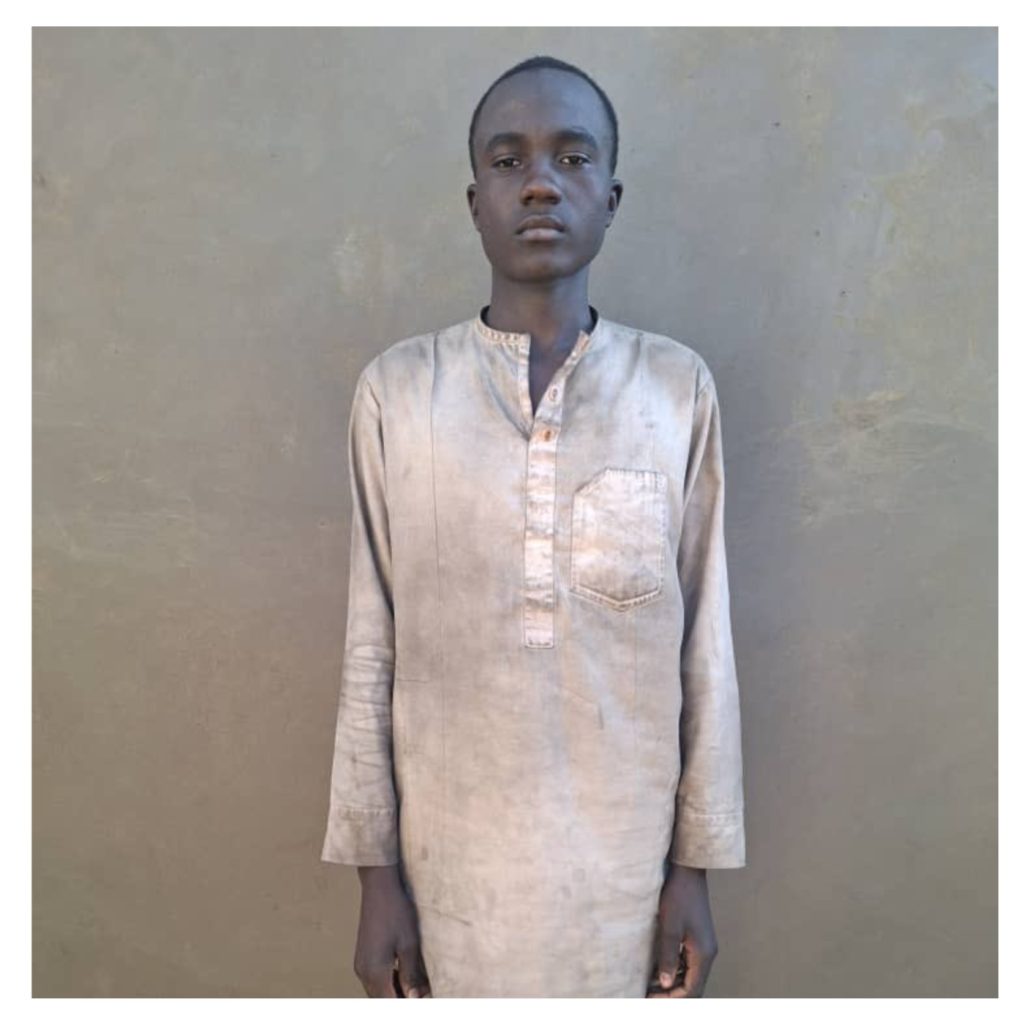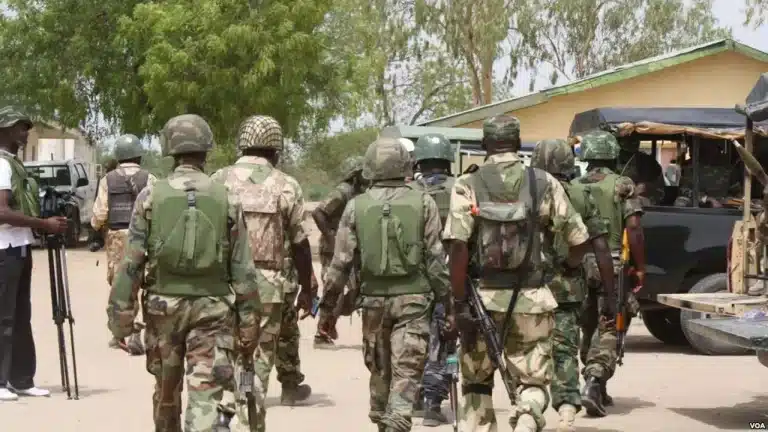




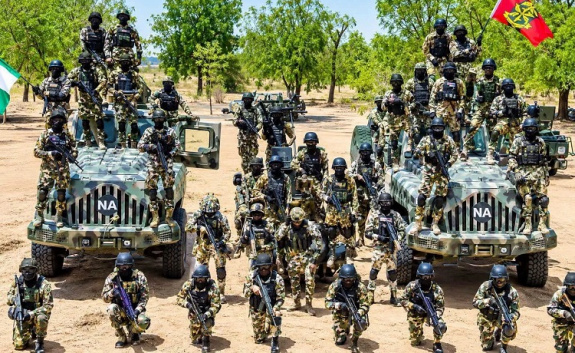
Troops of Operation Hadin Kai have recorded another breakthrough in Nigeria’s counter-insurgency campaign, intercepting two trucks laden with suspected terrorist supplies and arresting 16 individuals believed to be part of a logistics network aiding insurgents in Borno State.
According to military sources, the suspects were apprehended during a targeted operation along key transit routes leading to terrorist enclaves in the northern part of the state. The operation was driven by actionable intelligence indicating the movement of goods intended for insurgent groups operating in remote areas, including the Gubio and Gudumbali axis—locations long identified as strongholds of Boko Haram and its splinter faction, ISWAP.
The intercepted trucks were reportedly conveying a range of materials suspected to be critical to sustaining terrorist operations. While full details of the recovered items were not immediately disclosed, similar operations in the theatre have previously uncovered food supplies, fuel, clothing, spare parts, and communication devices—items routinely used to maintain insurgent mobility and operational capability.
Preliminary investigations revealed that the arrested suspects allegedly played roles in procuring and transporting goods to terrorist groups. Some of them reportedly admitted involvement in the supply chain, citing economic hardship and lack of employment as motivating factors behind their actions.
Military authorities noted that the arrests highlight the persistent challenge posed by civilian collaborators who facilitate insurgent activities through logistics support. They emphasized that disrupting these supply chains remains a critical component of ongoing counter-terrorism efforts in the North-East.
- Tottenham Stun Chelsea at Stamford Bridge as Palmer Sees Red and Maddison Suffers Fresh Injury Blow
 Tottenham Hotspur delivered a statement victory over London rivals Chelsea…
- AFCOM-HS: New Military Medical College Listed on JAMB Portal for 2026/2027 Admission
 The Armed Forces College of Medicine and Health Sciences (AFCOM-HS),…
Read More “AFCOM-HS: New Military Medical College Listed on JAMB Portal for 2026/2027 Admission” »
The Nigerian Army reiterated its commitment to intelligence-driven operations aimed at cutting off terrorists from essential supplies, stressing that sustained collaboration with local communities and security partners has been instrumental in recent successes.
Security analysts say the latest operation underscores a broader reality: beyond kinetic military engagements, the fight against insurgency increasingly hinges on dismantling the economic and logistical networks that enable terrorist groups to survive and adapt.
The military has assured that the suspects are currently in custody and undergoing further interrogation, while efforts continue to track down other members of the supply network.