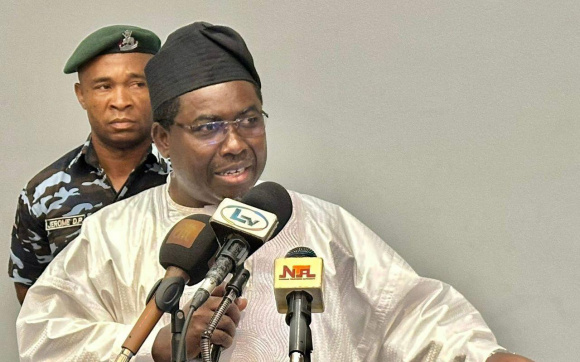







The Independent National Electoral Commission (INEC) has announced a major change to the remuneration framework for its workforce, with Chairman Professor Joash Ojo Amupitan saying the commission has been removed from the general civil service payment structure.
Amupitan disclosed the development on Tuesday, October 6, 2026, during a world press conference and national stakeholders’ meeting in Abuja, where he presented INEC’s preparations for the 2027 general elections.
The INEC chairman said the commission took the decision after identifying staff welfare and remuneration as significant institutional gaps. According to him, INEC personnel are currently the “least paid in Nigeria”, a situation he said needed to be addressed if staff were to be held to higher standards of accountability.
Amupitan explained that although INEC is constitutionally distinct from the civil service, its employees had previously been placed under the civil service payment structure. He said the commission had now taken steps to establish a separate electoral structure and salary framework.
The development is not entirely without precedent. In July 2026, the Revenue Mobilisation Allocation and Fiscal Commission (RMAFC) confirmed that it had received communication conveying presidential approval of proposed remuneration adjustments for INEC. RMAFC, however, stated that implementation remained subject to the necessary legal, regulatory and administrative processes.
Amupitan’s latest statement therefore signals a significant movement in the process, although the chairman did not announce specific salary figures or provide details of the new salary scales. The precise financial implications for individual categories of INEC employees will depend on the final structure and implementation arrangements.
The chairman linked the remuneration issue directly to institutional performance, arguing that improved welfare would help create the conditions for greater accountability among electoral personnel. He said the commission had identified several other gaps that required attention as part of efforts to improve the electoral system.
The announcement comes as INEC intensifies preparations for the 2027 general elections. The commission is simultaneously upgrading its election technology, including its Bimodal Voter Accreditation System devices, while also developing artificial-intelligence tools for results verification and other electoral processes.
Amupitan also disclosed that INEC had established a dedicated artificial intelligence division within its ICT department. According to him, AI-assisted auditing and anomaly-detection tools are being incorporated into the results-verification process, with mandatory human oversight built into the governance framework.
The commission is also scheduled to begin the first phase of Permanent Voter Card distribution at local government centres nationwide on October 9, 2026, adding another major component to its preparations for the forthcoming elections.
With the 2027 elections approaching, the proposed separate salary structure could become an important component of INEC’s wider institutional reform agenda. The immediate issue, however, will be how the new framework is translated into actual remuneration, while ensuring that improved staff welfare is matched by stronger professionalism, accountability and public confidence in Nigeria’s electoral administration.
- Nigeria’s First Ebola Patient Identified as Wife of Swiss Diplomat as Authorities Probe Source of Infection
 Nigeria’s latest Ebola case has been traced to a 42-year-old…
- MURIC Seeks Police Probe into Alleged Killing of Man Inside Oyo Mosque
 The Muslim Rights Concern (MURIC) has petitioned the police over…
Read More “MURIC Seeks Police Probe into Alleged Killing of Man Inside Oyo Mosque” »