







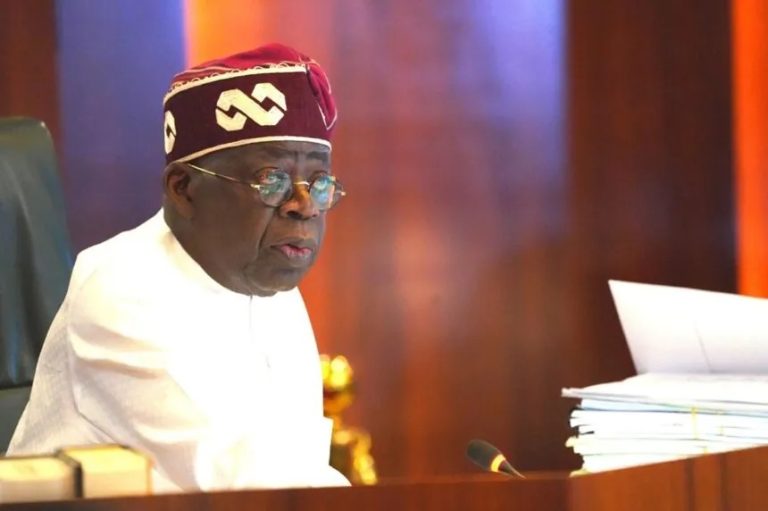
President Bola Ahmed Tinubu has reiterated his administration’s commitment to restructuring Nigeria’s security framework, assuring Nigerians that the introduction of state and community policing is imminent once the National Assembly concludes the necessary legislative processes.
The President gave the assurance on Friday during a meeting with a delegation of the Christian Association of Nigeria (CAN), led by its President, Archbishop Daniel Okoh, at his residence in Lagos. The interaction formed part of broader consultations with religious and community leaders on national security and governance.
According to a statement issued by the Special Adviser to the President on Information and Strategy, Bayo Onanuga, Tinubu acknowledged the deep concerns of Nigerians over insecurity and emphasized that his government is taking deliberate steps to rebuild public confidence in the nation’s security architecture.
President Tinubu explained that the federal government is already working closely with the National Assembly to address the constitutional and legal requirements needed to operationalize state and community policing across the country. He stressed that the reform is not a mere policy proposal but a structured process that must align with constitutional provisions.
- Tottenham Stun Chelsea at Stamford Bridge as Palmer Sees Red and Maddison Suffers Fresh Injury Blow
 Tottenham Hotspur delivered a statement victory over London rivals Chelsea…
- AFCOM-HS: New Military Medical College Listed on JAMB Portal for 2026/2027 Admission
 The Armed Forces College of Medicine and Health Sciences (AFCOM-HS),…
Read More “AFCOM-HS: New Military Medical College Listed on JAMB Portal for 2026/2027 Admission” »
“Community and State Police will be a reality once the National Assembly completes the required legislative inputs,” the President was quoted as saying.
The President noted that Nigeria’s complex security challenges require a decentralized approach that allows states and local communities to play a more active role in policing, intelligence gathering, and crime prevention, while still operating within a unified national security framework.
Tinubu further assured the CAN delegation that his administration remains committed to protecting lives and property, regardless of religious or ethnic affiliations, and will continue to engage stakeholders in shaping policies that promote peace, unity, and stability.
In his remarks, Archbishop Daniel Okoh welcomed the President’s assurances and called for sustained dialogue and concrete actions to address insecurity, particularly attacks affecting vulnerable communities. He emphasized the role of faith-based organizations in promoting peace and supporting government efforts toward national cohesion.
The renewed push for state policing has remained a prominent issue in national discourse, with proponents arguing that locally rooted security structures would enhance responsiveness and accountability, while critics urge caution over funding, coordination, and potential abuse.
As legislative deliberations continue at the National Assembly, President Tinubu’s latest comments signal that security sector reform, including state and community policing, remains a key priority of his administration’s broader governance agenda.


