



The administration of President Bola Tinubu has reportedly approved a $9 million lobbying contract with a Republican-aligned firm in Washington, as diplomatic relations between Nigeria and the United States come under increasing strain.
An investigative report published on Tuesday by The Africa Report disclosed that the contract was designed to open channels of engagement with the administration of U.S. President Donald Trump and influential members of the U.S. Congress over Nigeria’s worsening security situation. Central to the engagement, according to the report, are international concerns surrounding persistent killings of Christian communities in parts of northern Nigeria.
The report alleges that Nigeria’s National Security Adviser, Nuhu Ribadu, played a key role in facilitating the arrangement, working through a Kaduna-based legal firm, Aster Legal, to secure the services of U.S. lobbying firm DCI Group.
Filings submitted to the United States Department of Justice and cited in the report indicate that the Nigerian government has already paid DCI Group an initial sum of $4.5 million. The payment was reportedly made on December 12, 2025, as part of a six-month retainer agreement.
Under the terms of the contract, a second instalment of $4.5 million is expected by July 2026, bringing the total value of the deal to $9 million, an average of about $750,000 per month over the contract period.
- Nigeria’s First Ebola Patient Identified as Wife of Swiss Diplomat as Authorities Probe Source of Infection
 Nigeria’s latest Ebola case has been traced to a 42-year-old…
- MURIC Seeks Police Probe into Alleged Killing of Man Inside Oyo Mosque
 The Muslim Rights Concern (MURIC) has petitioned the police over…
Read More “MURIC Seeks Police Probe into Alleged Killing of Man Inside Oyo Mosque” »
The filings state that DCI Group was engaged to help present Nigeria’s efforts to protect vulnerable Christian populations and to sustain U.S. political and military support for counterterrorism operations against jihadist groups operating across West Africa.
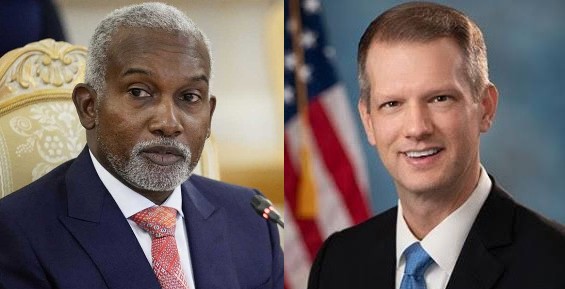
The agreement was reportedly executed by Oyetunji Olalekan Teslim, Managing Director of Aster Legal, and Justin Peterson, Managing Partner of DCI Group. Peterson is described as a Republican strategist and a known ally of President Trump, who previously served on Puerto Rico’s fiscal management board during Trump’s first term in office.
According to the report, the lobbying deal was finalised only weeks after President Trump redesignated Nigeria as a “country of particular concern,” a classification tied to allegations that the Nigerian government has failed to adequately address widespread attacks on Christian communities.
Diplomatic tensions intensified shortly after the agreement, with the United States announcing a partial travel ban on Nigerians just four days later. The restrictions affected tourist, business, and student visa applicants, with the Trump administration citing high visa overstay rates and what it described as deficiencies in Nigeria’s security vetting processes.
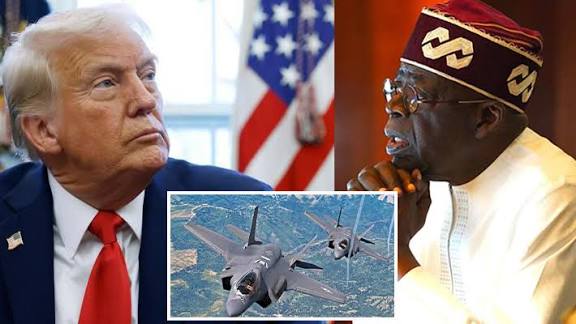
The situation escalated further on December 25, 2025, when President Trump announced that U.S. forces had carried out an airstrike on suspected insurgent hideouts in Sokoto State, in northern Nigeria. He later warned that additional military action could follow if attacks on Christian communities were not brought under control.