


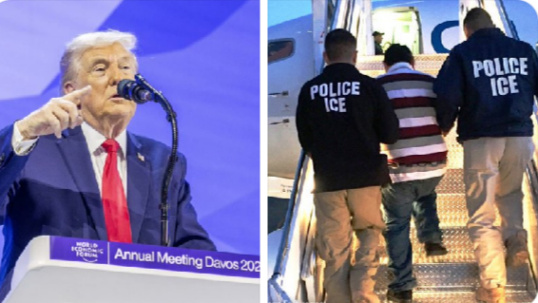
The United States Department of Homeland Security (DHS) has announced plans to deport 79 Nigerian nationals who have been placed on the U.S. government’s “worst‑of‑the‑worst” criminal aliens list, marking a significant step in a renewed immigration enforcement crackdown targeting non‑citizens with serious criminal convictions.
According to the DHS announcement published on its official platform, the Nigerians named are individuals convicted of a range of offences, including fraud, drug trafficking, assault, manslaughter, robbery and related crimes, and are scheduled for removal under a broader crackdown on criminal immigrants across the United States.
Under the intensified enforcement initiative, the DHS has highlighted that the campaign is aimed at removing non‑citizens considered dangerous to public safety. A statement accompanying the list noted that the agency was showcasing the “worst of the worst criminal aliens arrested by the U.S. Immigration and Customs Enforcement” (ICE), signaling a continued prioritization of deportations for individuals with serious records.
The DHS has published the names of those slated for removal. The list includes, but is not limited to:
- Boluwaji Akingunsoye
- Ejike Asiegbunam
- Emmanuel Mayegun Adeola
- Bamidele Bolatiwa
- Ifeanyi Nwaozomudoh
- Aderemi Akefe
- Solomon Wilfred
- Chibundu Anuebunwa
- Oluwole Odunowo
- Bolarinwa Salau
- Olayinka A. Jones
- Aishatu Umaru …and many others.
Other names on the list include Chibundu Anuebunwa, Joshua Ineh, Usman Momoh, Oluwole Odunowo, Bolarinwa Salau, Oludayo Adeagbo, Olaniyi Akintuyi, Talatu Dada, Olatunde Oladinni, Jelili Qudus, and dozens more, reflecting a comprehensive roundup of individuals flagged under the DHS’s enforcement priorities.
- Nigeria’s First Ebola Patient Identified as Wife of Swiss Diplomat as Authorities Probe Source of Infection
 Nigeria’s latest Ebola case has been traced to a 42-year-old…
- MURIC Seeks Police Probe into Alleged Killing of Man Inside Oyo Mosque
 The Muslim Rights Concern (MURIC) has petitioned the police over…
Read More “MURIC Seeks Police Probe into Alleged Killing of Man Inside Oyo Mosque” »
The deportation announcement has triggered anxiety among Nigerian diaspora communities in cities across the United States, with reports that some undocumented Nigerians are reportedly going into hiding while others are quietly returning home to avoid enforcement actions.
Experts in immigration policy note that such enforcement actions typically involve final immigration hearings, transfer to detention facilities, and coordination with homeland authorities for repatriation flights, although DHS has not yet released specific timelines for the deportation operations.
The campaign forms part of a larger trend of strict immigration enforcement by U.S. authorities, with similar actions seen in other contexts where foreign nationals with criminal convictions are prioritized for removal from the country.
Reactions from civil rights advocates and community leaders have been mixed, with some supporting the enforcement of laws against serious offenders, while others have raised concerns about the humanitarian aspects and broader social implications of mass deportations.
As the U.S. government prepares to implement the deportation list, all eyes are now on how these measures will unfold in practice, how quickly the operations will begin, and what support, if any, will be provided to repatriated individuals upon their return to Nigeria.